
 E-mail :
 Call Us :
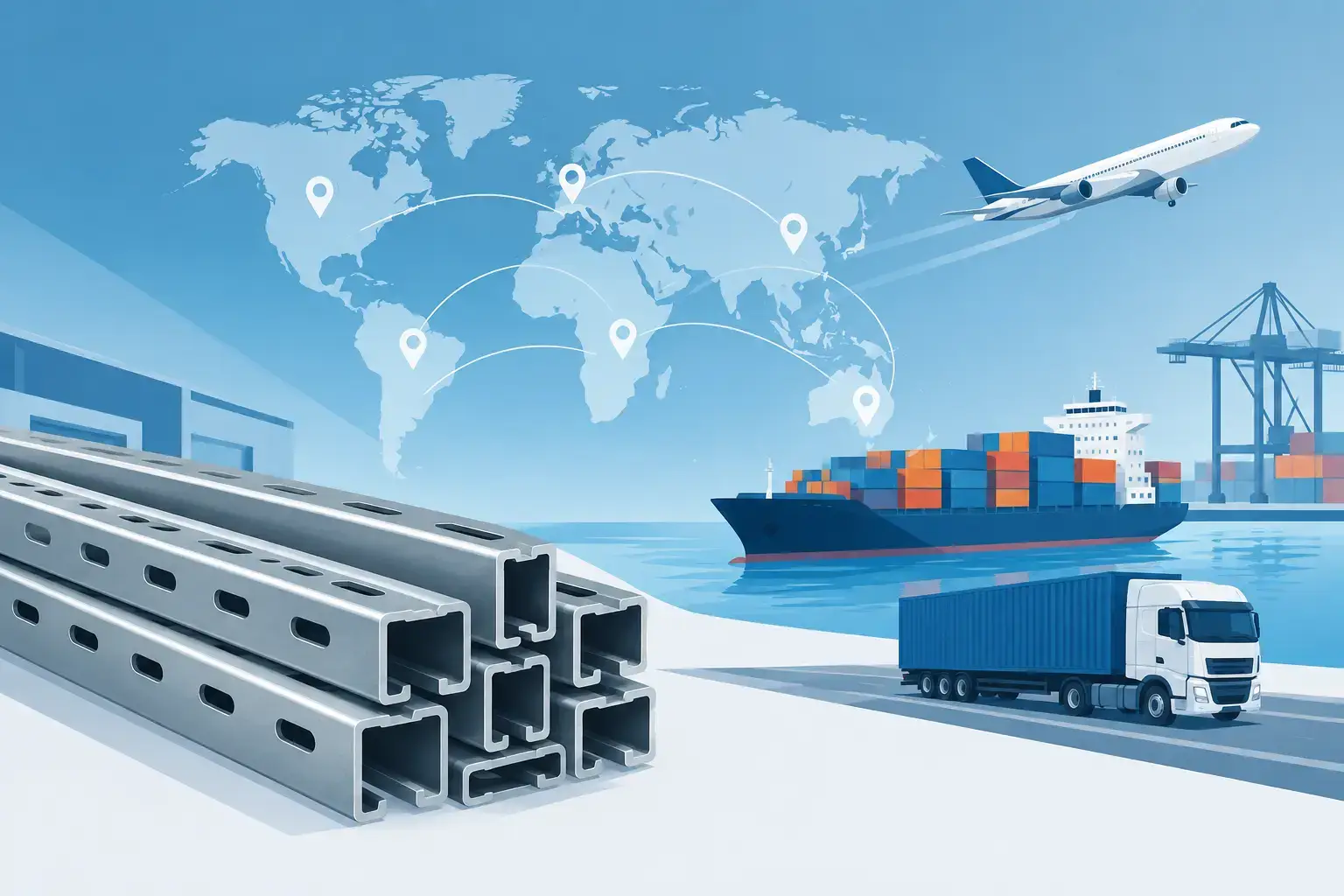
A strut supplier global express solution is not simply about moving channel quickly from one country to another. For OEMs, contractors, distributors, and project procurement teams, it means receiving compatible strut components with the right dimensions, finish, documentation, packaging, and shipment coordination to keep installation schedules intact. A late fitting, mismatched channel profile, or incomplete hardware kit can delay electrical, HVAC, mechanical, and structural work far beyond the value of the individual part.
Strut support systems are often specified as standard products, yet the supply requirement is rarely standard. Buyers may need multiple channel depths, slot patterns, brackets, spring nuts, beam clamps, post bases, and fabricated supports delivered against a phased project schedule. The right manufacturing partner brings those requirements together under controlled production and export-ready fulfillment.
What a Strut Supplier Global Express Partner Must Deliver
Speed matters, but it has to be supported by production discipline. Expedited shipping cannot correct an incorrect slot pitch, a channel gauge that does not match the approved specification, or hardware that is not compatible with the installed support system. For global supply, the first requirement is manufacturing accuracy.
A capable strut supplier should produce channels and fittings to defined tolerances, with clear control over material grade, thickness, hole pattern, forming dimensions, and coating requirements. Mild steel, galvanized steel, stainless steel, and aluminum each suit different operating conditions. The proper selection depends on load requirements, indoor or outdoor use, chemical exposure, humidity, coastal conditions, and the expected service life of the installation.
Compatibility is equally important. Many buyers need components that work with widely used unistrut-compatible channel systems while still meeting their own project drawings or private-label requirements. This calls for more than a catalog. It requires a manufacturer that understands channel geometry, nut engagement, fitting alignment, connection loads, and practical installation conditions.
Standard parts and project-specific fabrication
Standard channel and fittings are efficient when dimensions, finishes, and loading requirements align with common product ranges. They simplify repeat purchasing and help distributors maintain consistent inventory. However, standard parts are not always the most cost-effective answer for a project.
A custom bracket, welded frame, extended base, special hole configuration, or preassembled support can reduce field cutting and drilling. That can improve installation speed, reduce labor variability, and create a cleaner finished system. The trade-off is that custom work requires early engineering review, sample approval where needed, and realistic production planning. Buyers should not treat custom fabrication as an emergency substitute for missed planning. It performs best when drawings and quantities are established before fabrication begins.
Metallix Exports supports both approaches, combining strut support hardware with custom sheet metal fabrication for customers that need application-specific components produced to controlled specifications.
Start With the Installation Requirement
The best sourcing decision begins with the installed application, not the part number. A procurement team may know it needs channel, but the engineering team needs to define what that channel will carry, where it will be installed, and how it connects to adjacent equipment or structure.
For electrical and HVAC support work, channel size, span, load distribution, and corrosion resistance all affect performance. In industrial equipment, hole placement and bracket geometry may need to align with existing mounting points. For outdoor infrastructure or marine-adjacent applications, the surface finish and material selection can be as significant as the base component dimensions.
Purchase specifications should identify the channel profile, material, gauge or thickness, length, slot or hole pattern, finish, required accessories, and packaging format. When a component is custom, a dimensional drawing with revision control is essential. A supplier can manufacture accurately only when requirements are complete and consistent.
Quality Control That Supports Repeat Orders
A one-time shipment can look acceptable while still creating problems later. B2B buyers need repeatability across production batches, especially when the same support system is used at multiple facilities or supplied through distribution channels.
Quality control for strut products should cover incoming material verification, in-process dimensional checks, formed profile inspection, hole and slot positioning, weld quality where applicable, finish inspection, and final packing review. For fabricated assemblies, fit-up verification is particularly valuable. If components are designed to bolt together on site, minor variation can become a major installation issue.
Documentation requirements depend on the customer and project. Some buyers need material information, inspection records, packing lists, part labeling, or photo verification before shipment. Others need only a consistent product and accurate commercial paperwork. The right level of control depends on the application, but the supplier should be able to discuss it clearly before production starts.
Export Readiness Is Part of Product Readiness
International procurement adds another layer of risk. A channel may be manufactured correctly yet arrive damaged, poorly identified, or separated from the accessories needed for installation. Export-ready supply means treating packaging and documentation as part of the manufacturing process.
Long strut channels require packaging that limits shifting, abrasion, and deformation during handling. Smaller components such as nuts, clamps, brackets, and fasteners should be counted, labeled, and packed so receiving teams can identify them quickly. Mixed project kits can be useful, but only when part labels and packing lists make site distribution straightforward.
Lead time should also be discussed in practical terms. Production time, inspection, packing, freight booking, transit, customs clearance, and final delivery are separate stages. A reliable supplier does not present a single optimistic date without explaining what it includes. For urgent requirements, air freight may be justified for compact, high-value hardware, while longer channel sections often require more economical ocean or ground freight planning. The right choice depends on project urgency, shipment size, and total landed cost.
Questions to Ask Before You Place a Strut Order
Before selecting a supplier, procurement and engineering teams should confirm the details that affect both performance and delivery:
- Can the supplier manufacture the required channel profile, thickness, length, and slot pattern consistently?
- Are the fittings and hardware compatible with the intended strut system and installation method?
- What material and finish options are available for the actual operating environment?
- Can custom brackets, welded supports, or preassembled kits be produced from controlled drawings?
- How will parts be inspected, labeled, packaged, and documented for international shipment?
These questions help prevent the common problem of sourcing channel from one vendor, fittings from another, and custom supports from a third. Fragmented purchasing can appear economical at the quotation stage but often creates avoidable coordination work, inconsistent finishes, and schedule exposure during installation.
Balance Price Against Installed Value
The lowest unit price is not always the lowest project cost. A cheaper channel may lead to greater waste if lengths are poorly optimized. Low-cost fittings can create labor delays if holes do not align or coating quality is inconsistent. Separate suppliers can require multiple freight arrangements, receiving checks, and site-level sorting.
A stronger sourcing model considers installed value. This includes dimensional accuracy, compatibility, order consolidation, packaging quality, production communication, and shipment reliability. For repeat programs, it also includes the supplier's ability to maintain the same specification as volumes grow or project locations change.
There are situations where buying local stock is the correct choice, particularly for a small repair, a standard item needed immediately, or a low-volume requirement with no special finish or documentation. Global express supply creates more value when buyers need scale, catalog breadth, custom production, or coordinated delivery across multiple component categories.
The most dependable strut supply relationship starts with clear drawings, realistic timelines, and a manufacturer prepared to take responsibility for the details between raw sheet metal and the receiving dock. When the hardware arrives correctly identified, properly protected, and ready to install, project teams can focus on building rather than resolving supply issues.