
 E-mail :
 Call Us :
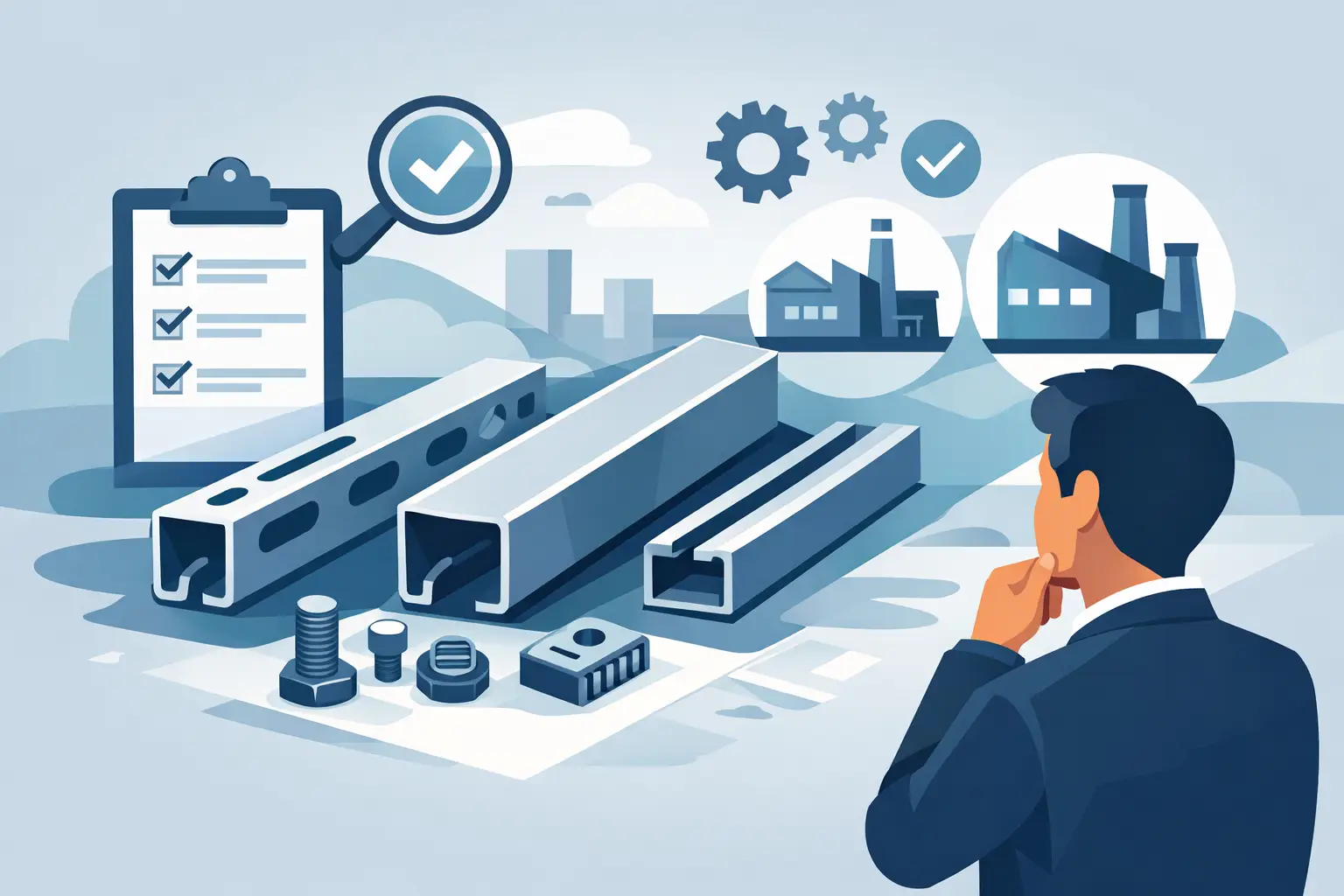
When a channel system is specified around Unistrut-compatible dimensions, small production errors create big installation problems. Hole misalignment, inconsistent wall thickness, poor slot tolerances, or weak surface finishing can slow field work, complicate assembly, and increase total project cost. That is why selecting a unistrut compatible channel manufacturer is not just a sourcing exercise. It is a specification, quality, and delivery decision that affects the entire project chain.
For procurement teams, OEM buyers, contractors, and engineers, the question is rarely whether a supplier can make channel. The real question is whether that supplier can produce consistent, application-ready channel systems that match required profiles, support loads as intended, and arrive on time with the right hardware, finishes, and documentation. In practice, that separates general metal fabrication from dependable industrial manufacturing.
What buyers should expect from a unistrut compatible channel manufacturer
A capable manufacturer should do more than offer standard strut channel sizes. It should understand why compatibility matters at the assembly level. Buyers often need channels that work with established nuts, clamps, brackets, post bases, framing accessories, and support hardware already used across a project or product line. If compatibility is inconsistent, downstream parts sourcing becomes more difficult and installers lose time making adjustments in the field.
A dependable unistrut compatible channel manufacturer should be able to control profile dimensions, slot patterns, straightness, material thickness, and finish quality with repeatable accuracy. That includes standard channel formats as well as custom lengths, punched patterns, welded assemblies, and project-specific fabrication. Many buyers also need mixed supply capability, where the same vendor can provide matching accessories and related support components instead of forcing procurement to manage multiple suppliers.
This is especially relevant in construction, HVAC, electrical support, industrial equipment mounting, and infrastructure applications. In these sectors, channel systems are part of a larger installed assembly. The manufacturer must think in terms of fit, load path, installation speed, and long-term corrosion performance, not only piece-part output.
Compatibility is more than matching the profile
At first glance, compatibility may seem simple. If the channel shape looks right, it should work. In reality, experienced buyers know that true compatibility depends on several manufacturing details.
Dimensional consistency is one of the most critical factors. Channel width, height, return lips, slot spacing, and material thickness all affect how spring nuts, bolts, clamps, and brackets engage. Even small variation can create binding, loose fit, or alignment issues. These problems may not appear in a sample piece but become costly when they show up across a full shipment.
Material selection also matters. Mild steel, stainless steel, aluminum, and pre-galvanized or hot-dip galvanized options each suit different environments and structural demands. A manufacturer should be able to advise on the practical trade-offs. Stainless steel may be the right choice for corrosive or washdown settings, but it comes with a different cost structure than carbon steel. Galvanized steel may meet outdoor requirements more economically, depending on exposure conditions and service life expectations.
Finish quality is another area buyers should examine closely. A poorly controlled finish can reduce corrosion resistance, interfere with fit, or affect appearance in exposed installations. For projects involving coastal, industrial, or high-moisture environments, finish performance should be treated as a functional requirement, not a cosmetic detail.
Manufacturing capability directly affects project reliability
The strongest manufacturers bring process control to every stage of production. That includes coil or sheet selection, roll forming or fabrication, punching, bending, welding where required, deburring, finishing, inspection, packing, and dispatch. If any of those steps are inconsistent, the final channel system becomes less reliable.
For buyers evaluating suppliers, production breadth is often a major advantage. A manufacturer with integrated cutting, punching, bending, welding, forming, assembly, and surface finishing can usually maintain tighter coordination than one relying heavily on outside processing. It also simplifies communication when custom requirements are involved.
This matters when the project goes beyond catalog channel. Many applications require custom hole patterns, welded channel frames, reinforcement details, special brackets, or assembled support kits. A supplier that can handle both standard line items and custom fabricated output reduces sourcing friction. It can also improve lead time control because fewer operations are moved between outside vendors.
Quality systems deserve equal attention. Buyers should expect inspection discipline around dimensions, thickness, hole placement, finish, and fabrication accuracy. Depending on the application, traceability, test records, and material verification may also be necessary. Reliable manufacturers do not treat quality as a final check. They build it into the process.
How to evaluate a channel manufacturer before placing volume orders
A practical evaluation starts with drawings, standards, and real-use expectations. A good supplier conversation should move quickly from general capability to exact requirements. That means profile dimensions, section type, material grade, finish specification, load expectations, accessory compatibility, packaging needs, and shipment schedule.
Sample review is useful, but it should be handled carefully. A clean sample alone does not prove production consistency. Buyers should ask how the manufacturer controls tolerances across batches, what forming and punching equipment is used, how finish quality is verified, and how mixed orders are managed. If a project depends on recurring supply, batch-to-batch consistency matters more than a one-time sample success.
Lead time should also be discussed in realistic terms. Some manufacturers promise aggressive schedules but struggle when order volumes increase or custom details are added. A better partner is transparent about tooling, production planning, finishing time, and export handling. Reliability is usually worth more than an optimistic promise that causes site delays later.
For international buyers, export readiness is not a secondary issue. Packaging integrity, labeling accuracy, container planning, document support, and coordination for overseas shipment all affect landed performance. A supplier that understands export workflows can help avoid damage, documentation problems, and avoidable delays at destination.
Standard product range versus custom manufacturing
This is where it depends on the buyer's operating model. If you are a distributor or contractor sourcing recurring standard sizes, a broad channel catalog with matching accessories may be the top priority. You want dependable dimensions, steady stock planning, and repeatable quality at commercial scale.
If you are an OEM or project buyer, the requirement often shifts. Standard channel may only be the starting point. You may need specific punching layouts, formed parts, welded subassemblies, or hardware packs tailored to an installation method. In that case, the right manufacturing partner is one that can work from drawings, maintain tolerances, and scale custom production without compromising delivery.
There is also a commercial advantage in consolidating both needs with one supplier. When standard and custom items are sourced together, procurement teams spend less time managing multiple vendors, engineering teams deal with fewer fitment variables, and project coordination becomes simpler. That model is often more efficient than buying channel from one source and related brackets, clamps, nuts, and fabricated supports from others.
Why broad metalworking capability matters
A channel manufacturer with wider fabrication capability can support more than one product category. That may not seem essential at the quotation stage, but it becomes valuable as project scope expands. A buyer who starts with strut channel may later need post bases, support brackets, foundation hardware, welded frames, or marine-related structural components built to similar quality standards.
Manufacturers such as Metallix Exports are positioned around that broader requirement. The value is not only in producing unistrut-compatible channel, but in supporting connected hardware and custom fabricated metal products through one disciplined manufacturing platform. For B2B customers managing complex sourcing demands, that kind of capability reduces fragmentation and supports better supply continuity.
Still, buyers should match supplier strength to actual need. A broad-capability manufacturer is especially useful when the job involves recurring orders, custom engineering input, or multiple related product lines. If the need is limited to a small quantity of standard channel only, other factors such as minimum order structure or stocking strategy may matter more.
The manufacturer decision affects more than unit price
Price always matters, but industrial buyers know that the lowest quoted channel cost does not always produce the lowest project cost. Installation delays, part mismatch, coating failure, inconsistent quality, and shipment problems can erase a unit-price advantage very quickly.
The better way to compare suppliers is through total supply performance. That includes manufacturing accuracy, accessory compatibility, custom capability, finish reliability, communication quality, documentation, packing, and on-time delivery. A strong manufacturer helps protect installation schedules and reduces the hidden costs that appear after goods leave the factory.
When you evaluate a unistrut compatible channel manufacturer through that lens, the decision becomes clearer. You are not only buying channel. You are selecting a production partner that must support fit, function, consistency, and delivery across the life of the order. For projects where precision and reliability matter, that is the standard worth holding.


