
 E-mail :
 Call Us :
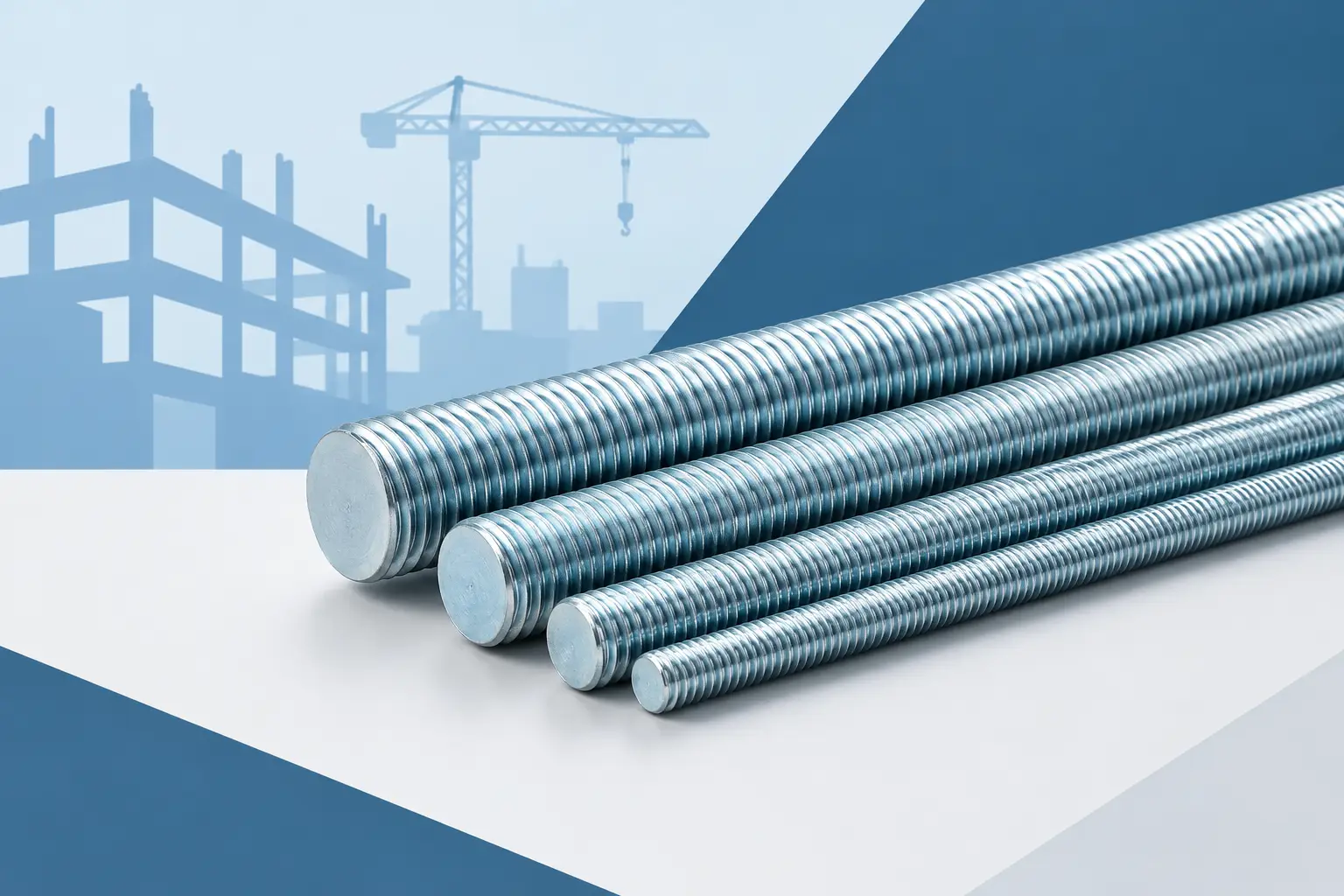
A threaded rod may be a small line item on a bill of materials, but a wrong selection can delay installation, compromise alignment, or create premature corrosion issues. Zinc-plated threaded rods provide an economical, widely compatible fastening solution for suspended supports, bracing, equipment mounting, framing, and general industrial assembly. The right rod is not simply the one with the correct diameter. It must also match the load, environment, thread system, finish requirement, and mating hardware used in the assembly.
Where Zinc-Plated Threaded Rods Add Value
Zinc-plated rod is typically manufactured from carbon steel and coated with zinc to provide a protective barrier against light corrosion. It is commonly specified for indoor, dry, and moderately protected environments where plain steel would be unsuitable but the added cost of stainless steel or hot-dip galvanized hardware is not necessary.
For contractors and OEMs, this balance matters. Zinc plating supports a clean, uniform appearance while helping protect threaded hardware during storage, transportation, and installation. It also works well with common zinc-plated nuts, washers, strut fittings, clamps, and brackets, allowing buyers to source coordinated hardware for a complete support or assembly system.
Typical uses include HVAC hanger systems, electrical tray supports, pipe supports, light structural bracing, machinery anchoring, retail fixtures, fabricated frames, and maintenance applications. In each case, the rod must perform reliably under tension while remaining easy to cut, couple, adjust, and secure in the field.
Choose the Grade Before You Choose the Finish
A zinc coating does not define the mechanical capability of a threaded rod. Base material grade, diameter, thread form, and manufacturing quality determine how the rod handles tensile loading. Buyers should start with the required strength and connection design, then select a finish appropriate to the exposure conditions.
Low-carbon steel threaded rod is often suitable for general-purpose hanging and fastening applications. Higher-strength rod may be required where the assembly carries greater loads, experiences vibration, or forms part of an engineered structural connection. Specifications should clearly identify the applicable grade or standard rather than relying on a general description such as “steel threaded rod.”
Strength must also be evaluated as part of the complete assembly. The rod, nut, washer, channel fitting, anchor, and supporting structure each have their own capacity limits. A high-strength rod cannot compensate for undersized anchors or improperly selected support brackets. For safety-critical or code-governed work, the design professional should confirm allowable loads, safety factors, and applicable local requirements.
Diameter and Thread Pitch Affect Installation
Diameter selection influences tensile capacity, stiffness, available nut engagement, and compatibility with existing hardware. Common diameters may simplify procurement, but a standard size is not automatically correct for the application. Longer unsupported lengths can be more vulnerable to deflection or buckling, particularly in compression or lateral-loading situations.
Thread pitch and thread system also require attention. Unified coarse threads are widely used in North American industrial and construction work because they assemble quickly and tolerate normal site conditions well. Fine threads can offer different engagement characteristics but must match the specified nuts and couplers precisely. Mixing metric and inch-based components is a preventable source of installation errors, damaged threads, and lost labor time.
Understand What Zinc Plating Can and Cannot Do
Zinc plating is a practical corrosion-control option, not a universal corrosion solution. The finish is well suited to interior applications and protected industrial settings. However, moisture, chemical exposure, coastal air, salt spray, and repeated wet-dry cycles can reduce its service life substantially.
Electro-zinc plating is a common finish for threaded rod and offers a bright, consistent surface. Some plated products receive a supplementary passivation treatment that improves corrosion resistance and changes the surface appearance. Buyers should confirm the requested coating type and any minimum coating requirements when corrosion performance is important.
For exterior structures, marine hardware, aggressive industrial atmospheres, or long-term exposed installations, hot-dip galvanized or stainless steel threaded rod may be the better choice. Hot-dip galvanizing generally provides a heavier zinc layer, but its coating thickness can affect thread fit. Stainless steel offers strong corrosion resistance in many environments, though grade selection still matters, especially near chlorides or chemical exposure.
The practical decision depends on the application. Zinc-plated rod can be an efficient, cost-conscious choice for indoor supports. It should not be specified by default for exposed rooftop equipment, outdoor infrastructure, or coastal installations without evaluating the expected environment.
Thread Fit and Nut Engagement Matter
A threaded rod assembly is only as dependable as the engagement between its components. Nuts should run freely on the rod without excessive looseness, galling, or cross-threading. Poorly formed threads may create field installation problems even when the rod appears acceptable on visual inspection.
Adequate nut engagement is essential for transferring load safely. The required engagement length depends on the material, thread size, load direction, grade, and applicable design criteria. Coupling nuts used to extend rods deserve the same attention. A coupler must match the rod thread system and provide sufficient engagement on both ends, especially where extensions are used in suspended support systems.
Cut ends also need consideration. Field-cut rod may leave burrs that make nut installation difficult. A clean cut, deburred end, and correct thread restoration process reduce wasted hardware and installation delays. Where rods are supplied cut to length, consistent dimensional control can reduce jobsite processing and improve assembly speed.
Specify Zinc-Plated Threaded Rods Clearly
A purchase description should give a supplier enough information to manufacture, inspect, and deliver the correct product without assumptions. Vague requests can lead to inconsistent coating, incompatible threads, or material that does not meet project requirements.
For recurring purchases or project-specific orders, define the following requirements:
- Diameter, length, and permitted dimensional tolerances
- Thread system, pitch, and whether the rod is fully threaded
- Base material grade, strength requirement, or governing standard
- Zinc coating type, supplementary treatment, and corrosion expectations
- Required nuts, washers, couplers, or other matching hardware
- Packaging, labeling, inspection documentation, and shipment quantities
This level of detail is particularly valuable for export projects and multi-site programs, where receiving teams may not have direct access to the original engineering documents. Clear labeling by size, finish, lot, and quantity helps maintain traceability from receiving through installation.
Consider Fabrication and System Compatibility
Threaded rod is often purchased alongside channel systems, brackets, clamps, base plates, welded frames, and custom support hardware. Buying each item from separate sources can create fit-up issues and fragmented quality control. A better approach is to confirm compatibility across the complete assembly before production begins.
For example, a suspended mechanical support may require threaded rod, spring nuts, channel, beam clamps, angle brackets, and fabricated mounting plates. The rod diameter has to work with the channel fitting, while the coating choice should be appropriate for the full system environment. If custom brackets are added, hole sizes, slot geometry, weld locations, and finish coverage must be coordinated with the rod and nut arrangement.
Metallix Exports supports buyers who need both standard hardware and custom-fabricated metal components aligned to project drawings and installation requirements. This can help reduce sourcing complexity when a project requires a combination of threaded hardware, structural supports, and precision-fabricated parts.
Inspection Points That Protect Project Quality
Incoming inspection does not need to be complicated, but it should focus on conditions that affect installation and performance. Verify rod diameter and length, confirm thread compatibility with representative nuts, and inspect the finish for bare areas, flaking, excessive buildup, or handling damage. Packaging should protect threads and plating during shipment and storage.
For larger orders, buyers may also request material certificates, coating records, first-article approval, dimensional reports, or lot-based traceability. The right documentation depends on the project. General maintenance hardware may need only basic verification, while OEM assemblies, infrastructure work, and engineered support systems often require more formal quality controls.
Storage affects finish life as well. Keep zinc-plated rods dry, protected from standing water, and separated from materials that may trap moisture. Hardware left exposed at a jobsite for extended periods can begin to corrode before it is installed, reducing the benefit of the original finish.
A well-specified threaded rod order saves more than material cost. It gives installers compatible components, gives procurement teams predictable supply, and gives project stakeholders confidence that the fastening system will perform as intended. Start with the load and environment, document the thread and finish requirements, and work with a manufacturing partner that can maintain those details from production through delivery.