
 E-mail :
 Call Us :
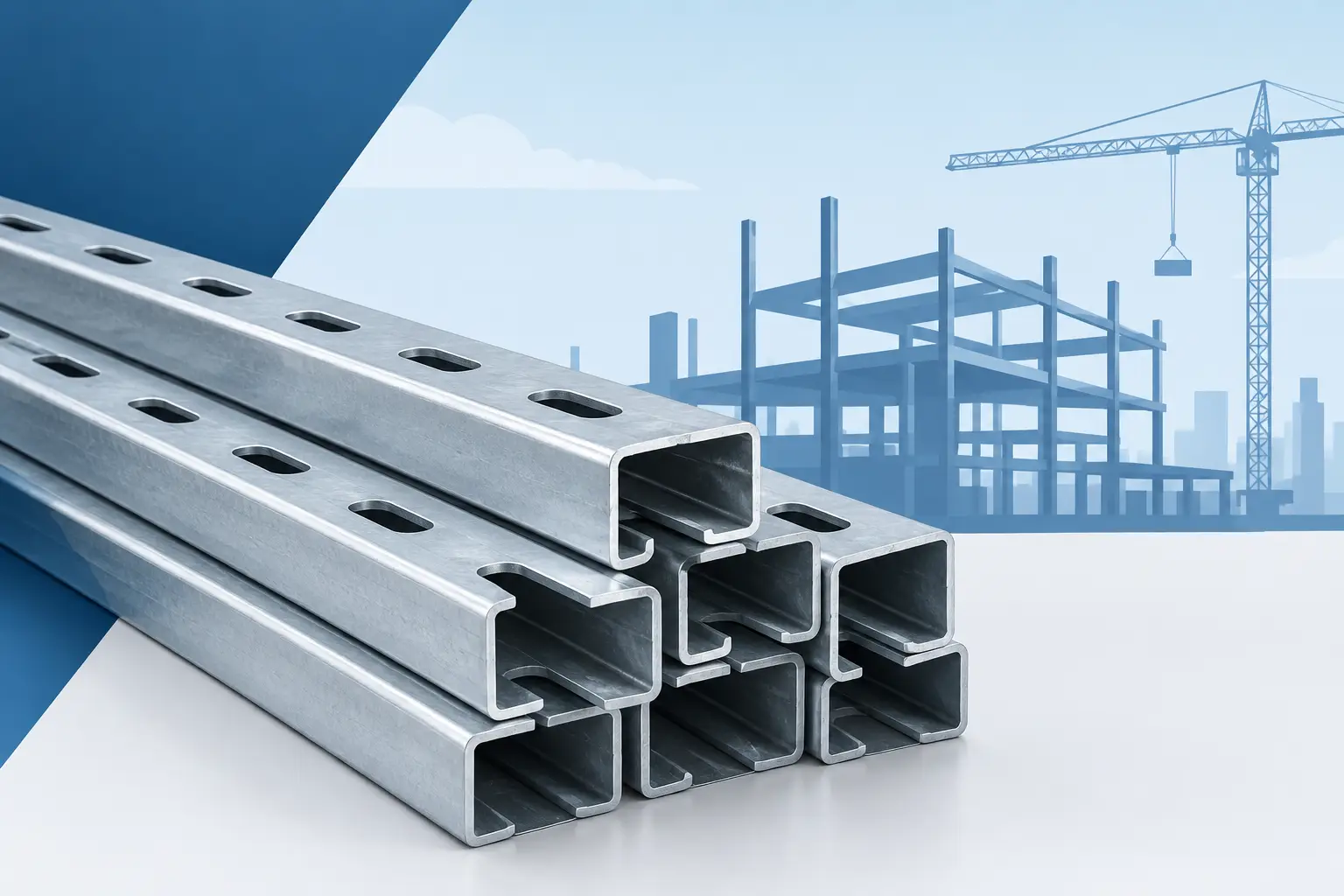
A strut system is only as dependable as the channel at its center. For contractors, OEMs, distributors, and infrastructure buyers, sourcing wholesale strut channels is not simply a matter of finding the lowest unit price. Channel profile accuracy, steel thickness, finish quality, accessory compatibility, and delivery discipline all affect installation speed and long-term system performance.
A well-planned wholesale purchase creates consistency across electrical supports, HVAC installations, pipe racks, equipment framing, solar structures, and industrial maintenance work. It also reduces the disruption caused by mixed channel profiles, incomplete hardware, and last-minute fabrication changes. The right manufacturing partner helps buyers secure standard channels at scale while retaining the ability to specify project-specific lengths, materials, slots, and finishes when the application requires more than an off-the-shelf solution.
What Buyers Should Expect From Wholesale Strut Channels
Strut channels are cold-formed metal framing sections designed to work with spring nuts, channel nuts, brackets, clamps, bolts, and other support hardware. Their value lies in adjustability. Installers can build and modify support assemblies without extensive field welding or drilling, which saves labor and preserves flexibility when equipment layouts change.
For wholesale buyers, the essential requirement is repeatability. A channel must accept compatible hardware consistently from one production lot to the next. Small variations in internal dimensions, slot placement, return lips, or material thickness can slow assembly and create fit-up issues across a large installation.
Standard solid and slotted profiles serve different purposes. Solid channel may be preferred where a continuous section is needed or where the support design does not require frequent attachment points. Slotted channel provides more adjustment during installation and is widely used for suspended services, framing assemblies, and support racks. The best choice depends on the load design, mounting arrangement, required adjustability, and environmental exposure.
Specify the Channel Before Comparing Prices
Unit cost has value, but it is not a complete comparison unless the underlying specification is the same. A quote for a lighter-gauge channel, a shorter length, or a basic finish may appear favorable while creating higher installation or replacement costs later.
Start with the profile dimensions and section type required by the application. Buyers should confirm the width, depth, lip geometry, wall thickness, slot pattern, and stock length. If the channel must work with an existing unistrut-compatible support system, dimensional compatibility should be verified before production begins. Compatibility should be evaluated across the channel and the related nuts, clamps, brackets, fittings, and fastening hardware rather than assumed from a product description.
Material selection follows the operating environment. Mild steel is a practical choice for many indoor industrial and construction applications. Pre-galvanized or hot-dip galvanized steel provides added corrosion resistance for damp, outdoor, and exposed settings. Stainless steel is often selected for corrosive environments, food-related facilities, marine conditions, or applications with strict cleanliness requirements. Aluminum can reduce weight and offers useful corrosion resistance, although its strength characteristics, fastening approach, and galvanic interaction with adjacent metals must be considered.
Finish selection deserves the same attention as base material. A zinc coating may be suitable for dry indoor service, while hot-dip galvanizing is generally better suited to harsher exterior exposure. Powder coating can provide a specified appearance and additional surface protection, but coating thickness and coverage around cut edges, slots, and bends should be discussed for demanding environments. No finish choice should be made independently of the expected moisture, chemicals, salt exposure, temperature range, and maintenance conditions.
Channel Lengths, Slots, and Secondary Processing
Standard lengths can simplify purchasing and inventory management, particularly for distributors and recurring projects. Custom cut lengths can reduce field cutting, scrap, handling time, and installation delays. The right approach depends on volume and jobsite conditions. Standard lengths may be more economical for flexible stock programs, while cut-to-length supply becomes attractive when repetitive assemblies require precise dimensions.
Additional processing can also be worthwhile. Buyers may require punched holes, nonstandard slot patterns, end trimming, welded end caps, brackets, formed connections, labels, or complete hardware kits. These details are often treated as secondary requirements, yet they can determine whether a support system arrives ready for installation or requires labor-intensive modification in the field.
Load Capacity Is a System Question
A strut channel should never be selected on appearance alone. Load capacity depends on the channel profile, gauge, span, support spacing, loading direction, connection design, bracing, and the strength of the structure receiving the load. A heavy channel can still perform poorly if it is installed with unsuitable fittings or fastened to an inadequate substrate.
Procurement teams should request the engineering information needed for the intended use and make sure project engineers review the complete support arrangement. This is especially relevant for seismic applications, overhead installations, vibration-prone equipment, concentrated loads, long spans, and outdoor structures subject to wind or ice. Channel selection must account for the installed system, not only the weight of the pipe, cable tray, duct, or equipment being supported.
Where a project requires custom fabrication, clear drawings help eliminate ambiguity. Useful documentation includes overall dimensions, material grade, thickness, tolerances, hole or slot locations, weld requirements, finish specification, packaging needs, and inspection expectations. A capable manufacturer can convert these details into repeatable production methods across cutting, punching, bending, welding, forming, assembly, and finishing.
Quality Controls That Matter in Bulk Supply
Wholesale quantities make inconsistency expensive. One incorrect lot can affect hundreds of assemblies, delay a construction schedule, or create costly sorting work at a distribution center. Buyers should look beyond a general quality statement and assess how the supplier controls the points that affect fit and function.
Key checks typically include material traceability where required, profile dimensions, wall thickness, slot geometry, straightness, burr control, weld quality on fabricated items, coating coverage, and packaging condition. For channels intended to accept nuts and accessories, periodic functional fit checks are practical because they identify issues that dimensional inspection alone may not reveal.
Packaging is also part of quality. Long channels can be damaged by poor bundling, inadequate edge protection, or insufficient support during transport. Export shipments require packaging that accounts for container handling, transit duration, moisture exposure, and unloading practices at the destination. Clearly identified bundles, accurate packing lists, and lot-level organization make receiving faster for procurement and warehouse teams.
Building a Better Wholesale Strut Channel Program
The most effective procurement programs balance standardization with controlled flexibility. Standardizing common channel sizes, finishes, and accessory families improves inventory turnover and reduces purchasing complexity. At the same time, a supplier should be able to support custom lengths and fabricated components when a project calls for a nonstandard solution.
For recurring demand, buyers can establish an approved specification package covering profile drawings, materials, finishes, tolerances, packing method, labeling, and inspection requirements. This gives purchasing teams a stable basis for reorders and helps manufacturing teams maintain consistency across future production runs. Forecast sharing can further improve material planning and delivery reliability, particularly when galvanized, stainless, or custom-finished products are involved.
Consolidating channels, brackets, clamps, nuts, post bases, and fabricated support hardware with one qualified source can also reduce vendor management effort. It is not always the right choice - specialized items may require separate sourcing - but a broader manufacturing partner can simplify coordination when multiple metal components must fit together and arrive on the same project timeline.
Metallix Exports supports this approach through standard strut support products and custom sheet metal fabrication for buyers that need precise, export-ready component supply. The practical goal is straightforward: deliver channels and related hardware that match the drawing, fit the system, and arrive in a condition ready for productive installation.
Questions to Settle Before Issuing a Purchase Order
Before releasing a wholesale order, confirm whether the quoted channel is solid or slotted, the exact profile and thickness, the material and finish, required lengths, compatible accessory requirements, and packaging expectations. Also confirm the production lead time, inspection process, shipment terms, and documentation needed for receiving or project records.
For custom items, approve drawings and samples when appropriate before full production. This step is particularly useful when parts include unusual slot locations, welded attachments, special coating requirements, or tight installation tolerances. It takes less time to correct a drawing before production than to correct a large shipment after it reaches the jobsite.
A dependable wholesale strut channel source should make purchasing easier, not shift technical risk downstream. When specifications are clear and manufacturing controls are aligned with the application, buyers can build a supply program that supports reliable installations, cleaner inventory management, and on-time project execution.


