
 E-mail :
 Call Us :
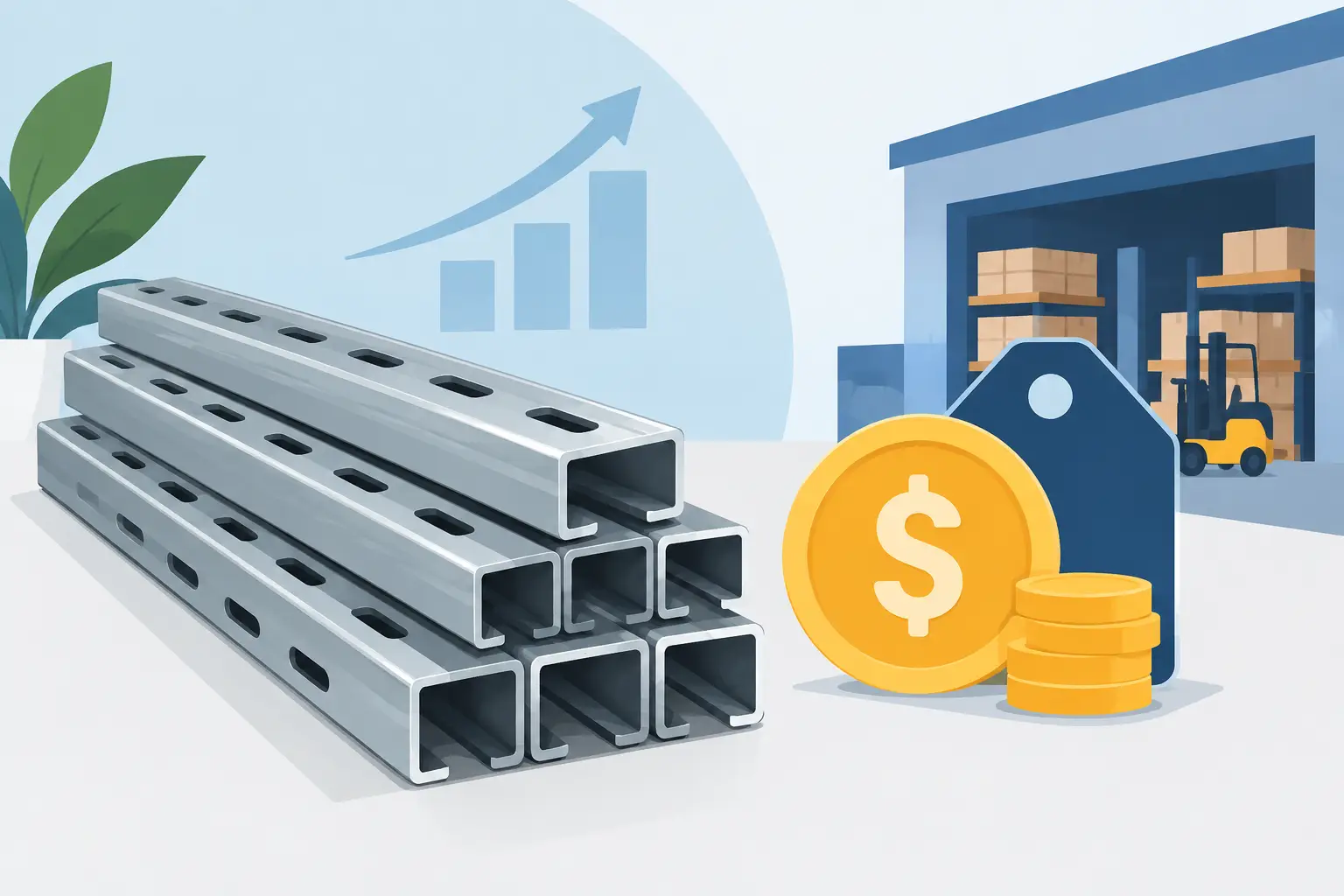
Wholesale pricing for strut channels is rarely a single number that can be compared line by line. A channel that appears less expensive at purchase may create higher installation costs, compatibility issues, corrosion failures, or schedule delays later in the project. For procurement teams, contractors, distributors, and OEM buyers, the correct comparison starts with a defined system specification and ends with the delivered cost of reliable, usable material.
Strut channel supports electrical, HVAC, piping, cable-management, machinery, solar, and general framing applications. Because it is often part of a larger support assembly, the channel profile, slot pattern, material grade, finish, fittings, and hardware must work together. Strong wholesale buying decisions account for that full requirement rather than focusing only on the per-length price.
What Determines Wholesale Pricing for Strut Channels
Material is one of the most direct pricing factors. Mild steel channel is generally the practical choice for dry indoor applications where corrosion exposure is limited. Pre-galvanized steel can suit many commercial installations, while hot-dip galvanized channel provides stronger protection for outdoor, humid, and corrosive environments. Stainless steel is typically selected for food processing, marine, chemical, and washdown applications, where its higher initial cost can be justified by service life and maintenance requirements.
Channel dimensions matter just as much. Common variables include profile width, depth, wall thickness, channel length, and whether the profile is solid or slotted. Heavier-gauge channels use more raw material and may require greater forming control, but they can deliver the load capacity and rigidity required for demanding support runs. A lighter channel may be economical where loads and spans are modest. Specifying excess capacity across every run, however, can raise material cost without improving project performance.
The finish also affects the quote. Zinc coatings, hot-dip galvanizing, powder coating, and specialized protective systems each have different cost, lead-time, and performance characteristics. The right finish depends on the actual exposure condition, not simply a preference for the most protective option. For example, a coated indoor installation and a coastal outdoor installation should not be priced or specified the same way.
Compare Systems, Not Just Channel Lengths
A strut channel purchase is usually only one part of a support system. Nuts, spring nuts, bolts, clamps, brackets, post bases, cantilever arms, beam clamps, and threaded rod all influence installed cost and compatibility. A channel sourced at a lower unit price can lose its advantage if fittings must be purchased separately from another vendor, require modification, or do not engage consistently with the channel lips.
For buyers using unistrut-compatible systems, dimensional consistency is essential. Compatibility should be verified across the channel profile, slot configuration, nut engagement, accessory fit, and load expectations. Small variations in internal width or lip geometry can affect how hardware seats and how efficiently crews install assemblies in the field.
This is where a bundled sourcing approach can create commercial value. When a supplier can provide channels and related structural hardware from the same production base, buyers can reduce vendor coordination, simplify incoming inspection, and maintain a more consistent finish and fit across the assembly. The lowest channel price is not necessarily the lowest system cost.
Volume, Length, and Packaging Change the Economics
Wholesale pricing improves when production can be planned around repeatable specifications and efficient quantities. Larger order volumes help distribute setup, tooling, handling, and packing costs across more units. Repeat orders of the same profile and finish can be especially efficient because the production process is already defined and quality requirements are understood.
Standard lengths often provide the best balance of availability and price. Custom lengths may reduce cutting waste and field labor, particularly for OEM kits, modular equipment, or repetitive construction assemblies. The trade-off is that custom production may require minimum order quantities and longer planning windows. Buyers should compare the added fabrication cost against savings in installation time, scrap reduction, and jobsite handling.
Packaging deserves attention, particularly for export shipments and long channel lengths. Improper bundling can lead to bent ends, damaged finishes, or difficult unloading. For international procurement, packaging design, bundle weights, container utilization, and documentation can materially affect the delivered cost. A quote should make clear whether it covers bare material only or includes packaging suitable for the chosen transport method.
Specifications That Should Appear in Every RFQ
A clear request for quotation helps suppliers provide accurate wholesale pricing and prevents costly assumptions. It should identify the channel profile and required compatibility standard, material type and thickness, length, solid or slotted configuration, finish, required quantity, and destination. If the channels are part of a load-bearing support design, provide the applicable load criteria, span conditions, and safety requirements.
For a complete and comparable quote, procurement teams should also request the following information:
- Unit price and pricing basis, such as per piece, per foot, or per bundle
- Minimum order quantity and any volume price breaks
- Manufacturing lead time, production capacity, and shipment readiness date
- Packaging method, bundle quantity, weight, and shipping dimensions
- Inspection requirements, dimensional tolerances, material records, and finish documentation
These details make it easier to compare suppliers on a like-for-like basis. They also help engineering, purchasing, and logistics teams identify differences before a purchase order is issued rather than after material reaches the site.
When Custom Strut Channel Is the Better Buy
Standard channel is the logical choice when it meets the application, is readily available, and supports the required accessories. Custom fabrication becomes valuable when standard profiles create extra field work or cannot meet a specific installation requirement. Examples include nonstandard slot spacing, special lengths, heavier material, project-specific coatings, welded assemblies, pre-punched mounting patterns, and integrated brackets.
Custom work should be evaluated on total project efficiency. A pre-cut and pre-punched channel may have a higher purchase price than a stock length, but it can reduce labor, eliminate secondary operations, improve repeatability, and shorten installation time. This is particularly relevant for OEMs producing repeated equipment frames or contractors working on high-volume, schedule-sensitive installations.
Manufacturing capability matters here. A supplier that can cut, punch, bend, weld, assemble, and finish components under one quality process is better positioned to control tolerances across the completed assembly. Metallix Exports supports both standard strut support components and custom fabricated hardware, allowing buyers to source to drawing, application, and delivery requirements rather than forcing a project into a limited catalog choice.
Avoid False Savings in Channel Procurement
The most common purchasing mistake is comparing quotes without confirming material thickness and coating type. A lower-price offer may reflect a lighter gauge, a different steel grade, a shorter length, less protective finish, or hardware that is not truly compatible. Those differences may be acceptable if they match the application, but they must be visible in the comparison.
Another risk is relying on nominal dimensions alone. Actual tolerances, slot edge quality, straightness, burr control, and finish coverage can influence installation speed and long-term performance. For repeat programs, requesting samples or conducting first-article approval can be more valuable than negotiating a small reduction in unit price.
Lead time is also part of pricing. A supplier with a competitive unit cost but uncertain production availability may expose the project to expediting charges, idle labor, or missed milestones. Reliable delivery commitments, clear production communication, and export-ready packaging have measurable value when channels are needed for a scheduled installation or manufacturing build.
Build a Purchase Strategy Around Total Delivered Value
The best approach to wholesale buying begins with a stable specification, forecasted demand, and a realistic view of logistics. Consolidate repeat channel sizes where possible, but do not standardize so aggressively that the system becomes overbuilt. Use standard profiles for routine work, reserve custom fabrication for requirements that eliminate meaningful labor or performance issues, and evaluate accessories as part of the same sourcing package.
For long-term programs, a supplier relationship can be more valuable than a one-time price concession. Consistent drawings, approved samples, documented finishes, predictable packaging, and scheduled releases help reduce friction across every future order. That is the foundation for purchasing strut channels with confidence: specify precisely, compare completely, and choose a manufacturing partner that can keep the system moving when the project schedule is on the line.


