
 E-mail :
 Call Us :
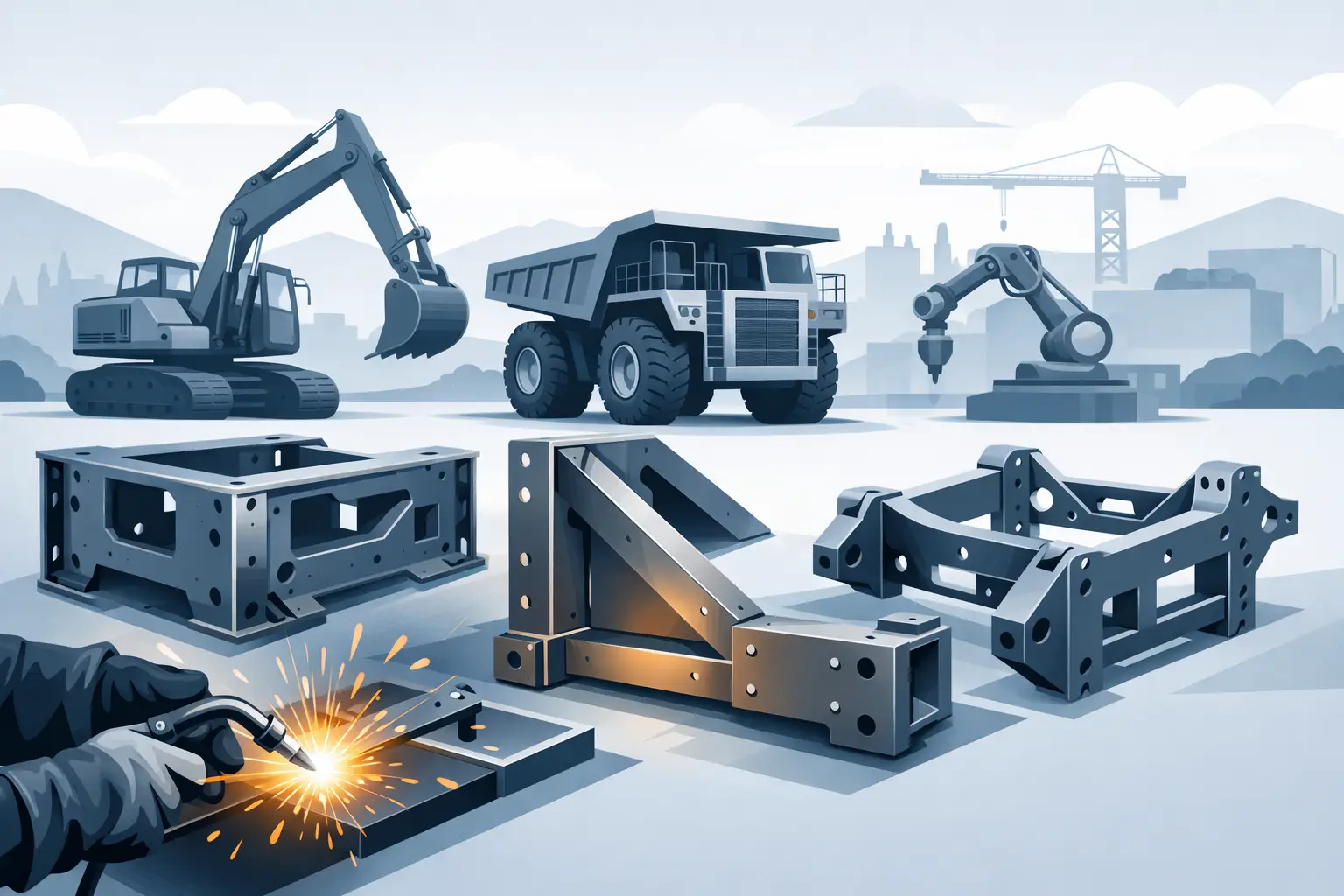
A frame that arrives square but shifts after welding can stop an installation, misalign mounted equipment, and create costly rework. Welded frame assemblies are often treated as straightforward fabrications, yet their performance depends on disciplined control of material, joint design, fixturing, welding sequence, dimensional inspection, and finish selection.
For OEMs, contractors, distributors, and industrial procurement teams, the right supplier is not simply one that can weld steel. It is one that can produce repeatable assemblies that fit adjacent components, carry their intended loads, withstand their service environment, and arrive ready for production or installation.
What Defines a Production-Ready Welded Frame Assembly
A welded frame assembly combines cut, formed, machined, or fabricated metal parts into a load-bearing or support structure. It may be a simple rectangular base, an equipment skid, a machinery enclosure frame, a channel support structure, a bracketed mounting frame, a dock component, or a custom structural subassembly.
The distinction between a welded frame and a production-ready assembly is consistency. A one-off frame may be acceptable if its dimensions can be adjusted during installation. A repeat-order component for an OEM or construction system has different requirements. Hole positions must align, mounting surfaces must remain flat, welds must provide the specified strength, and the assembly must fit packaging, shipping, and downstream operations.
This is where engineering details become commercial details. An assembly with inconsistent diagonals may delay a customer’s line. Incorrect fastener access can complicate field installation. A finish that is not matched to exposure conditions can shorten service life and increase warranty risk.
Material Selection Starts With the Application
Material selection should reflect the frame’s load, environment, fabrication requirements, finish, and cost target. Mild steel remains a practical choice for many industrial and construction frames because it is widely available, economical, and well suited to forming and welding. It is commonly finished with powder coating, paint, galvanizing, or other protective systems when corrosion resistance is needed.
Stainless steel is appropriate where moisture, chemicals, washdown conditions, or visible architectural surfaces require greater corrosion resistance. The grade matters. A stainless frame intended for indoor processing equipment does not necessarily need the same alloy as a marine or coastal installation. Selecting a higher-cost material without matching it to the exposure condition can add expense without improving performance.
Aluminum reduces weight and provides good corrosion resistance, making it useful for transportation, marine, electrical, and equipment applications. However, aluminum welding requires suitable procedures, filler selection, handling, and fixturing. Its response to heat differs from steel, so design assumptions should not be carried over unchanged.
Galvanized sheet and structural sections can support corrosion-conscious applications, but welding zones and finish repair requirements should be addressed before production. Copper and specialty metals may also be suitable where conductivity, appearance, or a specific operating condition is central to the design.
Design for Welding, Not Just for Shape
A frame drawing should communicate more than overall length, width, and height. It should identify critical datums, tolerances, material thickness, weld locations, joint types, hole requirements, and finish expectations. When only general dimensions are provided, the manufacturer is left to make assumptions that may not support the final installation.
Joint design influences both strength and manufacturing efficiency. Fillet welds are common for joining angles, channels, plates, and formed sections. Butt joints, lap joints, and gusseted connections may be selected based on load direction, access, aesthetics, and required penetration. Larger welds are not automatically better. Oversized welds can add heat, distortion, production time, and cost while providing no practical benefit beyond the design load.
Critical interfaces deserve special attention. If a frame supports a motor, panel, pump, rail, machine guard, or structural bracket, define the surfaces and hole patterns that govern fit. Dimensioning all features from a clear datum system reduces tolerance stack-up and makes inspection more meaningful.
Tolerances Must Reflect Function
Tight tolerances should be reserved for features that truly need them, such as mounting holes, bearing surfaces, machined interfaces, and frame squareness where modules must interchange. Applying very tight tolerances to every noncritical edge can increase cost and lead time without improving the assembly’s field performance.
At the same time, general fabrication tolerances may not be sufficient for frames with long members, thin material, or multiple welded intersections. Heat input can pull a structure out of square or create local bowing. The practical question is not whether distortion can occur, but how much distortion the application can accept and how it will be controlled.
Fixturing and Weld Sequence Protect Accuracy
Welding introduces localized heat. As the weld cools, the metal contracts, which can change flatness, squareness, and hole alignment. Production control begins before the first weld is made.
Purpose-built fixtures hold parts in a known position and support repeatability from one assembly to the next. For recurring production, dedicated jigs can reduce setup variation, improve throughput, and make inspection more predictable. For low-volume custom work, flexible fixtures and careful setup may be more economical, provided the critical dimensions are controlled.
Weld sequence is equally important. Alternating weld locations, balancing heat across the frame, and using appropriate tack welds can reduce distortion. The best approach depends on material thickness, joint arrangement, frame geometry, and tolerance requirements. A heavy equipment base and a light-gauge formed sheet-metal frame should not be welded using the same assumptions.
Some assemblies also require secondary operations after welding. These can include grinding, straightening, machining, tapping, adding inserts, installing hardware, or preparing surfaces for coating. Planning these operations early prevents avoidable access problems and keeps the finished part aligned with the drawing.
Weld Quality Should Be Verified at the Right Level
Quality control for welded frames should match the application’s risk and specification. Visual inspection confirms fundamentals such as weld continuity, position, profile, cleanliness, and the absence of obvious defects. Dimensional inspection verifies overall size, diagonal measurements, flatness, critical hole locations, and mounting interfaces.
For higher-duty or regulated applications, additional controls may be required. These can include documented welding procedures, qualified welders, weld size verification, material traceability, or nondestructive testing. The appropriate level depends on the product’s use, governing code, customer requirements, and consequences of failure.
A practical inspection plan focuses attention where a defect would affect assembly, safety, or service life. Inspecting every cosmetic surface to the same level as a critical mounting face is inefficient. Ignoring a critical interface because the overall frame looks acceptable is equally costly.
Finishing Is Part of the Assembly Specification
Surface finishing protects the investment made in fabrication. It also affects appearance, handling, electrical performance, and compatibility with adjacent components. Powder coating is widely used for indoor and moderate outdoor industrial applications where a consistent appearance and durable surface are desired. Paint systems can be selected for specific colors, touch-up needs, or project conditions.
Hot-dip galvanizing offers long-term protection for many exposed steel structures, particularly in construction and outdoor service. It adds coating thickness, however, and may affect threaded areas, close-fitting interfaces, or parts with narrow clearances. The frame must be designed with the process in mind.
Stainless steel may be left with a specified mill, brushed, or polished finish, but weld discoloration and surface contamination must be managed where corrosion performance or appearance matters. Aluminum can be powder coated, anodized, or finished according to the intended environment and visual requirement.
Finish selection should also consider shipment and installation. Large welded frames can be scratched by poor stacking, inadequate separators, or unsuitable packaging. Export-ready packing is not an afterthought when components must travel long distances and arrive fit for use.
Choosing a Supplier for Custom Frame Production
A capable manufacturing partner should be able to review drawings before production, identify manufacturability concerns, and align cutting, bending, welding, assembly, and finishing under one quality process. This reduces handoffs between vendors and gives buyers a clearer path from prototype through repeat production.
Capacity also matters, but it should be evaluated alongside process discipline. A supplier may have substantial welding capability yet lack the fixtures, inspection methods, or finishing coordination needed for consistent assemblies. Ask how critical dimensions are controlled after welding, how revisions are managed, what records can be supplied, and how packaging is planned for the shipment method.
Metallix Exports supports custom welded fabrications with integrated sheet metal processing, structural hardware capability, assembly, and export-focused fulfillment. That combination helps buyers consolidate related components while maintaining control over specifications and delivery requirements.
A Better Starting Point for Your Next Frame
Before requesting a quotation, identify the frame’s service environment, load path, critical mounting points, tolerance-sensitive features, finish, annual volume, and delivery destination. A complete requirement package gives the manufacturer the information needed to recommend the right material, process route, inspection level, and packaging approach.
The most dependable welded frame assemblies are not defined by welds alone. They are built around the interfaces that must work after the frame leaves the factory. When those interfaces are clear from the start, production can move faster, quality is easier to verify, and the finished assembly is more likely to perform exactly as intended.


