
 E-mail :
 Call Us :
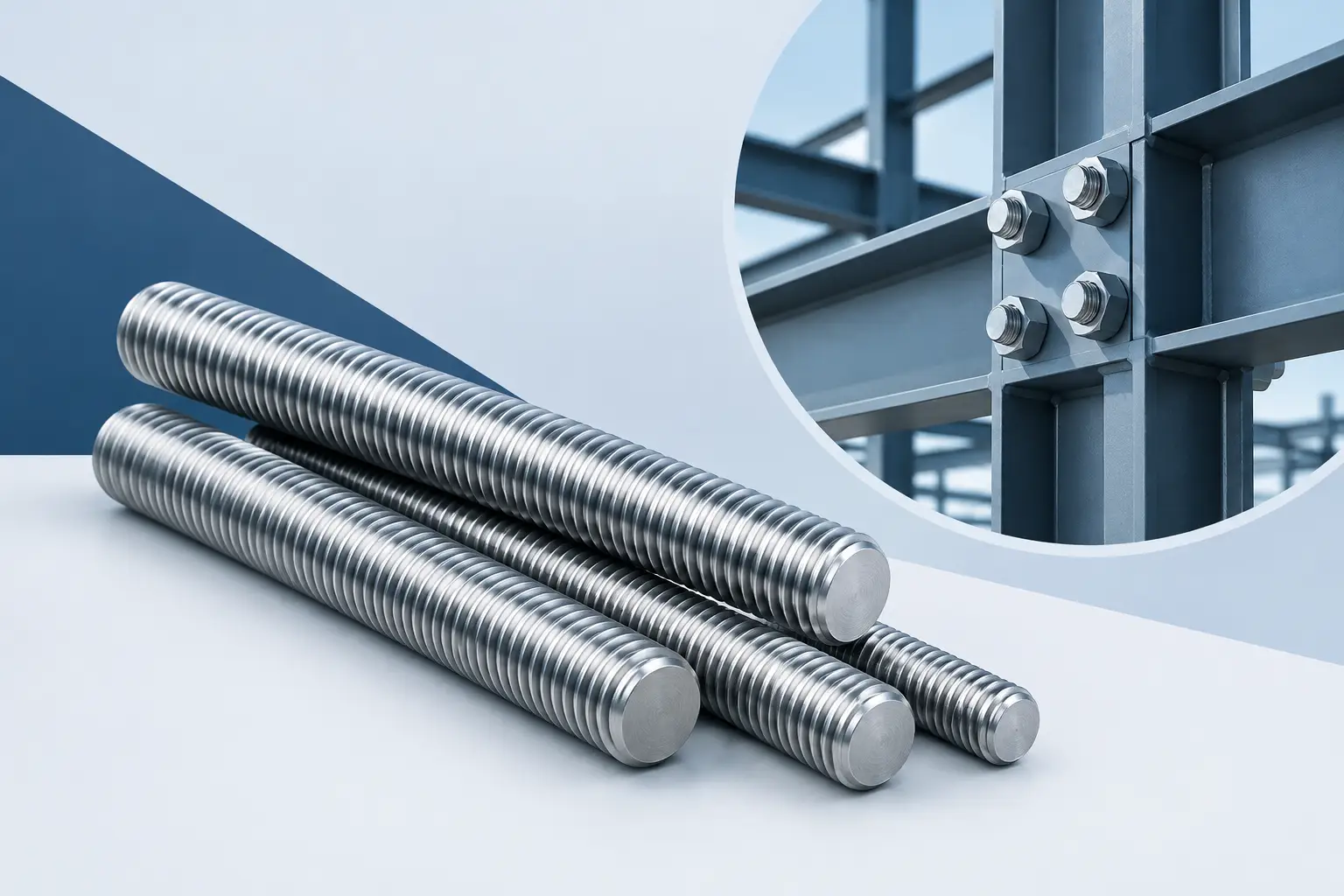
A threaded connection can be the smallest component in an assembly and still determine whether the installation proceeds on schedule. UNC thread rods are widely specified for structural supports, machinery mounting, pipe and cable systems, fabricated frames, and general construction fastening because their coarse thread form is practical, familiar, and well suited to many industrial applications. The right rod, however, is not selected by diameter alone. Material grade, thread fit, finish, length, nut compatibility, and loading conditions all affect field performance.
For OEM buyers, contractors, and procurement teams, a clear specification prevents common problems: mismatched nuts, damaged threads after coating, insufficient engagement, corrosion before installation, and late substitutions that do not meet the drawing requirement. A dependable supply partner should be able to manufacture or source to the required dimensions while maintaining consistent inspection and export-ready packaging.
What Defines UNC Thread Rods?
UNC stands for Unified National Coarse. It is a U.S. inch-series thread standard with a 60-degree thread angle and a coarser pitch than Unified National Fine, or UNF, threads of the same nominal diameter. A common designation is 1/2-13 UNC, meaning a 1/2-inch nominal diameter with 13 threads per inch.
The coarse pitch gives UNC threads a number of practical advantages. They assemble quickly, are more tolerant of normal handling damage than fine threads, and provide useful engagement in standard steel components. UNC is therefore common in construction hardware, strut and framing systems, equipment supports, fabricated steel assemblies, and maintenance applications.
That does not mean UNC is automatically the best choice in every case. Fine threads can provide higher tensile stress area at the same diameter and may be preferred where adjustment precision, thin-wall engagement, or specific engineering standards require them. The application, not habit, should determine the thread series.
UNC Versus Threaded Bar
The terms threaded rod, all-thread rod, and threaded bar are often used interchangeably. In most industrial buying contexts, they refer to a bar threaded along its usable length. The key distinction is in the specification. A rod described simply as “threaded” leaves open critical details, while a complete UNC callout identifies the thread system and pitch.
A purchase description should normally state the nominal diameter, threads per inch, thread series, material or grade, finish, overall length, and any special end condition. For example, a requirement may call for 3/8-16 UNC threaded rod, low-carbon steel, zinc plated, cut to 36 inches. Where performance is critical, add the governing standard, thread class, tensile requirement, and inspection documentation.
Selecting the Right UNC Thread Rod Specification
The most efficient buying process begins with the assembly drawing and load path. Before selecting a rod, confirm whether it is functioning as a hanger, tie rod, anchor extension, leveling element, clamp fastener, or adjustable connection. Each role creates different demands for tensile load, vibration resistance, corrosion protection, and dimensional control.
Diameter and thread pitch
Diameter is the starting point for strength and compatibility, but it must align with the mating nuts, couplers, washers, brackets, and tapped holes used in the assembly. Standard UNC sizes range from small hardware dimensions through larger structural diameters. Common examples include 1/4-20, 3/8-16, 1/2-13, 5/8-11, 3/4-10, and 1-8 UNC.
Do not assume that a rod will fit because its nominal diameter matches a nut. The threads per inch must also match. A 1/2-inch UNC component has 13 threads per inch, while a 1/2-inch UNF component has 20. They are not interchangeable. Mixing thread series can damage both parts and compromise the connection.
Material grade and mechanical performance
Material selection should reflect required strength, service environment, and applicable project standards. Low-carbon steel threaded rod is a cost-effective choice for many noncritical indoor applications. Higher-strength alloy steel grades may be required for demanding tension loads, mechanical equipment, and structural assemblies. Stainless steel is often specified where moisture, chemicals, washdown exposure, or outdoor corrosion resistance is a primary concern.
The grade named on a drawing should never be replaced casually. For example, ASTM A307, SAE Grade 2, Grade 5, Grade 8, ASTM A193 B7, and stainless grades have different mechanical properties and intended uses. A stronger material is not always a direct substitute. It may have different ductility, coating compatibility, certification requirements, or nut pairing requirements.
When a rod will carry a calculated load, engineers should consider tensile capacity, proof load, thread stress area, connection geometry, and the capacity of every mating component. The rod may be strong enough while the nut, channel fitting, weldment, anchor, or supporting substrate is not. Connection performance is a system issue.
Length, cut ends, and usable engagement
Long rods are frequently cut in the field, but factory-cut lengths can reduce waste and improve installation speed on repetitive projects. If custom lengths are required, specify the allowable tolerance. This is especially relevant for assemblies with fixed bracket spacing, prefabricated frames, or limited adjustment range.
Thread engagement deserves equal attention. Insufficient engagement reduces capacity and increases the risk of stripping. Excessive projection can interfere with covers, equipment clearances, or finished surfaces. The required engagement depends on material strength and design conditions, but a practical specification should define washer and nut requirements as part of the assembly rather than treating the rod as an isolated item.
Finishes for Corrosion Protection and Fit
The finish on a UNC threaded rod affects both service life and assembly behavior. Plain steel may be appropriate for protected indoor environments where the assembly will be painted or enclosed. Zinc plating provides a common level of corrosion protection for general-purpose hardware. Hot-dip galvanizing is often selected for outdoor, industrial, and corrosive environments because of its heavier protective coating.
Coating thickness matters on threaded components. A heavy galvanized coating can affect thread fit, particularly when standard nuts are used. Depending on the relevant standard and manufacturing method, galvanized threaded rods may require appropriately tapped or oversize nuts to ensure proper assembly. Forcing a poorly matched nut onto a coated rod can remove protection, gall threads, and create unnecessary installation delays.
Stainless steel offers strong corrosion resistance but is not a single, universal answer. Grade selection should reflect the exposure. Stainless components can also gall during assembly, especially under high friction or repeated adjustment. Proper nut selection, clean threads, controlled tightening, and suitable anti-seize practices can reduce that risk where permitted by the project specification.
Manufacturing and Quality Controls That Matter
For industrial procurement, consistency from one shipment to the next is as important as the basic product description. Threaded rod quality depends on raw material control, thread rolling or cutting process, straightness, length accuracy, surface condition, and protection during packing and transit.
Rolled threads are commonly preferred for many production applications because the process forms the thread profile through material displacement rather than removing material. The result can provide a smooth finish and favorable grain flow. Cut threads remain useful for certain materials, custom sizes, repair work, and lower-volume requirements. The appropriate process depends on the rod grade, dimensions, tolerance needs, and order quantity.
A capable manufacturing partner should verify nominal diameter, pitch, thread profile, straightness, cut length, coating condition, and visual finish. For specified grades, material traceability and mechanical test documentation may also be required. Buyers should communicate these needs before production begins, particularly for export projects, safety-related assemblies, and customer-controlled quality programs.
Metallix Exports supports industrial buyers with standardized hardware and custom-fabricated metal components that can be matched to project-specific dimensions, finishes, and assembly requirements. This approach helps reduce fragmented sourcing when threaded hardware must work alongside brackets, channels, clamps, welded fabrications, or structural support systems.
Avoiding Common Procurement Errors
The most frequent errors occur when specifications are incomplete. Calling for “1/2-inch threaded rod” without identifying 1/2-13 UNC, material grade, finish, and length leaves too much room for interpretation. The result may be a technically usable part that does not meet the actual installation, compliance, or durability requirement.
Another issue is treating nuts, couplers, and washers as generic accessories. They must match the thread series and be suitable for the rod grade and coating. If the assembly uses a coupling nut for extension, confirm that its length and engagement capacity are appropriate. If it uses a slotted channel or fabricated bracket, verify clearance and installation access before releasing production.
Finally, plan for shipping and site conditions. Long threaded rods can bend if packed inadequately, while plated or stainless surfaces can be damaged by poor handling. Export orders should be bundled, protected, labeled by size and finish, and packed to support efficient receiving and jobsite identification.
A well-specified UNC threaded rod is a straightforward component, but it should never be an afterthought. Define the complete connection, confirm the environment and load requirements, and source from a manufacturer that can hold the details steady from first article through final delivery.


