 E-mail :
 Call Us :
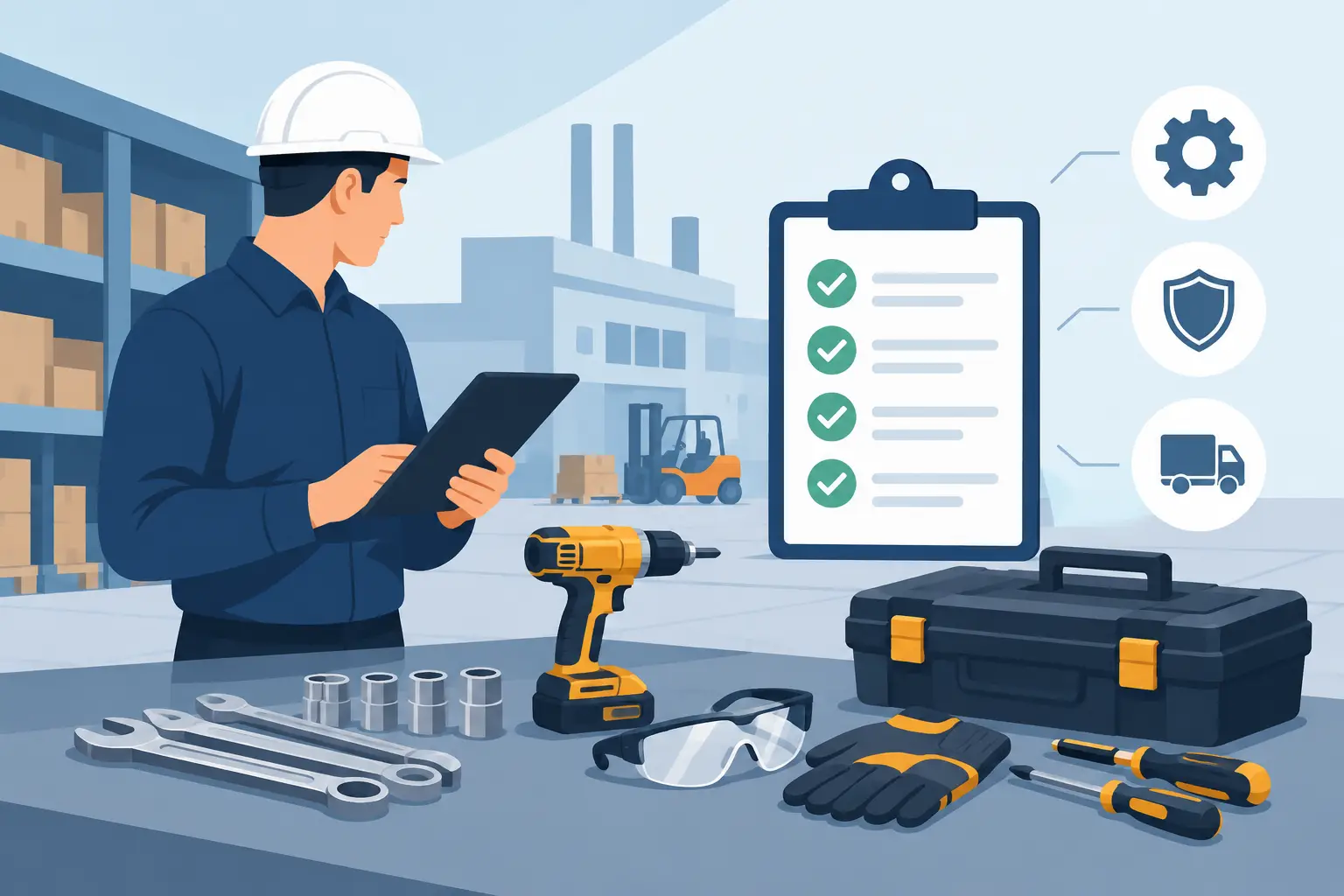
A search for total express tools can lead procurement teams toward a broad mix of hand tools, power tools, consumables, workshop equipment, and industrial supply options. That range can be useful, but it also creates a purchasing risk: a supplier that meets day-to-day maintenance needs may not be the right fit for engineered components, repeat production, or project-critical structural hardware.
For OEMs, contractors, distributors, and industrial buyers, the better question is not simply whether a supplier can provide tools quickly. It is whether the source can support the complete requirement - from installation and maintenance equipment to accurately manufactured metal parts that meet drawings, material requirements, finish specifications, and delivery schedules.
Total Express Tools and the Industrial Buying Decision
When buyers use the phrase total express tools, they may be looking for a convenient source of equipment and supplies needed to keep a job moving. For a maintenance department, that can mean drill bits, grinders, cutting discs, fasteners, measuring tools, welding accessories, and safety equipment. For a contractor, it may mean products that are available for immediate field use.
Speed and product availability matter. A delayed saw blade, damaged drill, or unavailable fastening tool can stop installation work with little warning. However, industrial procurement should separate tool purchasing from component sourcing when the application involves load-bearing hardware, repeatable assemblies, custom brackets, support systems, formed channels, welded fabrications, or foundation components.
A tool distributor is typically organized around inventory turnover and product availability. A metal fabrication partner is organized around engineering review, process control, tolerances, traceability, and production consistency. Both can be valuable, but they solve different problems.
Start With the Application, Not the Catalog
The first step in evaluating any industrial supply source is to define the application. A general-purpose tool may be suitable for occasional repair work, while a high-volume manufacturing line may require a specific tool grade, documented performance, and dependable replenishment. The same distinction applies to the metal components being installed or assembled.
For example, a standard angle bracket may work for a noncritical indoor support. A structural installation exposed to vibration, weather, salt air, or repeated loading may require a different steel grade, coating system, bend radius, hole pattern, and thickness. Selecting an item based only on appearance or basic dimensions can create installation problems later.
A clear requirement should identify the material, thickness, dimensions, hole sizes, coating or finish, loading conditions, quantity, packaging needs, and required delivery date. Where drawings are available, they should be reviewed before pricing begins. This reduces the chance of receiving parts that are technically close but not usable in the intended assembly.
What to Check Before Ordering Tools or Hardware
Industrial buyers benefit from a consistent evaluation process, especially when sourcing across multiple product categories. The most useful checks are practical rather than promotional.
First, confirm whether the supplier understands the intended use. A buyer should be able to explain whether the item will be used in fabrication, field installation, maintenance, marine work, electrical support, HVAC installation, or structural construction. Suppliers that ask relevant questions early are more likely to identify compatibility issues before shipment.
Second, verify dimensional and material information. For tools, this includes drive size, power rating, cutting capacity, operating range, and consumable compatibility. For fabricated parts, it includes material grade, gauge or thickness, flatness, hole placement, bend geometry, weld requirements, and coating specification. A part can look correct in a product image and still fail to fit the installation.
Third, evaluate consistency across orders. A one-time purchase may tolerate minor variation. OEM production and repeat construction programs cannot. If components must fit channels, clamps, frames, posts, anchors, or equipment housings across multiple locations, repeatability becomes a commercial requirement as well as a quality requirement.
Finally, review lead times in realistic terms. Stock tools may be available quickly, while custom tooling, fabrication, finishing, and export packing require planned production time. The right supplier will distinguish between ready inventory and made-to-order manufacturing rather than promising a timeline that cannot be maintained.
When Standard Products Are the Right Choice
Standard products are often the most efficient answer when dimensions, materials, and performance requirements are already established. Common examples include standard strut channels, channel nuts, clamps, post bases, brackets, fasteners, and framing hardware used in familiar installation conditions.
Using standard hardware can reduce engineering time, simplify replacement purchasing, and help contractors maintain familiar installation practices. It is particularly effective when the product is compatible with existing systems and the project does not require unusual loading, corrosion resistance, or geometry.
The trade-off is limited flexibility. Standard parts may force installers to add spacers, alter mounting locations, drill additional holes, or accept excess material weight. Those adjustments can be manageable in small applications but expensive when repeated across a large project or production run.
When Custom Fabrication Creates Better Value
Custom fabrication is appropriate when standard products introduce compromises that affect fit, performance, labor time, or project reliability. It is not limited to highly complex assemblies. A minor change to a bracket flange, slot position, gusset, hole pattern, or coating can eliminate field modification and improve installation speed.
A capable fabrication partner can produce parts through cutting, punching, bending, welding, forming, assembly, and surface finishing. This allows buyers to source components designed around their application rather than adapting the application to available inventory.
For instance, an OEM may need a stainless steel enclosure bracket with precise mounting points for electrical equipment. A marine project may require galvanized or corrosion-resistant dock hardware suited to continuous moisture exposure. A construction supplier may need strut-compatible support components with a specific load path and repeatable geometry. In each case, the best answer depends on the operating environment and the cost of failure or rework.
Custom work does require stronger communication. Buyers should provide drawings, tolerances, material requirements, expected annual volume, inspection expectations, and packaging preferences. In return, the manufacturer should identify production considerations before the order enters fabrication. This early review is where many costly errors can be prevented.
Quality Control Is More Than a Final Inspection
For industrial hardware and fabricated components, quality should be built into the production process rather than checked only after parts are completed. Material verification, controlled cutting and punching, accurate forming, weld inspection, and finish review each affect the final result.
Tolerance control is especially important where parts interface with other assemblies. Hole misalignment, inconsistent bends, burrs, inadequate weld penetration, or coating defects can delay assembly even when the issue appears minor. A quality-focused supplier should understand which dimensions are critical and use appropriate inspection methods for the part and production volume.
Documentation also matters when projects involve regulated industries, export shipments, customer approvals, or ongoing supply agreements. Buyers may need material information, inspection records, packing details, part identification, or traceability procedures. The level of documentation depends on the application, but it should be agreed upon before production rather than requested after shipment.
Reduce Vendor Fragmentation Where It Makes Sense
Buying tools, standard hardware, and custom fabricated parts from separate sources can be necessary, particularly when proprietary tools or specialized equipment are involved. Yet managing too many vendors creates administrative work, variable quality expectations, multiple freight arrangements, and additional coordination during schedule changes.
The strongest sourcing strategy often combines specialized tool purchasing with a manufacturing partner that can supply a broad range of fabricated metal components. This can include standardized framing hardware alongside custom brackets, welded assemblies, channels, clamps, structural supports, and project-specific parts.
Metallix Exports supports this approach through precision sheet metal manufacturing and export-ready fulfillment for industrial and construction buyers. The value is not only product breadth. It is the ability to review an application, manufacture to specification, and maintain production discipline across repeat orders.
Build Purchasing Decisions Around Project Risk
The lowest unit price is not always the lowest total cost. A less expensive tool that fails early, or a low-cost bracket that requires field drilling and adjustment, can add labor, delay installation, and create warranty exposure. Conversely, specifying a premium option for a simple noncritical task can add cost without improving the outcome.
The right sourcing decision depends on the consequence of variation. For routine maintenance supplies, stock availability and reasonable performance may be enough. For structural, electrical, marine, or OEM assemblies, buyers should place greater weight on specifications, manufacturing capability, quality procedures, and delivery reliability.
A practical supplier relationship should make purchasing easier without reducing technical control. When tools, hardware, and fabricated parts are matched to the real conditions of the job, crews spend less time adapting components and more time completing work correctly.