
 E-mail :
 Call Us :
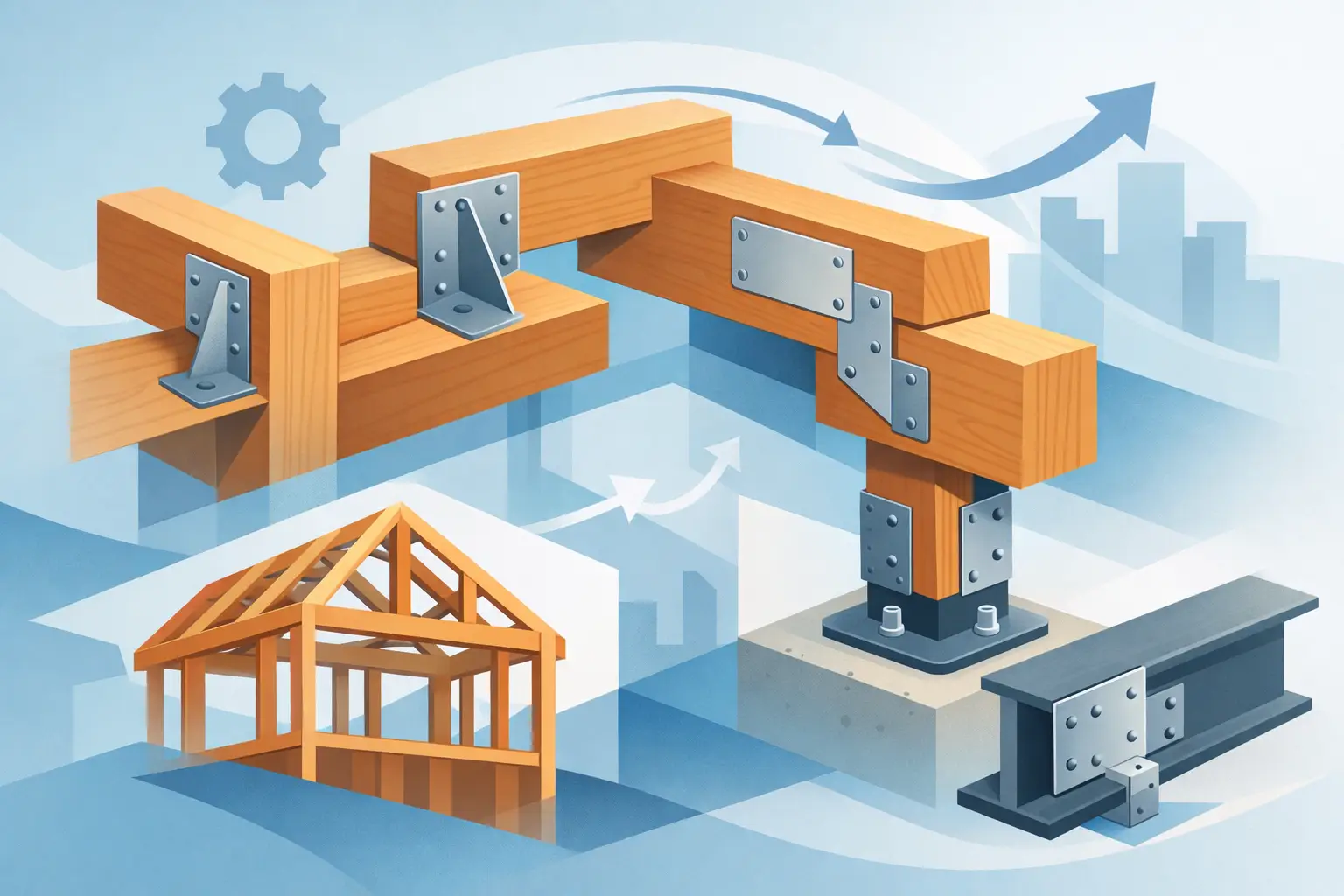
A connection can be a small portion of a structure by weight, yet it can determine whether a load transfers as intended or introduces movement, misalignment, corrosion, or installation delays. Structural connectors are not generic pieces of metal hardware. They are engineered interface components that join members, transfer forces, maintain alignment, and support the practical realities of assembly in the field or on a production line.
For procurement teams, OEMs, contractors, and engineers, the right connector decision begins well before a purchase order is issued. Material grade, forming method, hole position, coating system, weld quality, and dimensional consistency all affect the performance of the finished assembly. A supplier that understands these requirements can reduce vendor fragmentation while providing hardware that is fit for its application.
What Structural Connectors Do in a Completed System
Structural connectors create a defined path for compression, tension, shear, uplift, lateral force, or a combination of these loads. Depending on the project, they may connect steel framing, timber members, support channels, posts, concrete foundations, equipment skids, dock sections, pipe support assemblies, or fabricated brackets.
Common examples include angle brackets, post bases, beam and joist connectors, gusset plates, channel fittings, base plates, clamps, cleats, anchor plates, framing hardware, and welded support assemblies. Their shapes can appear straightforward, but every bend radius, slot, hole pattern, and material thickness has a purpose. A connector that fits poorly can shift the load path, slow installation, or require rework across an entire project.
The connector also has to work with the installation method. Bolted components require appropriate hole sizes, edge distances, access for tools, and compatible fasteners. Welded assemblies require controlled joint preparation and repeatable fixturing. Hardware used around concrete or foundation systems may need to accommodate anchors, embedded plates, tolerances in poured surfaces, and site adjustment.
Selecting Structural Connectors Starts With the Load Path
The most useful first question is not, “What bracket do we need?” It is, “How will force move from one member to the next?” This keeps the decision focused on function rather than appearance.
A connector carrying a primarily vertical load may be governed by bearing and fastener capacity. A connection resisting lateral movement may depend more heavily on shear performance, gusset geometry, and stiffness. In exposed outdoor applications, corrosion resistance may become just as significant as the initial load requirement. Marine and floating dock hardware, for example, must contend with moisture, salt exposure, movement, and repeated loading cycles.
Design engineers should define the required loads, connection geometry, member materials, fastening approach, service environment, and applicable code requirements. Procurement teams can then use those details to compare suppliers on meaningful criteria rather than comparing only unit price.
It depends on the application whether a standard catalog component is the efficient choice. Standardized brackets and strut-compatible fittings can shorten sourcing time and simplify replacement planning. Custom fabricated parts are often more appropriate where envelope constraints, unique hole patterns, nonstandard member sizes, or integrated functions make an off-the-shelf component unsuitable.
Material Choice Is More Than a Cost Decision
Mild steel remains a practical choice for many indoor industrial and construction applications because it offers strength, formability, weldability, and competitive cost. It can also receive finishes such as zinc plating, powder coating, or galvanizing when additional corrosion protection is required.
Galvanized steel is often selected for outdoor supports, structural framing accessories, and environments where moisture exposure is expected. The coating process and the treatment of cut edges, drilled holes, and welded areas should be considered early. A finish that looks adequate at delivery may not provide the expected service life if the operating environment is more aggressive than anticipated.
Stainless steel is a strong option where corrosion resistance, cleanliness, and long-term appearance are priorities. It is common in marine, food-related, chemical, and exterior applications, though the material grade must match the exposure conditions. Aluminum offers a favorable strength-to-weight ratio and natural corrosion resistance, making it useful for selected marine, transportation, and lightweight structural applications. Its different forming, joining, and galvanic compatibility requirements must be addressed during design.
The lowest-cost material is not automatically the lowest-cost solution. Replacement risk, maintenance access, finish durability, lead time, and compatibility with adjacent materials all influence total project cost.
Dimensional Control Protects Installation Schedules
Structural hardware is frequently installed alongside components made by multiple suppliers. That makes dimensional consistency essential. Hole location errors, inconsistent bends, warped plates, and uncontrolled weld distortion can turn a simple installation into a field modification issue.
For repeat production, documented tolerances should cover critical dimensions rather than applying a broad tolerance to every feature. Critical-to-fit areas may include mounting hole centers, slot orientation, channel widths, flange positions, overall squareness, and the relationship between welded components. Clear drawings and revision control are equally important. A well-manufactured part made to an outdated revision is still the wrong part.
Manufacturing methods should match the part’s geometry and volume. Laser cutting, punching, bending, forming, welding, and assembly can each contribute to efficient production when sequenced correctly. Precision fixturing is particularly valuable for welded fabrications because it helps maintain repeatable alignment through multiple production runs.
Coatings and Finishes Must Match the Service Environment
Surface finishing is sometimes treated as a final cosmetic step. For structural connectors, it is a performance requirement. The correct finish depends on indoor or outdoor placement, exposure to water, chemicals, abrasion, temperature variation, and the expected service life.
Zinc-plated hardware may suit controlled indoor settings, while hot-dip galvanizing can provide stronger protection for many outdoor steel applications. Powder coating offers color and an additional protective layer, but coating adhesion and edge coverage matter. Stainless steel may reduce coating requirements in demanding environments, although correct grade selection and fabrication practices remain necessary.
When connectors join dissimilar metals, galvanic corrosion should be reviewed. Moisture can create an electrochemical path between incompatible materials, especially in marine or exterior installations. Isolation washers, compatible fasteners, protective coatings, or material changes may be needed to protect the assembly.
When Custom Fabrication Delivers Better Value
Custom structural connectors are justified when they remove installation steps, combine several functions into one assembly, fit restricted spaces, or improve repeatability for an OEM product. A formed and welded bracket can replace multiple loose plates and fasteners. A custom clamp can secure equipment without requiring field drilling. A tailored base plate can accommodate a specific anchor layout while maintaining the required support geometry.
The strongest custom manufacturing process begins with complete technical input: drawings, material specifications, finish requirements, critical tolerances, load information, expected annual volume, packing needs, and destination market requirements. Samples or first articles can confirm fit before full-scale production, particularly for assemblies that must mate with customer-supplied parts.
At Metallix Exports, this approach combines standardized structural hardware with custom sheet metal fabrication, welding, forming, assembly, and finishing. It gives buyers a practical path to source common components and application-specific parts from a manufacturing partner focused on precision, consistent quality, and export-ready fulfillment.
Questions to Resolve Before Ordering
Before releasing an order for connectors, confirm the approved drawing revision, material and thickness, finish, critical dimensions, fastening method, packaging requirements, and inspection expectations. If the component has structural design implications, the responsible design professional should verify load capacity and code compliance for the complete connection, not just the individual part.
It is also useful to clarify whether the project needs prototype quantities, staged deliveries, or repeat production. A supplier can plan tooling, fixtures, material procurement, and inspection accordingly. That preparation supports dependable lead times and reduces the risk of variation when demand increases.
The right connector is one that performs predictably in its actual assembly, not merely one that matches a general product description. Clear engineering information, disciplined manufacturing, and consistent quality control give every connection a better chance to install correctly and perform reliably for the life of the project.


