
 E-mail :
 Call Us :
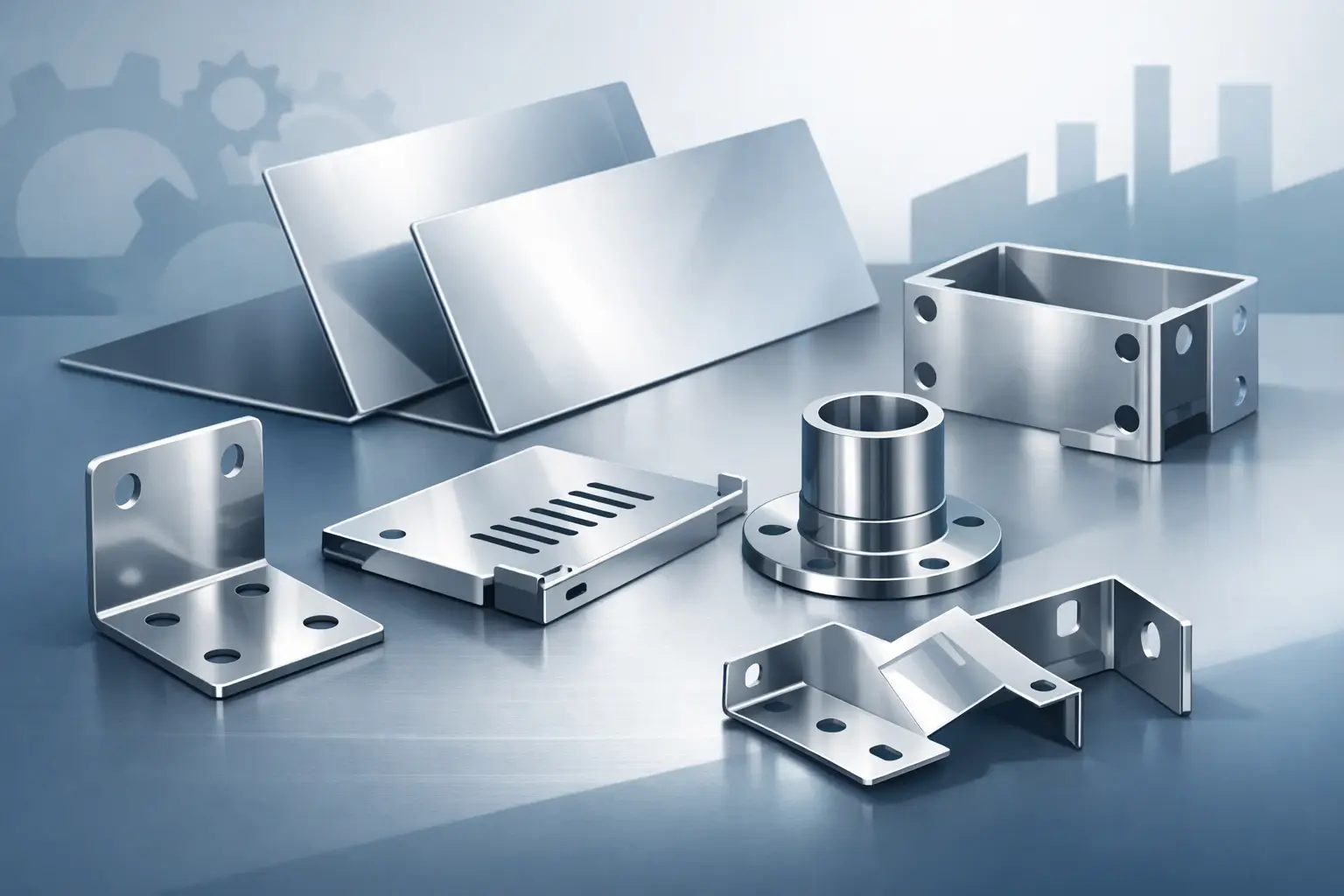
A part can look simple on a drawing and still create expensive problems in production if the material, tolerances, or finish are off by a small margin. That is why stainless steel sheet metal parts are often specified for applications where corrosion resistance, repeatable performance, and clean fabrication matter as much as basic strength. For OEMs, contractors, and procurement teams, the real question is not whether stainless steel works. It is whether the parts are being made to the right grade, process, and dimensional standard for the job.
Why stainless steel sheet metal parts are specified
Stainless steel is chosen when the operating environment is hard on metal and replacement is costly. Moisture, chemicals, outdoor exposure, washdown conditions, and temperature variation all push buyers toward a material that holds up over time without demanding constant maintenance. In many industrial and construction settings, that longer service life justifies the higher upfront material cost.
That does not mean stainless steel is always the default choice. Mild steel may be more economical for dry indoor use, and aluminum may be preferred where weight reduction is critical. But when a component needs a strong balance of corrosion resistance, formability, appearance, and structural reliability, stainless steel sheet metal parts remain one of the most practical options across industries.
The value becomes even clearer in multi-part assemblies. If one bracket, clamp, cover, channel support, or formed enclosure fails early due to rust or surface breakdown, the cost is rarely limited to the part itself. Labor, downtime, inspection, and replacement cycles can quickly outweigh any savings from choosing a lower-grade material.
Material grade matters more than many buyers expect
Not all stainless steel performs the same way in fabrication or field use. Grade selection should reflect the environment, the forming requirements, and the expected service life of the finished part.
304 stainless is widely used because it offers good corrosion resistance and works well in many general industrial, architectural, electrical, and equipment applications. It is often the practical choice for brackets, covers, framing components, support hardware, and fabricated assemblies exposed to humidity or intermittent moisture.
316 stainless is typically specified when chloride exposure, aggressive outdoor conditions, or marine environments are involved. For dock hardware, coastal infrastructure, washdown systems, and certain chemical environments, the added corrosion resistance can make a meaningful difference. The cost is higher, so the decision should be based on exposure conditions, not assumption.
There are also applications where specialized grades are needed for heat resistance, weldability, magnetic behavior, or specific compliance requirements. Buyers who define the operating environment early usually avoid costly redesigns later. In custom fabrication, a technically sound material decision at the quoting stage often determines whether the final part performs as expected.
Fabrication quality determines part performance
A stainless steel component is only as reliable as the fabrication behind it. Precision cutting, punching, bending, welding, and finishing each affect fit, appearance, and service life. This is especially true for parts that need to integrate with other hardware, install quickly in the field, or maintain dimensional consistency across production runs.
Laser cutting or turret punching must be controlled to keep edges clean and holes accurate. Poorly controlled cutting can create variation that shows up later during assembly. Bend allowances also require attention because stainless steel behaves differently than softer materials. If the tooling, tonnage, or bend sequencing is not managed properly, parts can spring back, miss angle targets, or develop cosmetic defects.
Welding introduces another layer of quality control. Heat input, fixture stability, joint design, and post-weld cleaning all influence both appearance and corrosion performance. For exposed or high-specification components, discoloration and contamination are not just cosmetic concerns. They can affect the protective characteristics of the surface if not addressed correctly.
This is where an engineering-focused manufacturing approach matters. A supplier that understands fabrication as a production system, not just a set of isolated processes, is better equipped to deliver repeatable stainless steel sheet metal parts at scale.
Common applications across industrial markets
Stainless steel sheet metal parts are used in a wide range of commercial and industrial sectors because they adapt well to both standard and custom requirements. In construction and infrastructure, they are commonly used for brackets, support channels, post bases, anchors, covers, connection plates, and mounting systems where outdoor durability is required.
In electrical and HVAC applications, stainless components often appear in enclosures, equipment housings, cable support hardware, duct-related brackets, and fastening systems. These parts need clean dimensions, dependable hole patterns, and surfaces that hold up in service environments that may include condensation or periodic cleaning.
Marine and waterfront projects present a more demanding use case. Mooring hardware, dock fittings, structural connectors, and fabricated support elements may face continuous moisture, salt exposure, and cyclical loading. In these conditions, the wrong material grade or poor finishing practice can shorten service life quickly.
For OEMs and machinery builders, stainless sheet metal is often used where hygiene, corrosion resistance, or product appearance matter. Covers, guards, formed panels, trays, machine components, and welded subassemblies all benefit from a material that can deliver both functional strength and a professional finish.
What B2B buyers should evaluate before ordering
Price matters, but for industrial sourcing teams, it should not be the first filter. The more useful starting point is whether the supplier can consistently produce to drawing, hold tolerances, and ship on schedule.
Review manufacturing capability in relation to the actual part geometry. A vendor may be able to cut stainless sheet, but that does not automatically mean they can handle tight-tolerance bends, welded assemblies, formed channels, or export-ready packaging for mixed orders. Complex parts require process control, not just machine access.
It is also worth confirming how quality is managed. For stainless steel sheet metal parts, consistency in thickness, hole location, angle accuracy, weld quality, and surface finish directly affects installation and downstream assembly. When buyers receive parts that vary from lot to lot, internal labor costs rise even if the quoted unit price looked competitive.
Lead time reliability is another practical issue. Procurement teams are often managing multiple workstreams, and delayed hardware can stall larger assemblies or field schedules. A dependable manufacturing partner should be able to communicate capacity, production planning, and shipment timing clearly rather than leaving delivery expectations vague.
For international buyers, export readiness should be considered part of the sourcing decision. Packaging, labeling, documentation, and order consolidation all affect how efficiently the shipment moves and how quickly the parts can be received into inventory or project use.
Standard parts and custom fabrication both have a place
Many buyers need a combination of standard hardware and custom components in the same project. That is especially common in support systems, structural framing, marine installations, and equipment assembly, where catalog items are used alongside application-specific brackets, plates, or welded fabrications.
Working with a manufacturer that can support both reduces sourcing friction. It simplifies communication, lowers the risk of dimensional mismatch between related parts, and helps procurement teams avoid managing multiple vendors for closely connected components. In practice, that can improve speed and reduce costly coordination issues.
Custom fabrication also gives engineering teams room to optimize installation and field performance. A revised bend, slot pattern, reinforcement detail, or welded feature may seem minor, but those changes can improve alignment, reduce labor, or extend service life. The strongest suppliers do more than quote drawings. They help identify manufacturing choices that support the end application.
Companies such as Metallix Exports are often selected for this reason. Buyers are not only looking for stainless parts. They are looking for a production partner that can handle precision fabrication, standard hardware integration, and export-ready fulfillment with the same level of control.
The finishing and handling details that protect value
Stainless steel does not eliminate the need for careful handling. Surface contamination during fabrication, storage, or shipment can compromise appearance and, in some environments, corrosion performance. Protective films, proper stacking, clean tooling, and disciplined packing methods are not secondary details. They are part of product quality.
Finish selection should also reflect how the part will be used. Some applications prioritize appearance, others need easier cleanability, and some simply require a practical mill finish that supports function at the right cost. The correct answer depends on exposure, visibility, and budget.
For B2B buyers, the most successful sourcing outcomes usually come from clear specifications and early communication. When grade, finish, tolerances, forming requirements, and packaging expectations are defined up front, stainless steel sheet metal parts are far more likely to arrive ready for immediate use.
The best part is not always the cheapest one on paper. It is the one that fits, performs, and arrives when your project needs it.


