 E-mail :
 Call Us :
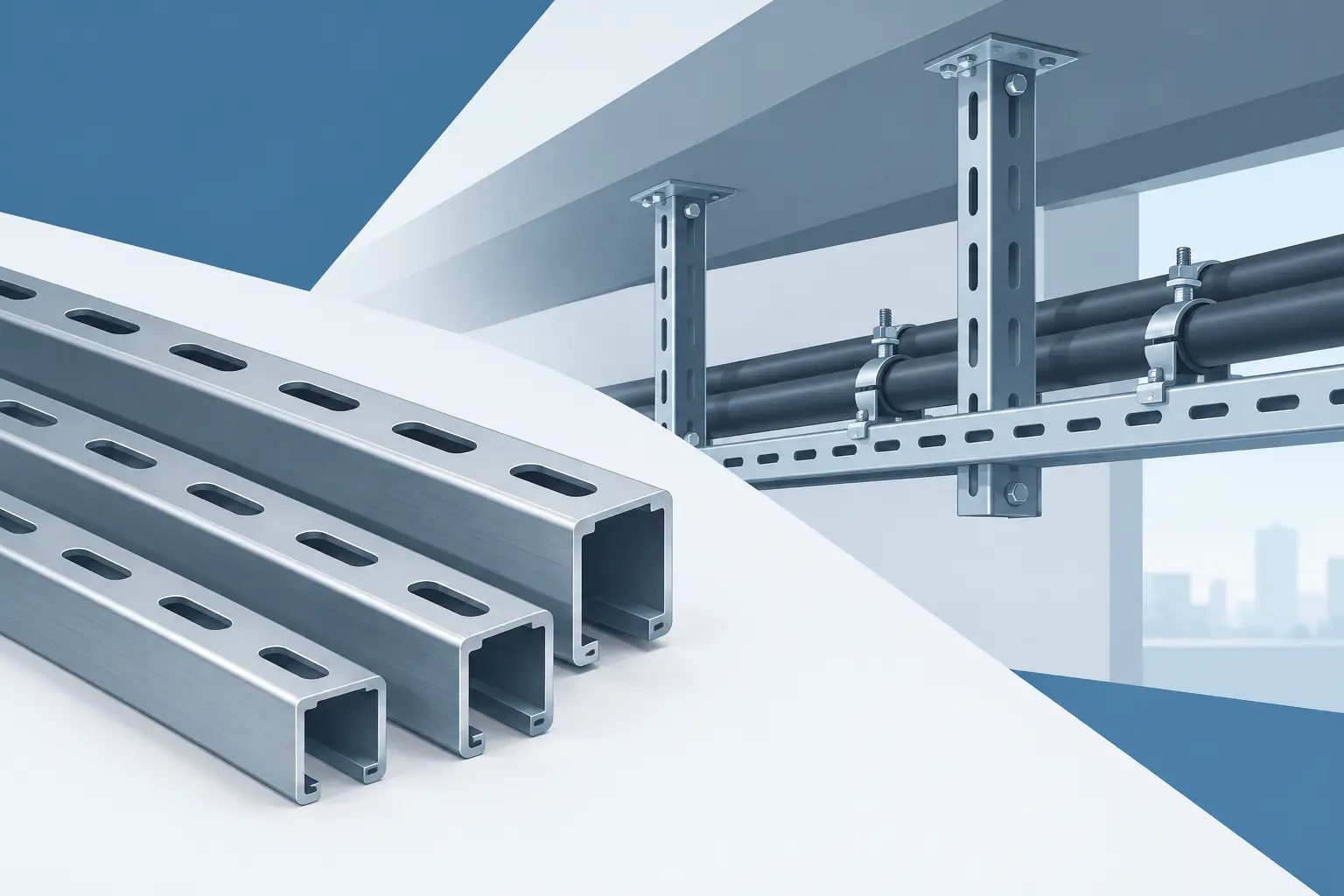
A support system is only as dependable as its connection points. When a project calls for continuous mounting surfaces, controlled component positioning, and dependable load transfer, solid strut channel provides a practical framing solution. Unlike slotted channel, solid channel has no pre-punched openings along its web, making it well suited to installations where uninterrupted material, custom hole placement, or a cleaner finished appearance is required.
For OEMs, contractors, distributors, and procurement teams, selecting the right channel is not simply a matter of choosing a profile size. Material grade, wall thickness, finish, fitting compatibility, fabrication requirements, and expected loading conditions all affect long-term performance. A properly specified channel reduces field modifications, simplifies inventory planning, and helps keep installation work on schedule.
What Is Solid Strut Channel?
Solid strut channel is a cold-formed metal support profile with a continuous, unperforated web. It is commonly manufactured in C-shaped configurations with inward-facing lips that accept spring nuts, channel nuts, bolts, clamps, brackets, and other strut-system hardware. This design allows installers to create adjustable support assemblies without extensive welding or drilling at the jobsite.
The absence of slots is the defining difference. Slotted channel offers fast, repeatable attachment locations and can reduce installation time in standard applications. Solid channel instead gives engineers and fabricators the freedom to place holes exactly where an assembly requires them. It also retains continuous web material between connections, which can be advantageous where the design calls for localized drilling, welding, or a more uniform visual finish.
Solid strut channel is used across electrical support, HVAC framing, pipe and conduit supports, equipment stands, machine guarding, solar structures, cable management, industrial racks, and custom fabricated assemblies. The right application depends on the complete system design, not the channel alone.
Where Solid Strut Channel Delivers Value
In standardized commercial installations, pre-slotted channel may be the most efficient choice. But projects with nonstandard attachment spacing, controlled fabrication processes, or aesthetic requirements often benefit from solid channel. It gives production teams a clean starting point for punching, drilling, welding, and assembly according to a drawing rather than adapting a design to fixed slot locations.
This is particularly useful for OEM equipment frames and repeatable fabricated products. A manufacturer can specify precise hole centers, use fixtures for consistency, and receive components prepared for faster downstream assembly. The result is better control over tolerances and less dependence on field adjustments.
Solid channel can also be a strong option for exterior or corrosive environments when matched with the correct material and finish. However, a solid web does not automatically make a system stronger or more corrosion resistant than a slotted alternative. Capacity depends on channel geometry, gauge, steel grade, span, loading direction, connection design, and installation method. Corrosion performance depends on the coating system, exposure conditions, cut edges, hardware selection, and maintenance expectations.
Selecting the Right Solid Strut Channel
A purchase specification should begin with the functional requirements of the assembly. Profile dimensions determine which fittings and nuts can be used, while material thickness affects stiffness and load performance. Common channel sizes can support a wide range of accessories, but nominally similar profiles are not always interchangeable across manufacturers.
Profile Size and Material Thickness
Channel depth, width, lip dimensions, and wall thickness must work together with the required hardware. A deeper or heavier-gauge profile may offer greater resistance to bending, but it can increase material cost, weight, and shipping volume. For light-duty brackets or compact equipment frames, a smaller profile may be appropriate. For trapeze supports, long spans, cantilevers, or heavier utility loads, engineering review is essential.
Do not select gauge based only on a catalog description such as "heavy duty." Request dimensional details and evaluate the channel as part of the full support assembly. The connection points, rods, anchors, brackets, and substrate often govern system performance.
Material and Surface Finish
Mild steel is widely used for indoor structural support applications because it offers favorable strength, formability, and cost. Pre-galvanized steel can suit many dry interior conditions, while hot-dip galvanized finishes are often selected for more demanding outdoor exposure. Stainless steel is commonly specified where moisture, chemicals, washdown, coastal conditions, or hygiene requirements create a higher corrosion risk. Aluminum can reduce weight and provide corrosion resistance, although its strength characteristics, galvanic compatibility, and connection details require careful review.
Finish selection should reflect the real environment, including condensation, salt exposure, chemical contact, temperature variation, and the likelihood of coating damage during installation. If channel is cut, drilled, or welded after finishing, specify how exposed areas will be protected. Mixing dissimilar metals without considering galvanic corrosion can shorten service life in wet environments.
Compatibility With Strut Hardware
A channel system performs best when channel, spring nuts, fittings, clamps, brackets, and fasteners are designed to work together. The internal opening and lip geometry influence nut engagement, adjustment range, and load transfer. A channel described as unistrut-compatible should still be checked against the required hardware dimensions and project tolerances before volume purchasing.
For procurement teams managing multiple product lines, dimensional consistency matters as much as initial fit. Repeatable profiles allow standardized brackets and hardware kits to be used across projects, reducing SKU complexity and preventing installation delays caused by mismatched components.
Fabrication Options That Reduce Field Work
The main advantage of a solid web is manufacturing flexibility. Rather than asking installers to drill channels onsite, a fabrication partner can prepare channel lengths and connection points to match approved drawings. This improves repeatability and can reduce labor time, site waste, and the risk of inaccurate hole locations.
Typical value-added operations include cut-to-length production, precision punching, drilled holes, end notching, miter cuts, welded brackets, gussets, tapped components, and assembled hardware kits. Surface finishing can be coordinated after fabrication when the application requires coating coverage across newly worked areas.
Custom fabrication is not always the lowest-cost route. For a small, simple installation with standard spacing, stocked slotted channel may be faster and more economical. The value of custom solid channel increases when quantities are repeatable, layouts are application-specific, tolerances are tight, or field labor is costly. The best decision weighs unit price against installation time, quality risk, and supply-chain complexity.
Engineering and Installation Considerations
Channel supports should be designed around verified load data and applicable project requirements. A channel that appears adequately sized can still fail to perform as expected if the span is too long, the load is eccentric, the channel is used in an unfavorable orientation, or the anchors are not suitable for the supporting structure.
For critical applications, confirm the following before release:
- Expected dead load, live load, vibration, and any dynamic or seismic considerations
- Support spacing, cantilever length, load location, and required deflection limits
- Channel profile, material thickness, finish, and compatible fitting configuration
- Anchor type, substrate condition, threaded rod size, and connection torque requirements
- Environmental exposure, code obligations, and any project-specific certification needs
Installation discipline is equally important. Cuts should be clean, burrs removed, and protective finishes repaired where required. Fasteners need correct engagement and torque, while support assemblies must be aligned so loads transfer as intended. Improvised substitutions may save time at the jobsite but can compromise compatibility and traceability.
A Manufacturing Partner for Standard and Custom Needs
Reliable strut systems require more than a channel profile. They require consistent forming, controlled dimensions, appropriate material sourcing, and the ability to deliver compatible fabricated components when the design moves beyond standard catalog parts. Metallix Exports supports industrial and construction buyers with standard strut support components as well as custom metal fabrication for application-specific channel assemblies, brackets, clamps, and structural hardware.
For export-oriented supply programs, clear drawings, finish specifications, packaging requirements, and inspection criteria should be established early. This helps prevent avoidable delays and gives purchasing teams confidence that each shipment will match the approved configuration.
The most useful solid strut channel specification is the one that reflects how the assembly will actually be built, loaded, installed, and maintained. Start with the required performance, verify compatibility across every connected part, and use custom fabrication where it removes risk from the field.