
 E-mail :
 Call Us :
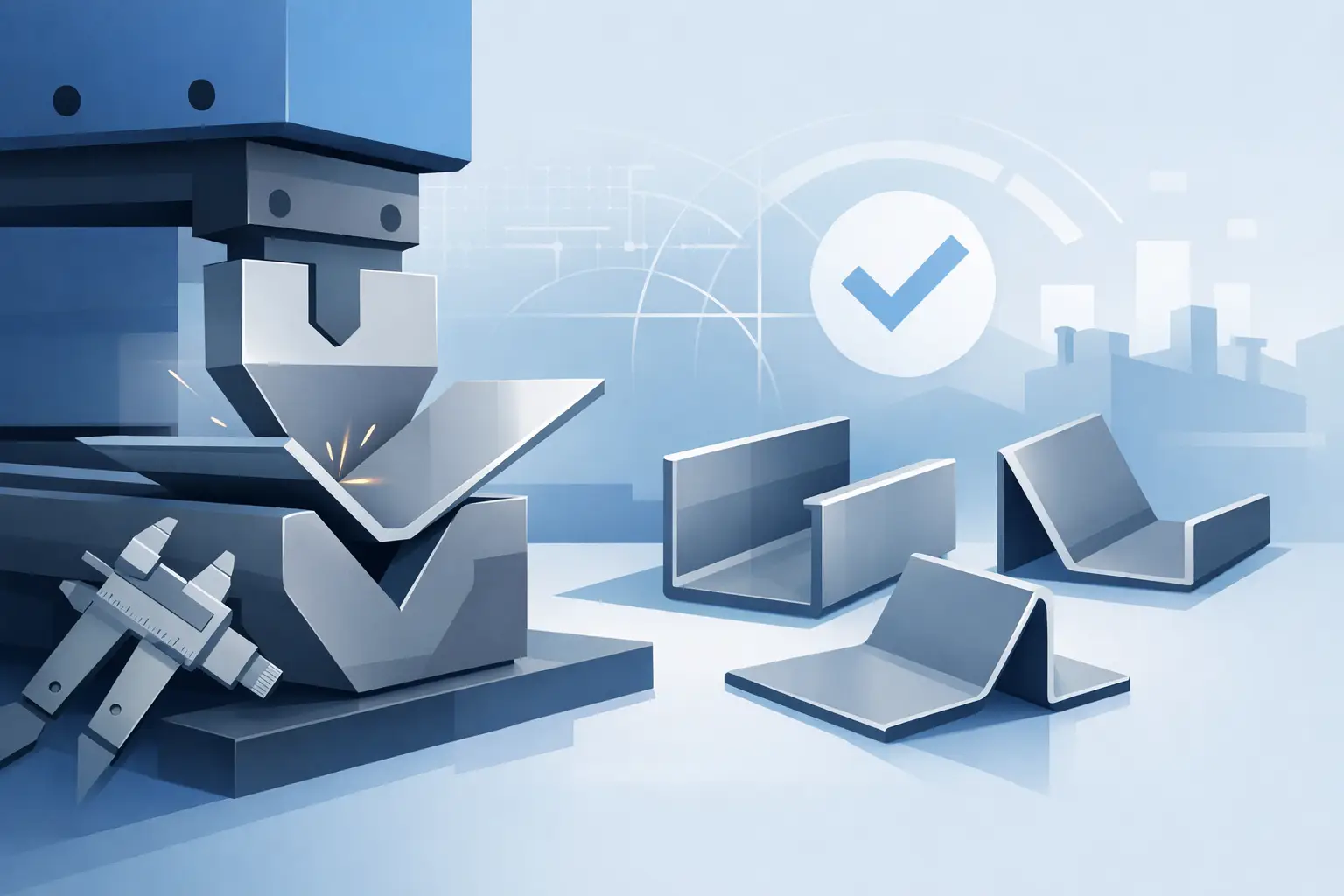
A bent part that is off by even a small margin can delay assembly, create fit-up issues in the field, or force costly rework across an entire production run. That is why sheet metal bending services are not just a fabrication step. For OEMs, contractors, and procurement teams, they are a direct factor in product quality, installation speed, and schedule control.
When buyers evaluate a bending partner, the real question is not simply whether a supplier can form metal. It is whether that supplier can hold tolerances consistently, understand application requirements, and deliver repeatable results across materials, thicknesses, and order volumes. In industrial and construction markets, that difference matters.
What sheet metal bending services should deliver
At a commercial level, bending services should reduce risk. A capable supplier should be able to interpret drawings accurately, select the right tooling, account for springback, and produce parts that match the intended function of the assembly. That applies whether the requirement is a simple angle bracket, a formed channel, a support component, an enclosure part, or a custom structural hardware item.
Precision is the baseline, but it is not the only requirement. Buyers also need process control, material knowledge, and production discipline. Mild steel, stainless steel, aluminum, copper, and galvanized sheet do not behave the same way under force. Bend radius, grain direction, thickness variation, surface requirements, and downstream finishing all influence the result.
This is where engineering-focused fabrication creates value. A supplier that understands both design intent and manufacturing realities can often identify issues before production starts. That may mean recommending a bend relief adjustment, reviewing hole-to-bend distances, or suggesting a more practical forming sequence. These details protect quality and help keep lead times on track.
Why bending accuracy affects the whole project
In many applications, bent components are not standalone parts. They fit into larger systems that include channels, clamps, welded assemblies, framing hardware, post bases, supports, or mounting structures. If bends are inconsistent, the problem moves downstream fast.
For OEM production, poor bend accuracy can disrupt automated or manual assembly, create stack-up tolerance issues, and increase inspection failures. For construction and infrastructure work, it can slow installation crews, lead to field modification, and create uncertainty around fit and load performance. For distributors and international buyers, inconsistent parts can result in claims, replacement shipments, and customer dissatisfaction that costs more than the original order value.
That is why repeatability is as important as one-time accuracy. The first article may look acceptable, but buyers need confidence that the 500th or 5,000th part will match it. Reliable sheet metal bending services are built around that level of consistency.
The manufacturing factors behind reliable sheet metal bending services
Accurate bending depends on more than press brake capacity. Tooling selection, machine calibration, operator skill, material condition, and inspection standards all play a role. A supplier with advanced machinery but weak process control may still produce avoidable variation. On the other hand, a disciplined manufacturing team with proven methods can deliver strong results across both standard and custom programs.
Tooling matters because bend geometry must match the part design and material behavior. Tonnage also matters, especially when working with thicker gauges or stronger materials. But the process begins even earlier with drawing review and production planning. If the bend sequence is not thought through correctly, parts can become difficult to form, dimensionally unstable, or unnecessarily expensive.
There is also a practical trade-off between complexity and efficiency. Multi-bend parts can absolutely be produced to tight standards, but they require careful sequencing and inspection. Buyers benefit when a supplier is transparent about what is achievable, what may need tolerance adjustment, and where design refinements can improve manufacturability without changing part function.
Material choice changes the bending approach
One of the most common purchasing mistakes is treating all sheet materials as if they form the same way. They do not. Mild steel is often more forgiving in forming, while stainless steel typically requires greater force and closer control of springback. Aluminum may bend cleanly, but depending on alloy and temper, it can also crack if the radius is too tight. Copper offers different forming behavior again, especially where conductivity and appearance matter.
Galvanized sheet introduces another consideration. Buyers may need formed parts that preserve corrosion protection while minimizing surface damage during production. That means the fabrication process has to account for both dimensional performance and finish quality.
For this reason, capable suppliers review the full application, not just the material callout. A marine component, for example, may prioritize corrosion resistance and structural fit. An electrical support bracket may require dimensional accuracy for mounting alignment. An HVAC or enclosure part may demand a cleaner cosmetic result. The right bending approach depends on the job.
Standard parts and custom fabrication both benefit from strong bending capability
Many industrial buyers need a combination of catalog components and custom parts from the same supplier. That model simplifies sourcing, reduces handoff problems, and helps maintain quality across related product lines. It is especially useful when projects include standard support systems alongside application-specific brackets, channels, mounting plates, or formed hardware.
Strong bending capability supports both sides of that need. For standard items, it enables dependable repeat production and dimensional consistency across batches. For custom work, it supports fast translation from drawing to finished part with fewer revisions and less production uncertainty.
This is one reason buyers often prefer a fabrication partner with broader in-house capability. When cutting, punching, bending, welding, forming, assembly, and finishing are aligned under one manufacturing system, quality control becomes more manageable. It also reduces delays caused by outsourcing separate process steps to multiple vendors.
What B2B buyers should ask before placing an order
A serious supplier should be prepared to discuss tolerances, material range, thickness capacity, bend lengths, tooling flexibility, and inspection methods. Buyers should also ask how the supplier handles first article validation, repeat jobs, and engineering review for custom parts.
Lead time deserves the same attention as technical capability. Some suppliers can produce accurate parts but struggle with planning, communication, or shipment readiness. For export orders and multi-market supply programs, packaging, labeling, documentation, and delivery coordination are part of the service, not an afterthought.
It also helps to understand how the supplier manages volume changes. A partner who can support prototype quantities, production runs, and larger replenishment orders offers more long-term value than a shop built only for one order type. That flexibility matters when product demand shifts or projects move from pilot stage to rollout.
Quality control is where confidence is built
Buyers do not need marketing language. They need proof that the manufacturing process is controlled. In bending operations, that means inspection against drawing dimensions, verification of critical angles and formed features, and consistency from lot to lot.
The strongest suppliers build quality into the process rather than relying only on end-of-line checks. They verify tooling setup, monitor first pieces carefully, and maintain clear production standards for repeat work. That approach reduces scrap, protects lead times, and improves overall order reliability.
For industries with tight installation or assembly demands, documentation and traceability may also matter. It depends on the product category and customer requirement, but clear records can be important for contract manufacturing, regulated environments, or large infrastructure programs.
Choosing a bending partner, not just a vendor
Price always matters, but the lowest quoted bend cost is rarely the full cost of supply. If a part arrives out of tolerance, ships late, or requires repeated clarification, the savings disappear quickly. Procurement teams know this, especially when parts support larger assemblies, field installation schedules, or customer-facing equipment.
The better decision is to work with a manufacturing partner that combines technical understanding with commercial reliability. That means clear communication, drawing discipline, dependable production, and the ability to support both standard and custom requirements. For buyers managing industrial hardware, structural components, support systems, or fabricated assemblies, that level of capability reduces friction across the entire procurement cycle.
Metallix Exports serves this need by combining precision sheet metal fabrication with broad production capability across industrial and construction applications. For customers sourcing bent components, formed hardware, or integrated fabricated products, the value is straightforward: quality you can rely on, manufacturing aligned to specification, and delivery planning built for real project demands.
The right bending supplier should make your next order easier to release, easier to assemble, and easier to trust when deadlines are real.


