
 E-mail :
 Call Us :
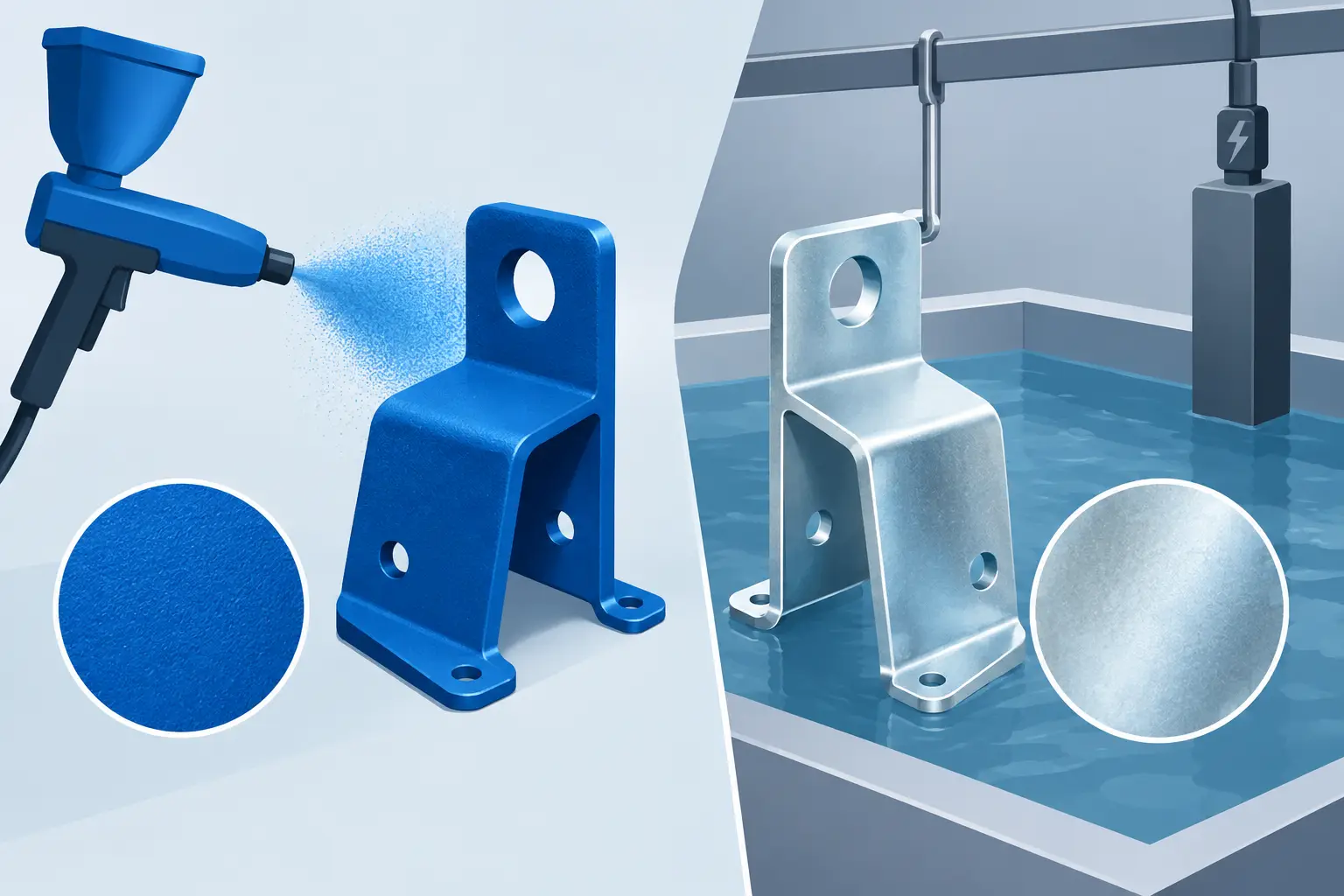
A finish specification can determine whether a bracket, channel, clamp, or fabricated assembly performs for years or begins corroding after its first demanding season. When evaluating powder coating versus zinc plating, the right choice depends less on which finish is generally “better” and more on the base material, exposure conditions, dimensional requirements, and the part’s intended service life.
For OEMs, contractors, and procurement teams, this decision should be made before production begins. Surface finishing affects corrosion performance, thread fit, coating thickness, appearance, manufacturing sequence, and total landed cost. A finish that looks suitable on a sample may be the wrong choice for coastal hardware, close-tolerance assemblies, or components that will be exposed to impact and abrasion.
Powder Coating Versus Zinc Plating: The Core Difference
Powder coating is an organic polymer finish applied as a dry powder and cured with heat to form a continuous protective film. It is available in many colors, textures, gloss levels, and chemistries, including polyester, epoxy, epoxy-polyester hybrid, and polyurethane systems. For fabricated steel products, powder coating is typically applied after cleaning and pretreatment, often phosphate-based or zirconium-based depending on the process.
Zinc plating is a metallic coating deposited electrochemically onto steel or iron components. Its key advantage is sacrificial protection. Zinc corrodes preferentially to the steel beneath it, helping protect exposed areas where minor scratches or small breaks in the coating occur. Clear, blue, yellow, black, and other passivates may be applied after plating to improve corrosion resistance and achieve a required appearance.
The distinction matters in the field. Powder coating acts primarily as a barrier between the steel and its environment. Zinc plating provides both a barrier and galvanic protection. Neither approach eliminates the need for sound part design, appropriate material selection, and realistic exposure assumptions.
When Powder Coating Is the Better Specification
Powder coating is often the practical choice for visible fabricated products that need a durable, consistent appearance. Structural brackets, strut accessories, equipment enclosures, frames, supports, and custom sheet metal assemblies can benefit from its relatively thick finish and broad color options. It is particularly valuable when a customer requires a specified color match or a finish that aligns with architectural, equipment, or brand standards.
A properly applied powder coat can provide strong resistance to chipping, chemicals, and weathering, but performance depends heavily on powder chemistry and pretreatment. Standard indoor epoxy powder can perform well in controlled industrial environments yet chalk or degrade under prolonged ultraviolet exposure. For exterior products, a weather-resistant polyester powder is generally more appropriate. Marine, chemical, and high-UV applications may require a more specialized system and additional validation.
Powder coating also works well on larger welded fabrications, where coating a complete assembly after welding provides a uniform finished appearance. It can cover edges, seams, and broad surfaces effectively when the part is designed for coating access and drainage. However, sharp edges should be radiused where possible because coating naturally pulls thinner at acute corners, creating potential weak points.
Thickness is another consideration. Powder coats are commonly thicker than zinc plating, which can be useful for protection and appearance but problematic for mating surfaces. Threaded holes, precision bores, press-fit locations, grounding points, and tight mechanical interfaces may need masking or post-finish processing. These requirements should be identified clearly on the drawing rather than addressed after parts reach assembly.
Where Zinc Plating Makes More Sense
Zinc plating is commonly selected for hardware, fasteners, nuts, bolts, clips, stamped components, and smaller precision parts. Because it is comparatively thin and follows the part geometry closely, it is well suited to threaded or close-tolerance features. A properly specified plating thickness can provide useful corrosion resistance without significantly changing the fit of an assembly.
For indoor industrial applications, zinc-plated hardware offers an efficient balance of cost, appearance, and protection. It is often appropriate for electrical hardware, machinery components, light-duty brackets, cabinet fittings, and general-purpose construction hardware used in dry or moderately controlled environments.
The sacrificial behavior of zinc is a meaningful advantage when parts are likely to receive small scratches during handling or installation. A powder-coated scratch can expose bare steel, which may corrode beneath the surrounding film if moisture reaches the interface. Zinc plating around a small damaged area can continue to protect the underlying steel until the zinc itself is consumed.
That said, standard electroplated zinc should not be treated as a universal outdoor or marine solution. Coating thickness, passivation type, salt exposure, humidity, pollutants, and contact with dissimilar metals all affect its service life. For severe external conditions, hot-dip galvanizing, zinc-nickel plating, mechanical galvanizing, or a duplex coating system may be more appropriate than conventional zinc plating alone.
Corrosion Resistance Depends on the Environment
The specification should begin with the environment, not the finish name. Indoor warehouse hardware, HVAC supports in a humid mechanical room, rooftop framing, agricultural equipment, coastal dock components, and industrial washdown assemblies face very different corrosion risks.
Powder coating can be highly effective in exterior environments when the correct powder system, pretreatment, film thickness, and curing process are controlled. Its broad coverage and visual consistency make it a strong option for customer-facing equipment and structural components. But coating damage, trapped moisture, poor edge coverage, and incomplete pretreatment can shorten service life quickly.
Zinc plating is effective for many protected or moderately exposed applications, especially where its sacrificial properties and thin build are beneficial. In wet, salty, or chemically aggressive conditions, however, its zinc layer may be consumed faster than expected. A bright zinc-plated part can look excellent when installed and still be poorly matched to a long-term coastal application.
For demanding environments, a duplex approach may be worth evaluating. This typically combines a zinc-based protective layer with an organic topcoat, providing the sacrificial protection of zinc and the barrier protection of paint or powder. The system must be engineered correctly. Surface preparation, compatibility between layers, venting, drainage, and coating access all influence the result.
Cost, Lead Time, and Production Considerations
Unit cost should be evaluated alongside rework risk and expected field life. Zinc plating can be economical for high-volume small parts, particularly standard hardware and stampings. Powder coating can be cost-effective for larger fabrications and mixed product runs because it supports efficient coverage, color customization, and a finished appearance in one process.
Production routing matters. Welding after zinc plating damages the plated coating and creates fumes that require appropriate process controls, so plated components are generally fabricated before plating. Powder coating is also normally applied after cutting, punching, bending, welding, and final cleaning. Any operation performed after finishing can damage the coating and may require touch-up or a revised sequence.
Buyers should also account for masking, racking marks, drainage holes, and handling requirements. Powder-coated parts need suitable hanging points and may show small rack contact areas. Plated parts may require masking of critical threads or electrical contact surfaces. These are normal manufacturing considerations, but they need to be discussed early to avoid tolerance conflicts or cosmetic surprises.
Hydrogen embrittlement deserves specific attention for high-strength steel fasteners and heat-treated components. Some electroplating processes can introduce hydrogen, which may create delayed cracking in susceptible materials unless appropriate baking and process controls are used. This risk should be addressed directly in the engineering specification rather than left to a general plating callout.
How to Specify the Right Finish
A useful finish specification identifies the substrate, required coating type, target thickness, color or passivate, performance standard, and any areas to mask. It should also state the operating environment and whether the part will be exposed to ultraviolet light, salt spray, moisture, chemicals, abrasion, or galvanic contact.
For powder coating, specify the powder chemistry when the application demands it. “Black powder coat” is not enough for an exterior structural component expected to retain color and corrosion protection over time. For zinc plating, define the required coating thickness and passivate, then confirm whether the part’s geometry, threads, and steel grade are suitable for the process.
At Metallix Exports, finish selection is most effective when it is reviewed alongside fabrication requirements. A drawing that identifies tolerances, mating interfaces, weld locations, material grade, and exposure conditions allows the manufacturing plan to support both part function and finish performance.
The practical choice is the one that protects the part in its real operating environment without creating avoidable cost, fit, or production issues. Bring the finish requirement into the design review early, and the finished component is far more likely to arrive ready for reliable installation and long-term service.


