
 E-mail :
 Call Us :
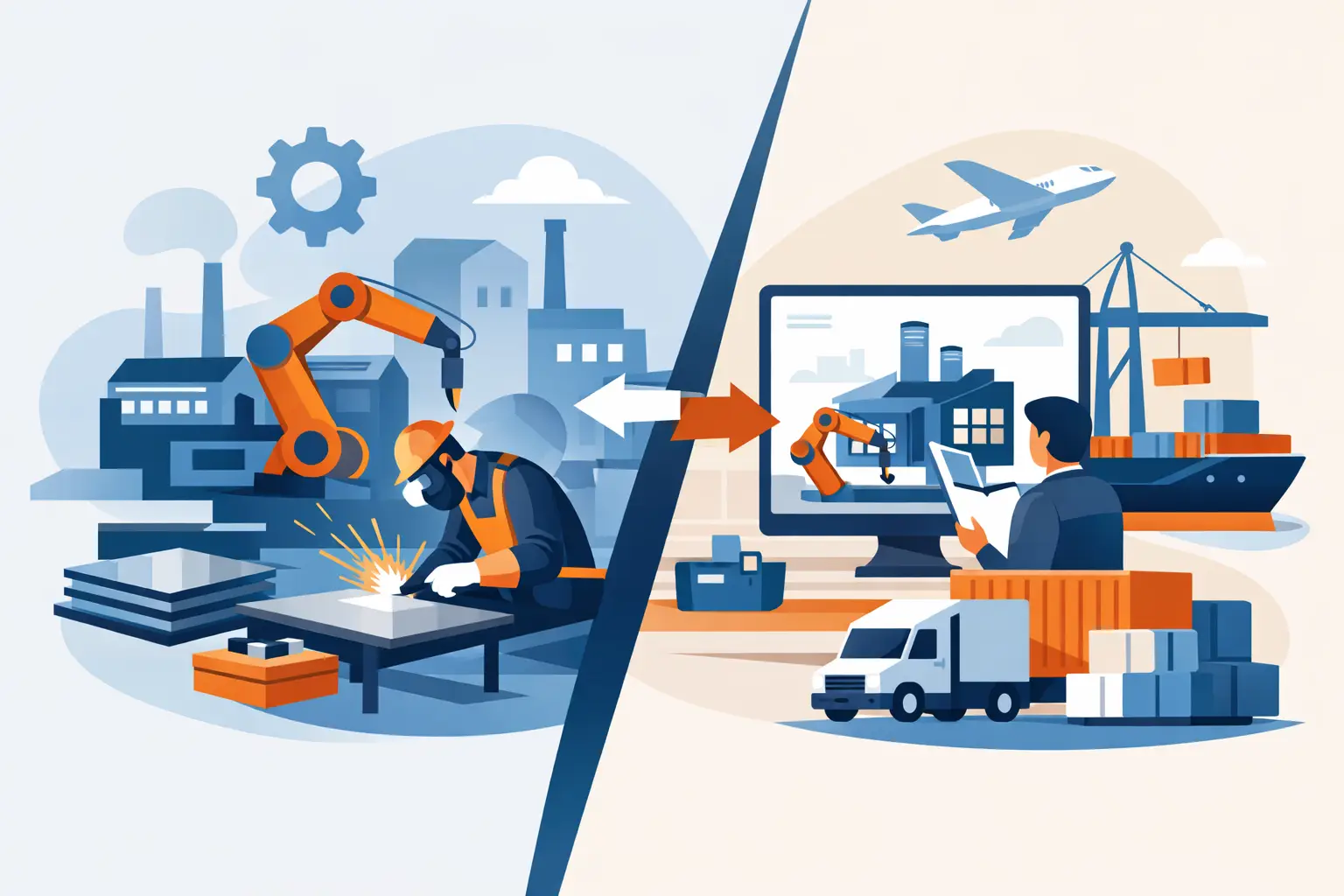
A production line is waiting for a bracket, enclosure, structural channel, or welded assembly that meets the drawing exactly. At that point, the question of in house versus outsourced fabrication is not theoretical. It affects project schedules, installed quality, inventory exposure, and the cost of every unit that reaches the field.
For OEMs, contractors, distributors, and industrial procurement teams, the right decision is rarely based on piece price alone. Fabrication requires more than a machine on the floor. It requires qualified operators, programming discipline, material control, inspection methods, preventive maintenance, finishing coordination, and enough available capacity to respond when demand changes.
In House Versus Outsourced Fabrication: The Real Decision
In-house fabrication can provide direct control when a company has stable, repeatable demand and the resources to operate a specialized production function. Outsourced fabrication can extend capability, reduce capital exposure, and simplify supply when the right manufacturing partner is selected. Neither model is automatically better.
The practical question is whether fabrication is a strategic internal capability or a production requirement that can be managed more efficiently through a qualified supplier. A company producing a narrow family of high-volume parts may benefit from dedicated internal equipment. A business with changing designs, multiple materials, mixed order quantities, or intermittent project demand may find that external capacity delivers a stronger commercial result.
The decision should account for the full operating model: engineering support, part complexity, forecast reliability, inspection requirements, logistics, and the consequences of a late or nonconforming component.
Cost Means More Than the Quoted Part Price
An internal cost comparison often begins with machine purchase price, labor, and material. Those are visible expenses, but they do not show the full cost of ownership. Press brakes, laser or plasma cutting systems, punching equipment, welding fixtures, and finishing processes require ongoing investment. Programming time, tooling, operator training, floor space, utilities, maintenance, inspection equipment, scrap, and downtime all affect the actual cost per part.
Utilization is especially important. A fabrication cell that runs consistently at productive volume can justify its fixed cost. Equipment that is used only for occasional projects can become an expensive bottleneck. Internal teams also need capacity buffers for urgent work, maintenance, employee absences, and engineering changes. Those buffers have a cost even when no parts are being produced.
Outsourcing converts much of that fixed exposure into a purchase cost. This can improve flexibility, particularly for companies that need fabricated components in stainless steel, aluminum, mild steel, galvanized sheet, or copper without investing in separate processes for each material. The supplier’s quote should still be evaluated carefully. Freight, packaging, duties where applicable, minimum order quantities, inventory carrying costs, and change-order charges all belong in the comparison.
For long-running, standardized parts, an internal operation may achieve an attractive unit cost after capital is fully utilized. For low-to-medium volumes, product launches, engineered-to-order work, and broad part portfolios, outsourced fabrication often avoids underused equipment and fragmented internal resources.
Capacity and Lead Time Must Be Evaluated Together
Owning equipment does not guarantee fast delivery. Internal fabrication departments can become constrained by competing priorities, a limited number of skilled operators, material shortages, or a single critical machine. When production schedules are full, urgent requirements can displace planned work and create delays elsewhere.
A capable fabrication partner adds production depth. Cutting, punching, bending, welding, forming, assembly, and surface finishing can be scheduled as a coordinated workflow rather than divided among separate vendors. This matters when a project requires both standard hardware and custom components, such as channel support systems, brackets, clamps, post bases, framing hardware, or welded structural assemblies.
However, outsourcing is not a substitute for planning. The buyer must provide complete drawings, material requirements, quantities, revision status, finishing specifications, packaging needs, and required delivery dates. Late clarification on hole locations, bend direction, weld symbols, or protective coating can disrupt lead times regardless of where the work is performed.
For repeat programs, it is useful to establish agreed lead times, forecast windows, safety-stock expectations, and procedures for expedites. A supplier with export-ready fulfillment and documented shipping coordination can be particularly valuable for international buyers managing multiple job sites or distribution locations.
Quality Control Depends on Process Discipline
Quality is often the deciding factor in an in house versus outsourced fabrication decision. Internal production gives engineers and quality teams physical proximity to the process. That can be useful during development, first-article approval, and frequent design adjustments. The advantage disappears, however, if the internal operation lacks documented inspection plans, calibrated measuring tools, material traceability, and clear accountability for nonconforming parts.
Outsourced fabrication requires confidence in the supplier’s controls. Buyers should look beyond a general statement of quality commitment and assess how the manufacturer manages drawings, revisions, incoming material, tooling, in-process inspection, final inspection, and corrective action. Tight tolerances are achieved through process control, not simply by requesting precision on a purchase order.
The level of verification should match the application. A cosmetic sheet metal enclosure may require surface consistency and fit. A structural bracket, foundation component, marine hardware item, or safety-critical assembly may require more detailed dimensional checks, weld verification, material documentation, and coating requirements. Clear acceptance criteria prevent disputes after parts are shipped.
Strong suppliers also help identify manufacturability issues before production begins. A minor adjustment to a bend radius, inside relief, weld access point, or toleranced feature can reduce scrap and improve repeatability without compromising functional requirements. This engineering dialogue is one of the most useful benefits of a partnership-based fabrication model.
Engineering Complexity Changes the Best Choice
Simple, stable parts are easier to bring in-house than complex assemblies with multiple operations. A flat blank may need only cutting or punching. A fabricated product can require precision bending, threaded hardware insertion, welding, grinding, assembly, plating or powder coating, labeling, and project-specific packaging. Each handoff increases the risk of variation and delay.
Companies should also consider how frequently designs change. If engineering revisions are common, internal teams may respond quickly for prototypes and small revisions. Yet a well-managed external manufacturer can provide the same responsiveness when it has disciplined revision control and direct communication between the buyer’s engineering team and its production team.
For products that combine catalog items with custom elements, a single-source supplier can reduce coordination effort. Rather than separately sourcing channels, fittings, clamps, fasteners, custom brackets, and fabricated assemblies, buyers can consolidate compatible requirements under one production and quality system. This reduces vendor management without forcing a company to own every fabrication process internally.
When In-House Fabrication Is the Better Fit
In-house fabrication is generally strongest when demand is high, predictable, and concentrated around a limited part range. It can also be justified when proprietary processes must remain closely controlled, when turnaround requirements are measured in hours, or when fabrication is inseparable from final assembly operations.
The organization must be prepared to treat the fabrication department as a serious manufacturing function. That means investing in equipment renewal, skilled labor, safety, quality systems, tooling, maintenance, and production planning. Without that commitment, the apparent control of in-house work can turn into inconsistent output and hidden operational cost.
When Outsourced Fabrication Creates More Value
Outsourcing is often the stronger choice when requirements vary by material, geometry, quantity, or finishing process. It is also effective for organizations that need to preserve capital, launch products quickly, access specialized capabilities, or supply projects across multiple regions.
The best results come from selecting a supplier that understands industrial drawings and commercial delivery requirements, not simply one that offers a low quote. Metallix Exports supports this model through precision sheet metal fabrication, custom production, standardized hardware coverage, and export-focused fulfillment for industrial and construction applications.
A qualified supplier should be evaluated on technical capability, capacity, communication speed, quality controls, packaging standards, and delivery performance. Request representative samples or first articles when appropriate, define inspection requirements before production, and establish a clear process for revisions. These actions make outsourcing a controlled extension of the buyer’s supply chain rather than a loss of control.
Build a Sourcing Model That Can Adapt
Many manufacturers do not need to choose only one path. A hybrid model can be effective: retain prototype work, highly proprietary operations, or immediate-response jobs internally, while outsourcing production volumes, specialized welding, complex assemblies, or finishing-intensive work. This approach can protect responsiveness without carrying the full cost of broad in-house capability.
The most reliable choice is the one that keeps approved parts moving at the required quality level and delivery date. Start with the component’s real production demands, measure total cost rather than visible cost, and choose the manufacturing structure that gives your team dependable capacity when the next schedule changes.


