
 E-mail :
 Call Us :
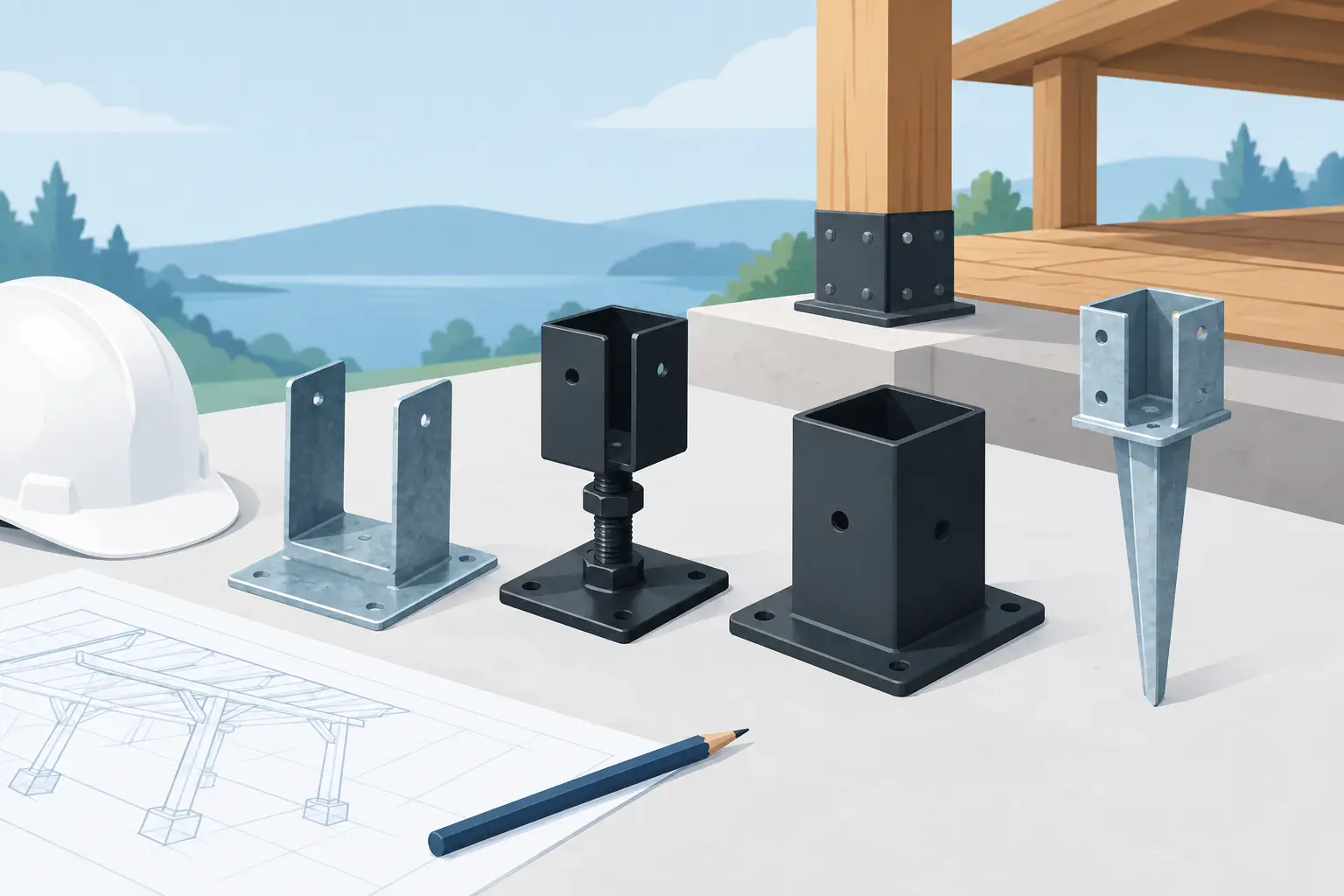
A post base may be a relatively small part of a structural assembly, but it controls a critical connection: how load moves from a post into the foundation. To select post bases correctly, buyers must look beyond post dimensions and match the base to the actual loading, substrate, exposure conditions, anchor requirements, and installation sequence. A mismatch can create alignment problems during erection, reduce connection capacity, or introduce early corrosion at the point where the structure meets concrete.
For contractors, OEMs, distributors, and project procurement teams, the right selection process reduces field modifications and helps keep schedules predictable. The objective is not simply to find a base that fits around a post. It is to specify a component that performs reliably within the complete structural system.
Start With the Load Path
Post bases are commonly used to connect timber, steel, or fabricated posts to concrete foundations, slabs, piers, deck footings, and other supporting surfaces. Their required capacity depends on more than vertical weight. A properly engineered selection considers gravity loads, lateral forces, uplift, moment forces, and the connection behavior of the post, fasteners, anchors, and supporting concrete.
Vertical compression is often the first consideration. The base must transfer the expected dead load and live load without deforming, crushing the support material, or overstressing the anchorage. Yet a post base that is adequate for compression alone may not be suitable where wind, equipment vibration, impact, seismic movement, or railing loads introduce lateral or uplift forces.
Where a post supports a canopy, platform, machinery frame, fence line, dock structure, or elevated assembly, the project team should confirm whether the connection is intended to resist moment. Many standard post bases are designed primarily as pinned connections. They locate the post and transfer specified loads, but they do not necessarily create a rigid moment connection. If the design relies on the base to resist bending, a heavier fabricated bracket, gusseted design, or engineered anchor arrangement may be required.
Select Post Bases by Post Profile and Connection Type
The post profile determines the geometry of the base, but fit should never be treated as the only requirement. Timber posts need adequate side support, clearance for drainage, and fastening provisions that do not split or weaken the member. Steel posts may require welded saddles, base plates, bolt holes, or custom brackets that match the post section and fabrication details.
Timber Post Bases
For wood construction, common configurations include U-shaped saddles, elevated standoff bases, and concealed or partially concealed connectors. The standoff dimension matters because direct wood-to-concrete contact can retain moisture and accelerate decay. An elevated base improves drainage and allows air movement beneath the post.
Check the inside width, side plate height, fastener hole pattern, and approved fastener type. A nominal post size can vary from its actual finished dimension, particularly with planed lumber, engineered wood, or imported material. Ordering by nominal size alone can result in loose fits or difficult installation.
Steel and Fabricated Post Bases
Steel tube, channel, angle, and custom fabricated posts may require a different approach. A welded base plate can provide a direct connection to concrete through anchor bolts, while a socket or cleat arrangement may simplify field assembly. Galvanized or stainless steel hardware should be selected with attention to material compatibility and the project environment.
For recurring OEM assemblies, standardized hole spacing and repeatable post geometry are valuable. They support faster installation, reduce assembly variation, and make replacement components easier to source. For specialized structural frames, custom fabrication can be more effective than modifying a catalog product in the field.
Evaluate the Supporting Concrete and Anchors
A post base can only perform as well as its anchor system and supporting substrate. Concrete strength, thickness, reinforcement location, edge distance, embedment depth, and condition all affect anchor capacity. New concrete, aged concrete, cracked concrete, hollow masonry, and thin slabs require different review criteria.
Cast-in-place anchor bolts are often preferred when foundation work can be coordinated early. They provide a dependable, purpose-designed connection and reduce the uncertainty associated with drilling after the concrete has cured. However, they demand accurate templates and careful positioning. A small anchor layout error can delay installation or require corrective work.
Post-installed mechanical or adhesive anchors can be practical for retrofit work and schedule-sensitive installations. Their selection must account for the approved substrate, drilling diameter, cleaning procedure, installation temperature, cure time where applicable, and required edge distances. These details are not administrative extras. They directly affect connection performance.
Anchor holes in the base plate should also match the installation strategy. Oversized holes may provide adjustment during erection, but they can require washers or plates sized to distribute load correctly. Slotted holes can help accommodate tolerances in one direction, though the structural implications should be reviewed before they are specified.
Match the Material and Finish to the Environment
Corrosion protection is central to long-term post base performance. Exterior installations, coastal conditions, chemical exposure, agricultural facilities, marine applications, and areas subject to deicing salts place substantially higher demands on the hardware than dry interior environments.
Hot-dip galvanized steel is a common choice for exterior structural hardware because the coating provides durable protection and reaches edges and complex shapes effectively. For highly corrosive locations, stainless steel may be the better option, provided the grade is appropriate for the exposure. Aluminum components require particular care where they contact dissimilar metals or treated wood, as galvanic corrosion can become a concern.
Finish decisions should include the fasteners and anchors, not only the post base itself. A high-quality galvanized base paired with unsuitable fasteners can create a weak point in the connection. Where appearance matters, powder coating may provide a clean finish, but it should not be assumed to replace the corrosion resistance needed for severe environments.
Consider Installation Tolerances Before Ordering
A well-made post base should make installation more controlled, not more difficult. Before procurement, confirm how much adjustment the crew needs for anchor placement, post alignment, and elevation. This is especially relevant for long runs of posts, modular frames, guard assemblies, dock systems, and structural supports that must align with prefabricated components.
The installation sequence also matters. Some bases require the post to be set into the saddle before the anchors are fully tightened. Others allow the base to be anchored first and the post installed afterward. If welded steel posts are being erected, access for tools, welding clearance, and coating touch-up requirements should be addressed in advance.
Field teams should not need to enlarge holes, bend side plates, or shim components beyond the approved installation method. Those practices often signal that the connection was not fully coordinated during specification. Clear drawings, controlled dimensions, and consistent manufacturing tolerances prevent these avoidable delays.
When Standard Post Bases Are Enough and When Custom Is Better
Standardized post bases are efficient for common dimensions, known load ranges, and repeat installations. They offer purchasing simplicity and can support stocking programs for distributors, contractors, and maintenance teams. Standard hardware is often the right commercial choice when its published dimensions, capacity, coating, and connection details match the project requirements.
Custom post bases become valuable when the project includes nonstandard post sizes, unique anchor patterns, heavier loads, special offsets, integrated gussets, unusual finishes, or repeated fabricated assemblies. A custom design can eliminate secondary plates, field welding, and improvised spacers. It can also combine multiple functions into one component, such as post support, lateral restraint, and connection to adjacent framing.
For buyers managing multiple vendors, working with a manufacturer capable of both standard supply and custom sheet metal fabrication can simplify sourcing. Metallix Exports produces precision metal components and structural hardware with fabrication processes that support application-specific dimensions, materials, finishes, and production volumes.
Specify the Details That Protect Project Performance
A purchase description should identify the post size or section, material grade, thickness, finish, anchor hole geometry, fastener requirements, and any applicable load or installation criteria. If the base will be used outdoors, near water, or in a corrosive facility, state the exposure condition directly rather than assuming a general exterior finish is sufficient.
The most reliable post base decision comes from treating the component as a structural connection rather than a commodity bracket. When the post, anchors, concrete, finish, and installation method are coordinated from the start, crews spend less time correcting fit-up issues and more time moving the project forward.


