
 E-mail :
 Call Us :
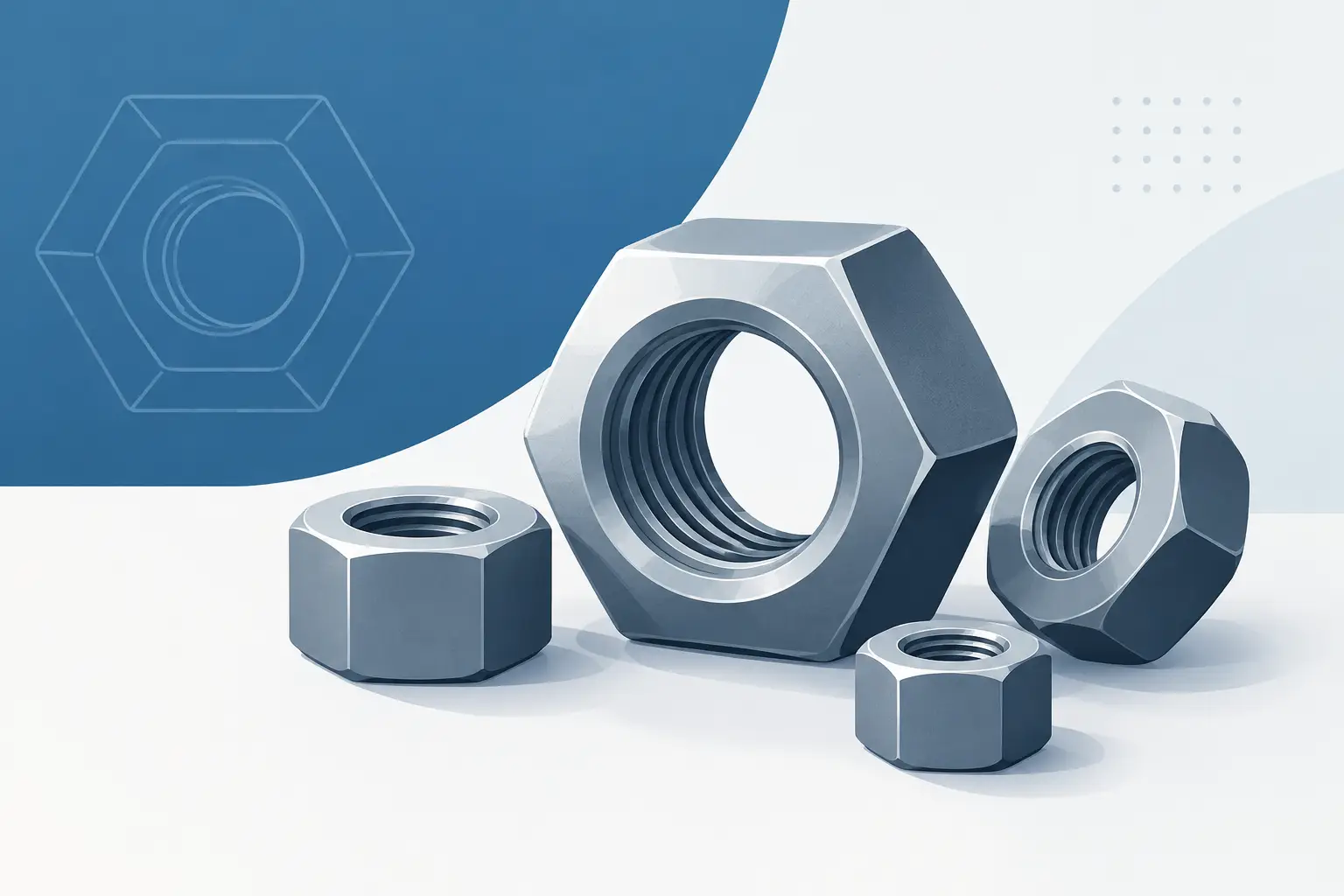
A hex nut is a small component with an outsized effect on assembly quality. When the thread form, material, grade, or protective finish is wrong, a structural bracket can loosen, a machine enclosure can become difficult to service, or an outdoor installation can corrode long before its intended service life. For procurement teams and engineers, selecting hex nuts is not a generic hardware decision. It is a specification decision that affects fit, load performance, installation speed, and long-term reliability.
The six-sided profile remains the standard for good reason. It gives installers positive wrench engagement, supports predictable torque application, and is readily available across a broad range of thread sizes and materials. Yet the apparent simplicity of the product can hide meaningful differences between standard catalog hardware and hardware that is genuinely suited to an application.
How to Specify Hex Nuts for the Application
A useful specification starts with the mating fastener. The nut and bolt must share the same thread system, nominal diameter, and pitch. A 1/2-13 UNC nut, for example, is not interchangeable with a 1/2-inch fine-thread nut, even though the diameters appear identical. Metric and inch-series threads also require strict separation. For high-volume assembly or international supply programs, clear thread callouts reduce receiving errors and prevent costly installation delays.
Thread fit matters as well. A nut that runs freely onto a bolt may seem convenient, but excessive clearance can reduce holding consistency. A fit that is too tight can increase assembly torque, damage coatings, or create galling risk in stainless steel. The correct balance depends on the applicable standard, coating thickness, and service environment.
The next decision is the required strength grade. Standard carbon steel hex nuts suit many general fabrication, framing, and noncritical mounting applications. Higher-strength nuts are required when paired with high-strength bolts in structural, equipment, automotive, or load-bearing assemblies. The nut must be compatible with the bolt grade, not selected in isolation. Pairing a high-grade bolt with an underspecified nut can compromise the joint, while specifying unnecessary strength can add cost without producing a practical benefit.
For buyers, the requirement should be stated in terms that can be verified: thread designation, material, grade or property class, dimensions, finish, governing standard, and any testing or certification needs. This is more dependable than requesting a "heavy-duty" nut, a term that has no consistent technical meaning.
Standard Dimensions and the Value of Consistency
Hex nut dimensions are defined by recognized standards, including across-flats width, thickness, thread size, and chamfer geometry. These dimensions affect more than wrench selection. They determine clearance around brackets, channels, equipment housings, and fabricated parts. A slightly oversized component may interfere with an adjacent bend or prevent a tool from reaching the fastener in the field.
Consistency is especially important where nuts are supplied with pre-punched brackets, strut systems, welded fabrications, or packaged installation kits. Matching hardware dimensions to the manufactured component avoids a common sourcing problem: parts that meet a basic specification individually but do not work efficiently as an assembly. For repeat orders, controlled dimensions and thread quality also support consistent torque procedures on the production floor.
Material Selection for Hex Nuts
Material selection should reflect both the mechanical load and the environment. Mild or carbon steel remains a practical option for indoor industrial applications and for components that will receive a suitable protective finish. It is cost-effective, widely available, and appropriate for many brackets, supports, machinery, and fabricated assemblies.
Stainless steel hex nuts are commonly selected for moisture, washdown exposure, marine-adjacent use, food-related equipment, and exterior installations where corrosion resistance is a priority. However, stainless steel is not a single material category. Different stainless grades provide different levels of corrosion resistance, and stainless threads can gall when assembled dry or at high speed. Where repeated servicing or high-torque installation is expected, thread lubrication, compatible coatings, or carefully matched bolt materials may be necessary.
Galvanized or zinc-coated steel hardware offers a middle ground for many outdoor and construction applications. The finish provides corrosion protection at a lower cost than stainless steel, but the right coating depends on the exposure level. Interior dry conditions, general exterior use, and aggressive coastal or chemical environments do not demand the same protection. Coating thickness also matters because it can affect thread fit.
Aluminum, brass, and specialty alloy nuts may be appropriate where weight, electrical conductivity, nonmagnetic properties, or compatibility with adjacent materials is required. These choices involve trade-offs. Aluminum is lightweight but has lower strength than steel. Brass resists corrosion in many settings and is useful in electrical applications, but it may not be suitable for high-load structural connections. The application, not habit, should determine the material.
Preventing Galvanic and Corrosion Problems
A fastener assembly must be evaluated as a system. Combining dissimilar metals in a wet or salt-exposed environment can accelerate galvanic corrosion. An aluminum component assembled with incompatible stainless or carbon steel hardware may require insulating washers, sealants, or a revised material combination. Similarly, damaged plating, trapped moisture, and crevices around hardware can shorten the usable life of an otherwise sound installation.
For exterior steel assemblies, buyers should also consider whether the hardware finish aligns with the finish on the bracket, channel, or fabricated support. A long-life coated structure paired with lightly protected nuts can create an early maintenance point. Coordinating finishes across the complete assembly is usually more efficient than replacing hardware after installation.
Finish, Torque, and Assembly Performance
A protective finish does more than improve appearance. Zinc plating, hot-dip galvanizing, mechanical galvanizing, black oxide, and other surface treatments affect corrosion resistance, friction, and thread engagement. Because torque is used as a practical method to create clamp load, changes in surface friction can change the actual joint force achieved at the same wrench setting.
This is why torque values should not be copied from a generic chart without considering fastener grade, lubrication, coating, and joint design. Over-torquing can stretch bolts, strip threads, damage plating, or distort thin sheet metal. Under-torquing can allow movement, vibration loosening, and loss of clamp force. Critical applications may need documented torque procedures, calibrated tools, prevailing-torque nuts, lock washers, thread-locking compounds, or a combination of these measures.
A standard hex nut is often the correct choice, but it is not automatically the right choice for vibration-prone equipment. In those cases, nylon-insert lock nuts, all-metal lock nuts, flange nuts, jam nuts, or engineered locking methods may offer better retention. Each option has limitations. Nylon inserts have temperature and reuse constraints, while all-metal locking designs can increase installation torque. The right solution depends on the joint, not simply the severity of the environment.
What B2B Buyers Should Confirm Before Ordering
The most reliable hardware orders begin with a complete part definition and a realistic view of the supply program. Before releasing a purchase order, confirm the thread designation, standard or drawing reference, material and grade, finish requirement, quantity, packaging, inspection expectations, and required documentation. If the nuts will be supplied as part of a kit, define the kit contents and labeling requirements rather than leaving them to interpretation.
For OEMs and distributors, lot consistency is as valuable as unit cost. Variations in coating, thread quality, wrench size, or packaging can interrupt assembly operations even when each shipment appears broadly similar. A capable manufacturing partner should be able to support repeatable specifications, dimensional checks, material traceability when required, and packaging suitable for export or jobsite distribution.
Custom requirements deserve the same discipline. Nonstandard dimensions, special materials, captive hardware arrangements, custom finishes, and hardware packaged with fabricated components can reduce handling and simplify vendor management. They also require early engineering review. Customizing a nut or related hardware may improve installation efficiency, but it can extend tooling, sampling, and approval timelines.
Metallix Exports supports industrial buyers with standardized hardware and custom-fabricated components designed around the full assembly requirement. For projects involving brackets, channels, structural supports, or export-ready kits, specifying the hardware alongside the fabricated parts helps control fit, finish compatibility, and delivery coordination.
A hex nut may occupy only a few lines on a bill of materials, but it carries the load of every decision made around it. Define it clearly, match it to the joint and environment, and treat consistency as a production requirement rather than an afterthought.