
 E-mail :
 Call Us :
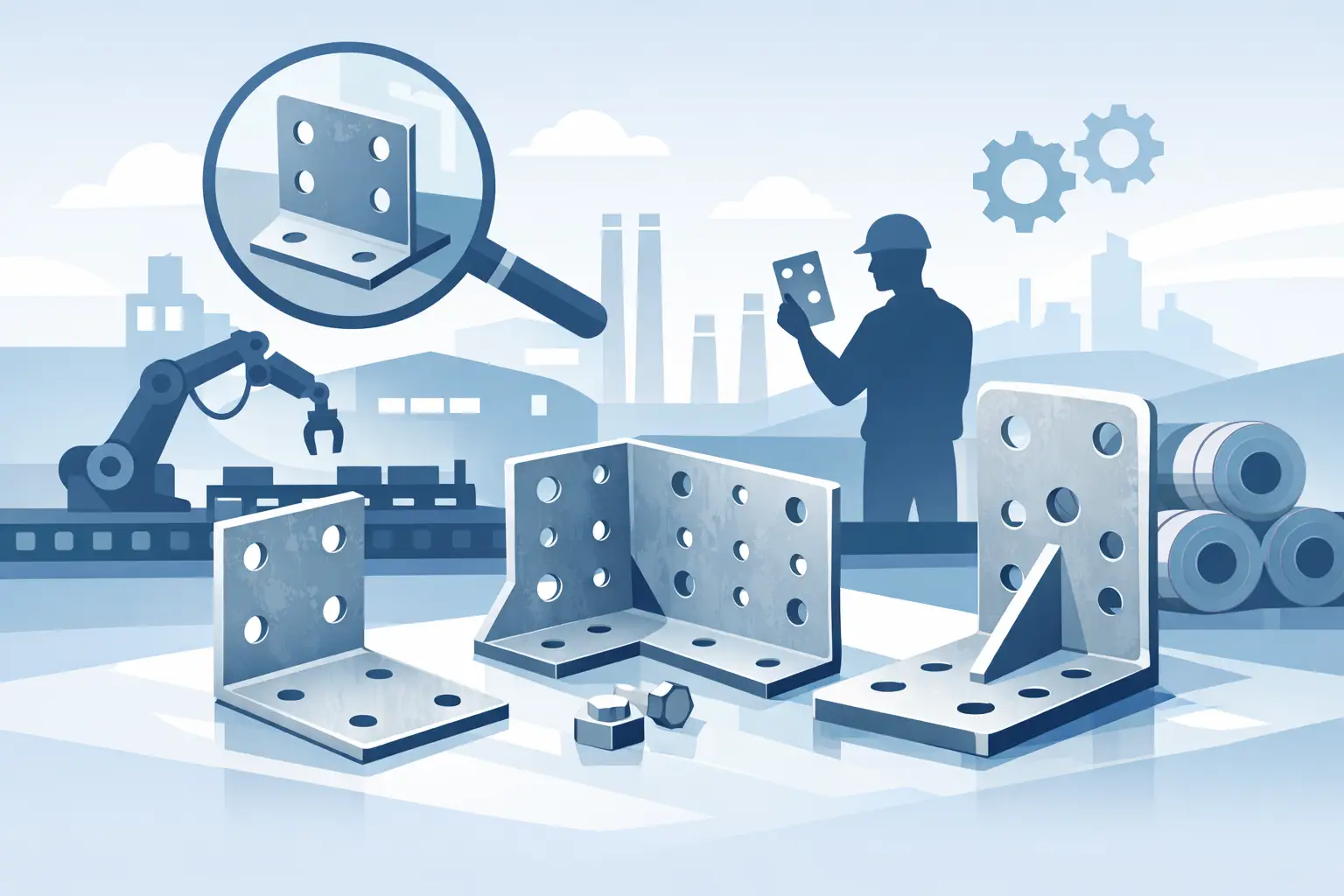
When a bracket fails in the field, the issue is rarely just the bracket. It becomes a delay, a return, a site fix, or a larger conversation about supplier reliability. That is why selecting a galvanized steel brackets manufacturer deserves the same level of scrutiny as any other structural or installation-critical component in your supply chain.
For procurement teams, OEM buyers, contractors, and engineers, the right manufacturer is not simply the lowest-cost source. It is a production partner that can hold tolerances, apply consistent corrosion protection, support volume requirements, and ship on schedule. In many applications, galvanized steel brackets are exposed to moisture, outdoor conditions, vibration, and load-bearing demands. Performance starts long before installation. It starts at the factory.
What a galvanized steel brackets manufacturer should actually deliver
At a basic level, a manufacturer should be able to produce brackets that meet dimensional, structural, and finish requirements. In practice, B2B buyers usually need more than that. They need repeatability across batches, process control across forming and finishing, and a supplier that understands how the bracket functions in the finished assembly.
That distinction matters. A simple angle bracket for light framing is not the same as a support bracket used in HVAC, industrial mounting, electrical infrastructure, marine-adjacent environments, or foundation hardware systems. The geometry, hole pattern, edge condition, load path, and coating specification all affect real-world performance.
A capable manufacturer evaluates the bracket as a functional part, not just a shaped piece of metal. That means reviewing material thickness, bend radii, punching accuracy, weld integrity where required, and the impact of galvanization on fit-up and installation.
Why galvanization quality matters as much as bracket geometry
Buyers often focus first on dimensions and price. Those are important, but galvanization quality deserves equal attention. A bracket that is dimensionally correct but poorly protected against corrosion can create service-life issues that cost far more than the original purchase price.
Galvanized brackets are selected because zinc coating helps protect the steel substrate in demanding conditions. Still, not all galvanized parts perform the same way. Coating consistency, adhesion, coverage on edges and corners, and compatibility with the intended environment all matter. If brackets will be used outdoors, near coastal conditions, in high-humidity installations, or in industrial settings with exposure to contaminants, the finish specification should be aligned to actual service conditions.
There is also a practical manufacturing consideration. Galvanization can affect final dimensions, hole tolerances, and mating surfaces if the process is not managed correctly. For projects involving assemblies, channels, clamps, anchors, or unistrut-compatible systems, small variations can create installation problems at scale. A reliable manufacturer accounts for coating thickness during design and production instead of treating finishing as an afterthought.
Evaluating manufacturing capability beyond the catalog
A broad product catalog is useful, especially for buyers trying to reduce supplier fragmentation. But catalog depth alone does not confirm production capability. The real question is whether the manufacturer can consistently build to your specifications, whether you need standard brackets, modified stock items, or fully custom fabricated parts.
This is where process range becomes important. Cutting, punching, bending, welding, forming, assembly, and surface finishing should be managed with control and consistency. If your project requires bracket families in multiple sizes, related hardware, or matched support components, the supplier should be able to produce them within one coordinated manufacturing system.
That coordination reduces risk. Separate vendors for brackets, clamps, channels, post bases, and fabricated supports may look workable during sourcing, but in production they often create mismatched tolerances, longer lead times, and accountability gaps. A manufacturer with integrated fabrication capability can simplify qualification and purchasing.
What B2B buyers should ask a galvanized steel brackets manufacturer
The strongest supplier conversations move quickly beyond unit pricing. Buyers should ask how the manufacturer controls tolerances, how material is sourced, what inspection steps are used, and whether the production line is suited for repeat orders as well as project-based runs.
It is also worth asking how custom requirements are handled. Many bracket programs begin with a standard form and then evolve around field conditions, mounting constraints, or application-specific load requirements. A manufacturer that can support design adjustments, prototype development, and production scaling is often more valuable than a supplier offering only fixed catalog items.
Lead time discipline is another critical factor. A low quote loses value if the supplier cannot support shipment windows or communicate clearly when schedules change. For international buyers, export readiness matters just as much. Packaging, documentation, consolidation, and shipment coordination should support commercial reliability, not add uncertainty.
Standard brackets versus custom bracket production
There is no single right approach here. It depends on application, volume, and installation requirements.
Standard galvanized brackets are often the best fit when dimensions are common, loading conditions are straightforward, and speed matters most. They help distributors, contractors, and repeat-purchase buyers control cost and reduce engineering time.
Custom brackets are usually the better choice when the project includes non-standard hole patterns, application-specific leg lengths, heavier gauges, welded features, or integration with larger assemblies. Custom production can also reduce total installed cost by eliminating field modification, improving fit, and reducing rework.
The trade-off is that custom manufacturing requires stronger up-front coordination. Drawings, tolerances, finish requirements, and inspection expectations must be clearly defined. A capable manufacturer will help make that process efficient, but the buyer should still expect a more technical review than with an off-the-shelf part.
Quality control is where supplier claims become measurable
Every manufacturer can say quality matters. Serious buyers need to understand how that quality is maintained.
For galvanized steel brackets, quality control should cover incoming material checks, dimensional verification during production, tooling consistency, hole location accuracy, bend angle inspection, and finish review. If brackets are welded, weld quality must be controlled without compromising downstream fit or coating performance. If the parts are part of a larger support or framing system, assembly compatibility should also be checked.
Repeatability is often the deciding factor in long-term supplier performance. The first sample may look fine. The real test is whether the tenth batch, shipped months later, matches the approved standard. That is especially important for OEMs, infrastructure buyers, and distributors serving multiple jobs from one qualified source.
The value of engineering-focused manufacturing
Bracket production may appear straightforward from the outside, but many sourcing problems come from manufacturers treating fabricated hardware as low-complexity commodity output. In reality, even a small bracket can carry structural, positional, and corrosion-resistance requirements that affect an entire installation.
An engineering-focused manufacturer understands that formed metal parts must work in real assemblies. Hole spacing affects mounting alignment. Material grade affects strength and formability. Bend sequencing affects consistency. Finish selection affects both durability and fit. When those details are managed correctly, installation becomes faster and field issues decrease.
This is where experienced manufacturing partners create value. They can review drawings with a practical eye, flag production risks early, and recommend adjustments that preserve function while improving manufacturability. For buyers balancing cost, quality, and lead time, that kind of input is useful.
Why supply chain reliability matters as much as part quality
A well-made bracket delivered late can still disrupt a project. Industrial buyers need manufacturers that understand production schedules, shipping commitments, and communication discipline.
Reliable supply means more than making parts. It means confirming specifications before release, maintaining output consistency, supporting forecasted demand, and shipping in a way that protects both product and schedule. For export markets, this includes the ability to manage documentation, packaging standards, and logistics coordination with the same precision applied to manufacturing.
This is one reason many buyers prefer working with a single capable partner for both standard and custom metal components. It simplifies planning and creates better accountability. Metallix Exports supports that model with broad sheet metal manufacturing capability, engineered hardware production, and export-ready fulfillment built for industrial and construction buyers.
Choosing the right manufacturing partner
The best galvanized steel brackets manufacturer is not defined by one attribute alone. It is a combination of fabrication capability, coating quality, technical understanding, quality control, and dependable delivery. Price remains important, but for serious B2B sourcing, total reliability usually matters more than a marginal savings on paper.
If your project depends on bracket performance, ask harder questions early. Review manufacturing depth, not just product photos. Confirm how tolerances are maintained, how finishes are controlled, and how custom requirements are managed. A bracket may be a small part of your bill of materials, but the manufacturer behind it can have an outsized impact on project execution.
The right supplier should make your job easier - not by promising everything, but by producing exactly what the application requires and delivering it when your schedule says it is needed.


