
 E-mail :
 Call Us :
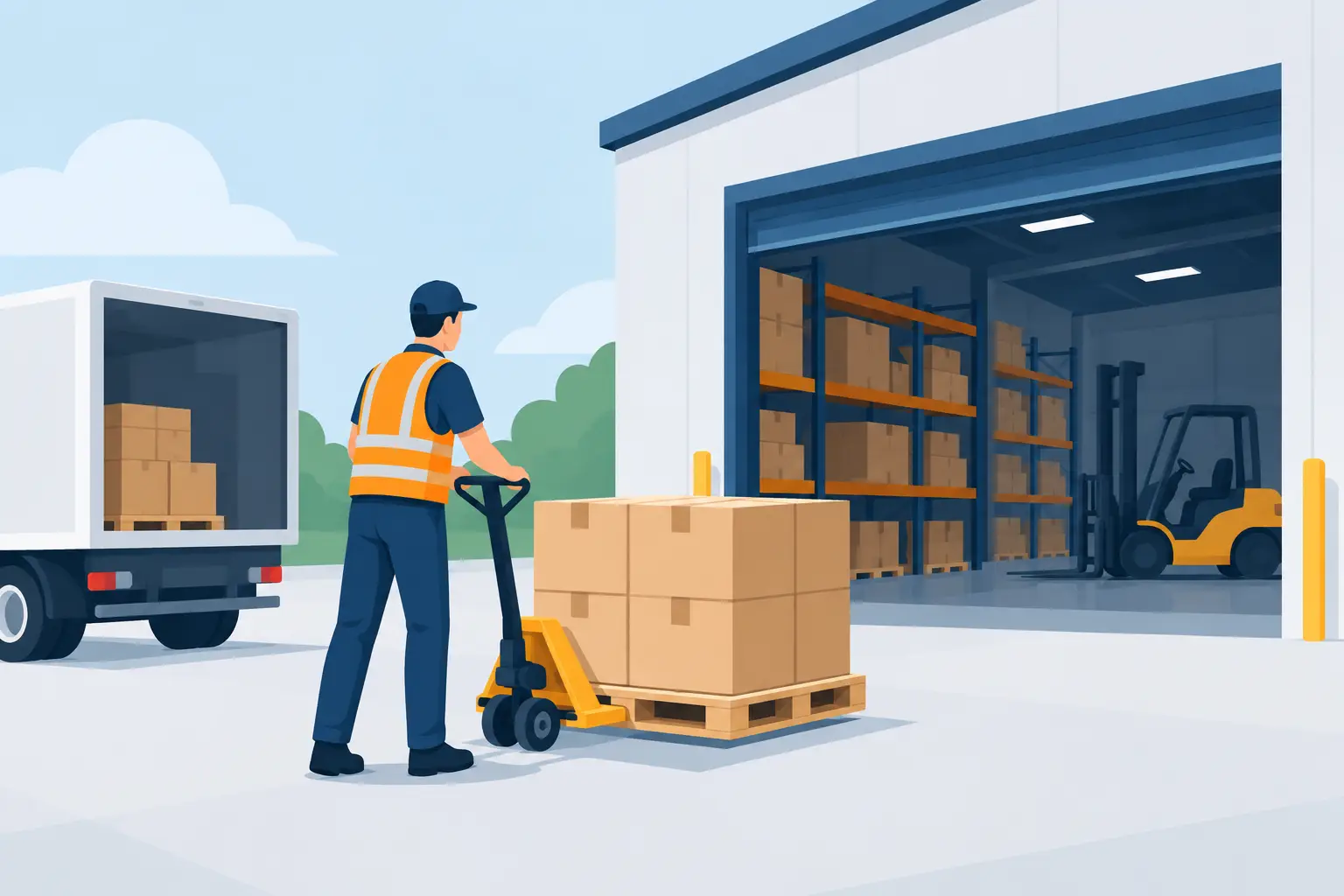
For a procurement team managing structural hardware, fabricated assemblies, channels, brackets, or project-specific components, freight is not merely a line item. It affects receiving capacity, installation schedules, damage exposure, and the final landed cost of every order. Free warehouse pickup gives qualified buyers more control over that process by allowing them to collect completed goods with their preferred carrier or company vehicle rather than paying for supplier-arranged transportation.
The offer is straightforward, but a successful pickup requires more than sending a truck to a loading dock. Industrial orders need accurate release information, suitable equipment, correct packaging expectations, and a defined transfer of responsibility. When those details are managed early, warehouse collection can be an efficient option for OEMs, distributors, contractors, and project buyers.
What Free Warehouse Pickup Means for B2B Buyers
Free warehouse pickup generally means there is no separate charge for making completed, properly packed goods available for collection at the supplier's facility during agreed warehouse hours. The buyer arranges transportation, selects the carrier, and assumes responsibility for the freight movement once the shipment is released to that carrier or pickup representative.
For buyers in the Greater Toronto Area, collecting from a Vaughan-area facility can be particularly practical when a project vehicle, dedicated courier, or consolidated regional truck is already operating nearby. For international and long-distance buyers, pickup may still be the right choice when a nominated freight forwarder is coordinating several suppliers into one export shipment.
The term does not mean every handling service is automatically included. Special crating, export documentation, after-hours access, extended storage, liftgate delivery, or unusual loading requirements may involve separate arrangements. A reliable supplier should make the scope clear before the goods are ready so the purchasing team can compare collection costs against delivered freight accurately.
When Warehouse Pickup Is the Better Freight Option
Pickup works best when the buyer has established freight rates, trusted carrier relationships, or a consolidation plan. A distributor may collect multiple product categories on one truck. An OEM may use its regular inbound route to collect custom bent parts, welded fabrications, and standard support hardware at the same time. A contractor may dispatch a vehicle directly to the jobsite after pickup, reducing an extra warehouse touchpoint.
It can also provide useful scheduling control. Rather than waiting for a supplier-selected carrier to offer a delivery window, the buyer can book collection around production needs, receiving hours, or site access restrictions. This matters when components must arrive in sequence for assembly, framing, electrical support installation, marine hardware work, or foundation preparation.
There are trade-offs. A low carrier rate can disappear if the wrong truck arrives, a driver lacks the required pickup number, or material is collected before all line items are verified. Buyers should also consider insurance coverage, cross-border requirements, detention exposure, and the actual cost of managing the shipment internally. Free pickup is most valuable when the buyer can control freight professionally, not simply because the initial charge is zero.
Confirm Readiness Before Dispatching a Carrier
The most common avoidable cost in warehouse collection is an unproductive truck arrival. Before booking transport, obtain written confirmation that the order is complete, inspected, packaged, and released for pickup. A production completion date is not always the same as a warehouse release date. Parts may still require final quality checks, labeling, protective finishing cure time, or packing into export-ready bundles.
The release confirmation should identify the purchase order number, sales order number, pickup reference, total piece count, and the number of pallets, bundles, crates, or loose items. It should also state the shipment weight and dimensions. Those details allow the carrier to assign the correct equipment and allow the buyer to verify that the shipment matches its original order.
For custom metal products, confirm the revision level before collection. A bracket, post base, channel, clamp, or welded assembly can be dimensionally similar to an earlier version while containing a critical hole pattern, material grade, coating, or tolerance change. The warehouse team needs a clear link between the physical goods and the approved drawing or specification.
Match the Vehicle to the Load
Industrial metal products are dense, often long, and sometimes awkward to handle. A vehicle selected by pallet count alone may be unsuitable once weight distribution, bundle length, forklift access, and securement points are considered. The pickup plan should reflect the actual configuration of the freight.
A boxed hardware order may fit a standard dry van, while long strut channels, formed sections, helical pier components, or fabricated frames may require a flatbed, curtain-side truck, or another vehicle with adequate load length and tie-down capability. If materials are crated for export, the carrier needs sufficient interior clearance and floor capacity. If a forklift will load from one side only, the truck's configuration must allow safe access.
Give the carrier the shipment weight, dimensions, package count, pickup hours, contact name, and any site-specific instructions when booking. Ask whether the driver needs a hard hat, safety vest, appointment number, or bill of lading in advance. These small checks protect the loading schedule and reduce the risk of refused collection.
Loading Equipment and Driver Responsibilities
Many industrial warehouses can load with a forklift when the shipment and vehicle are compatible, but buyers should not assume every pickup includes the same loading service. Clarify who will load, whether the driver must secure the freight, and whether the carrier needs dunnage, straps, edge protection, or tarps.
The driver should inspect the visible condition of the packages before departure. If a pallet appears damaged, a bundle is not secured, or the package count differs from the paperwork, the issue should be recorded before the truck leaves. Once freight is signed for and in transit, resolving responsibility becomes more difficult for every party involved.
Documentation That Keeps the Handoff Clear
At minimum, the driver should arrive with the correct pickup reference and leave with documentation that identifies what was collected. The bill of lading should match the shipment count, description, and consignee information. The buyer should retain the signed copy as proof of transfer.
Export orders need additional care. A freight forwarder may require commercial invoices, packing lists, country-of-origin details, tariff classifications, or other declarations based on the destination and product type. The required documents depend on the shipment, destination, and agreed shipping terms. Request them early rather than discovering a gap after cargo has reached a terminal or border crossing.
For order accuracy, align three records: the purchase order, the packing list, and the carrier receipt. This simple discipline helps procurement teams detect short shipments, mixed packages, or incorrect references before components reach a production line or jobsite. It is especially valuable when one collection includes both catalog hardware and custom-manufactured parts.
Set a Clear Point of Responsibility
A pickup arrangement should establish when custody and risk transfer from supplier to buyer or buyer-appointed carrier. The precise terms belong in the quotation, purchase order, or shipping agreement, particularly for export transactions. Ambiguity creates unnecessary disputes if freight is damaged in transit, delayed at a terminal, or misplaced during consolidation.
Buyers should also define what happens if collection is delayed. Warehouses have finite staging space, and completed goods may need to move through receiving and loading areas on a fixed schedule. Short-term holding may be available, but extended storage can affect capacity and may require an agreed plan. Communicating a delay early is far better than leaving completed goods uncollected without notice.
Metallix Exports supports buyers who need dependable access to standard and custom sheet metal products, from precision hardware to larger fabricated assemblies. For pickup orders, the same production discipline that applies to manufacturing should apply to the handoff: confirm specifications, verify readiness, match the freight equipment, and document the transfer.
Free warehouse pickup is most effective when it is treated as part of the supply plan rather than a last-minute freight decision. A well-prepared collection protects schedules, gives buyers meaningful transportation control, and helps finished components arrive ready for the work they were manufactured to support.


