
 E-mail :
 Call Us :
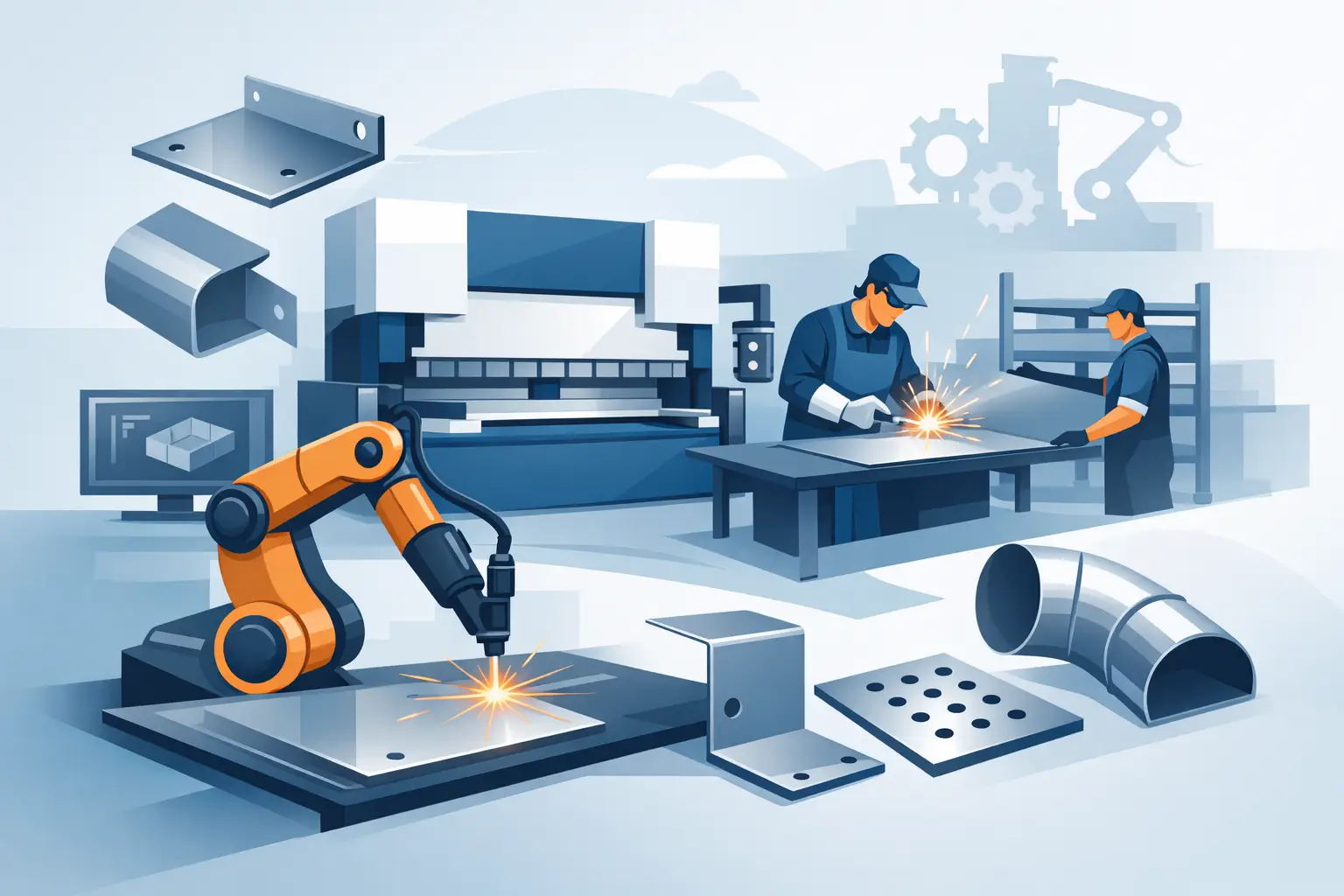
When a project depends on exact fit, repeatable quality, and delivery that aligns with installation or assembly schedules, off-the-shelf metal parts are rarely enough. Custom sheet metal fabrication services give OEMs, contractors, and procurement teams a way to source components built to specification instead of forcing designs around standard stock.
For industrial buyers, the value is not just in making a part. It is in getting the right material, the right tolerance, the right finish, and the right production method from a supplier that can support both prototype requirements and ongoing volume. That is where a capable fabrication partner creates measurable operational value.
What custom sheet metal fabrication services actually cover
Custom sheet metal fabrication services typically include the full sequence required to convert flat metal into finished components or assemblies. That can start with laser cutting, shearing, punching, and CNC machining, then move into bending, forming, welding, hardware insertion, finishing, and final assembly.
The scope matters because many buyers are not looking for a shop that can perform one isolated process. They need a manufacturing partner that can control the entire build. A bracket may require tight-hole placement, multiple bends, weld integrity, surface treatment, and packaging suitable for export or direct line-side delivery. Managing those steps through separate vendors creates risk at every handoff.
A single-source fabrication approach improves coordination, reduces dimensional variation between processes, and simplifies accountability. It also helps procurement teams reduce vendor complexity, which is often just as important as unit price.
Why buyers choose custom fabrication over standard components
Standardized hardware has a place, especially when lead time and interchangeability are the main priorities. But many applications in construction, marine, HVAC, infrastructure, electrical support, and industrial equipment require parts designed around load conditions, mounting constraints, environmental exposure, or assembly requirements.
That is where custom fabrication becomes the better commercial decision. A purpose-built component can improve installation speed, reduce field modification, increase structural performance, and limit waste. In many cases, a custom part is not an added cost so much as a way to avoid downstream cost.
The trade-off is that custom work demands better upfront coordination. Drawings must be clear. Material selection must match the application. Critical tolerances need to be defined correctly. If those inputs are weak, even a capable fabricator is left solving avoidable problems.
Custom sheet metal fabrication services and material selection
Material choice has a direct effect on part performance, manufacturability, and cost. Mild steel is often selected for structural strength and value. Stainless steel is preferred where corrosion resistance, hygiene, or appearance matters. Aluminum supports weight-sensitive designs and easier handling. Copper is used where conductivity is essential. Galvanized sheet offers a practical balance for many exterior or utility-focused applications.
There is no universal best option. It depends on the operating environment, finish requirement, forming complexity, and budget target. For example, a marine bracket may need corrosion resistance that changes the material recommendation entirely. A formed enclosure for indoor industrial equipment may prioritize dimensional stability and finish consistency instead.
Experienced fabricators do more than process customer drawings. They help buyers assess whether the specified material aligns with production reality and field performance. That kind of engineering-focused review can prevent expensive redesigns later.
The processes behind precision fabrication
Precision in sheet metal work does not come from one machine. It comes from process control across every step. Cutting accuracy affects bend performance. Bend sequencing affects final geometry. Welding heat can influence dimensional stability. Surface finishing can impact fit if tolerances are already tight.
That is why advanced capability matters. CNC-controlled cutting and punching improve repeatability. Press brake accuracy supports consistent forming. Skilled welding and fixture discipline protect alignment. Inspection procedures confirm that finished parts match approved drawings and tolerance requirements.
For B2B customers, consistency is often more valuable than a single successful sample. A prototype that looks good is not enough if production batches vary. Reliable custom sheet metal fabrication services are built around repeatable output, not one-time effort.
What to look for in a fabrication partner
The right supplier should be able to handle both technical demands and commercial realities. Manufacturing capability is only one part of the decision. Buyers also need confidence in communication, documentation, quality control, and shipping performance.
A strong fabrication partner should be comfortable working from detailed prints, CAD files, and application requirements. Just as important, they should ask the right questions when information is incomplete. That signals production maturity. It shows the supplier is thinking about manufacturability, tolerance stack-up, and final use rather than simply quoting what is on paper.
Production breadth is another advantage. A supplier that can produce brackets, channels, clamps, post bases, support systems, welded assemblies, and related hardware gives customers more purchasing flexibility. It becomes easier to consolidate sourcing and keep product compatibility aligned across a project or product line.
For global buyers, export readiness is equally important. Packaging, labeling, documentation, and shipment coordination need to support smooth international movement. Delays caused by incomplete export preparation can disrupt schedules just as much as late production.
Where custom fabrication delivers the most value
Custom fabrication is especially valuable in applications where installation conditions are fixed but standard parts are not suitable. Structural support hardware, framing systems, dock and marine hardware, equipment mounting brackets, foundation components, and OEM subassemblies all fall into this category.
In these environments, precision affects more than appearance. Hole location can determine whether field crews complete installation on time. Consistent bend angles can affect fit across an entire assembly. Surface finish can influence service life in outdoor or corrosive settings.
The strongest results usually come when fabrication is treated as part of project planning rather than a last-minute purchase. Early supplier involvement can identify opportunities to simplify geometry, reduce welding, improve nesting efficiency, or select a more practical material thickness. Those changes can lower cost without weakening performance.
Managing cost without sacrificing quality
Cost control in custom fabrication is not only about finding the lowest quote. It is about balancing material use, labor intensity, tooling requirements, tolerances, secondary processes, and order volume.
Very tight tolerances, cosmetic finish standards, and multi-stage assemblies naturally increase production time. That does not mean they should be avoided. It means they should be specified where function actually requires them. Overengineering a non-critical feature adds cost with no operational benefit.
A reliable supplier will help buyers identify these trade-offs. In some cases, changing a bend radius or hole size can improve manufacturability. In others, combining multiple fabricated parts into a smarter assembly can reduce installation labor enough to justify a higher component price. The best fabrication decisions are made with total project cost in mind.
Why manufacturing discipline matters after the quote stage
Many sourcing problems appear after purchase orders are placed. Lead times drift. Revision control gets messy. Finished parts vary from approved samples. These issues usually point to weak manufacturing discipline rather than isolated mistakes.
That is why process reliability matters as much as fabrication capability. Buyers should expect documented quality checks, clear revision handling, production planning discipline, and realistic scheduling. A dependable supplier does not overpromise capacity just to win work. They align commitments with actual production control.
This is where a company such as Metallix Exports can stand apart for B2B customers that need both standard product support and custom-built components. A manufacturing partner with broad process capability, engineering focus, and export-ready fulfillment can simplify sourcing while maintaining the precision industrial buyers expect.
Choosing custom sheet metal fabrication services with confidence
The best supplier relationship is built on more than equipment. It depends on responsiveness, technical understanding, and the ability to deliver repeatable quality at the pace your business requires. Buyers should look for evidence of real production capability, not just a long service list.
That includes material range, fabrication depth, assembly support, finish options, tolerance control, and packaging discipline. It also includes a practical understanding of the industries being served. A supplier familiar with construction hardware, industrial supports, marine applications, or OEM requirements can identify issues earlier and support better outcomes.
If your current sourcing model involves too many vendors, too many revisions, or too much variability, custom sheet metal fabrication services can provide a more controlled path. The real advantage is not simply getting a custom part made. It is working with a fabrication partner that helps your product, project, and supply chain perform with fewer surprises.
The right part should fit the first time, perform as intended, and arrive when your schedule says it should. That is the standard serious industrial buyers should expect.


