
 E-mail :
 Call Us :
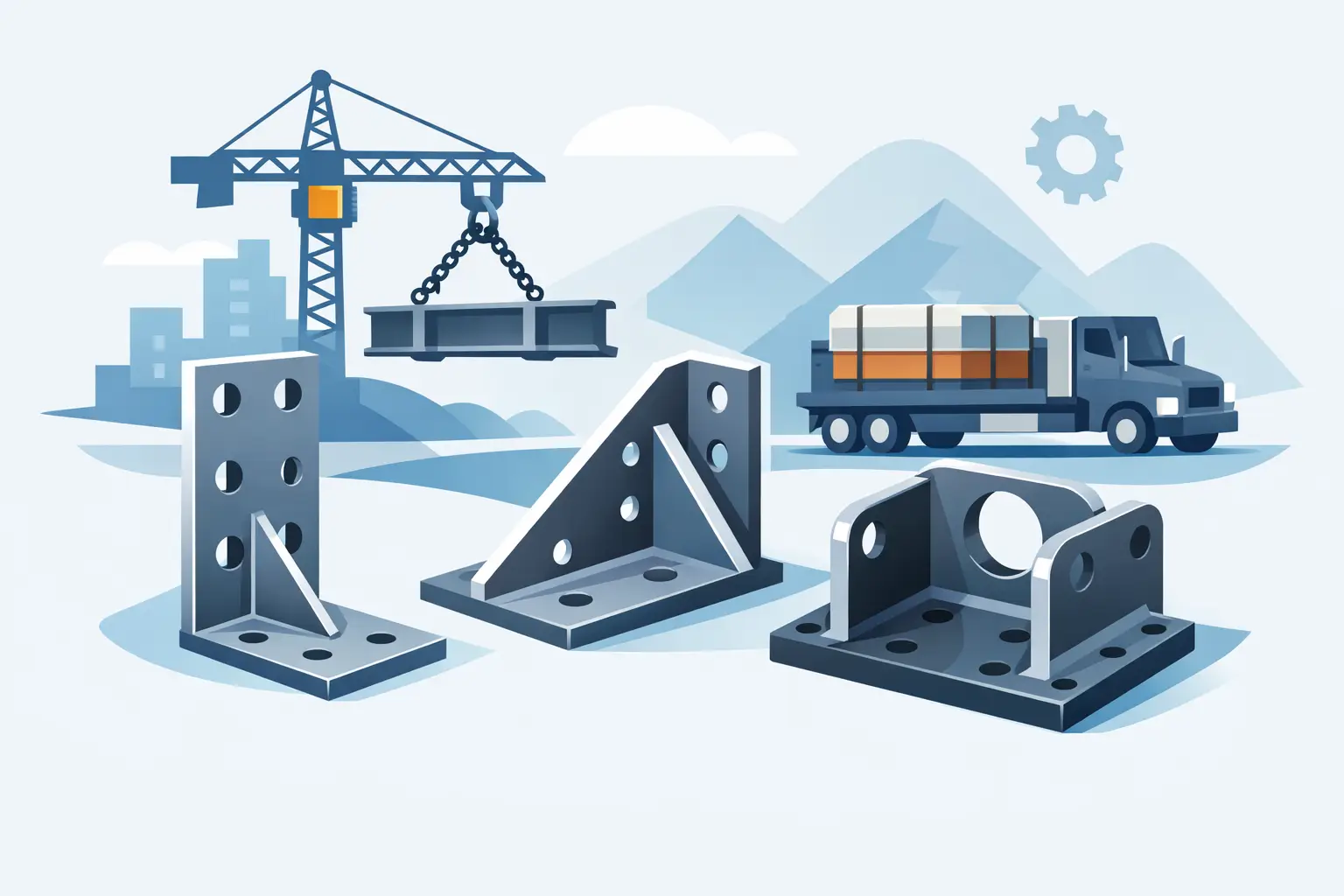
A bracket that is only a few millimeters off can create a costly problem on the assembly floor. Mounting holes may not align, a channel support may sit out of level, or an enclosure may require rework before it can be installed. Custom metal brackets address these application-specific requirements by turning a defined load, mounting method, material requirement, and space constraint into a repeatable manufactured component.
For OEMs, contractors, fabricators, and procurement teams, the goal is not simply to buy a shaped piece of metal. It is to source a bracket that fits correctly, performs under service conditions, arrives on schedule, and can be produced consistently from the first order through scaled production.
When Custom Metal Brackets Are the Right Choice
Standard brackets are efficient when dimensions, hole patterns, finish, and load conditions match the application. They can reduce lead time and simplify purchasing, particularly for common strut support, framing, shelving, and light-duty mounting work. However, a standard part becomes an expensive compromise when installers must drill additional holes, add spacers, modify flanges, or work around limited clearances.
Custom metal brackets are the practical choice when the installation has a nonstandard mounting pattern, a specific angle or offset, unusual loading, material compatibility requirements, or a need to integrate several functions into one component. A properly designed bracket can eliminate field modification and reduce the number of separate parts required in an assembly.
This matters in industrial equipment, HVAC support systems, electrical enclosures, automotive assemblies, construction hardware, marine installations, and machinery guards. Each environment places different demands on the component. A bracket for an indoor control cabinet may prioritize dimensional accuracy and appearance. A bracket for a coastal dock, structural support system, or outdoor equipment enclosure must also account for corrosion exposure, water retention, vibration, and long-term serviceability.
The best choice is not always the heaviest bracket or the most expensive alloy. It depends on the applied load, load direction, installation method, environmental exposure, expected service life, and volume required. Engineering the part around those variables prevents over-specification in low-risk applications and under-specification where failure is not acceptable.
Start With Function, Not Just Dimensions
A dimensional drawing is essential, but dimensions alone do not describe how a bracket must work. Before production begins, the manufacturer should understand the component's function within the complete assembly.
Consider where the load enters the bracket, how it transfers through bends and fasteners, and whether the load is static, cyclic, or subject to impact. A wall-mounted bracket with a vertical load behaves differently from a cantilevered support carrying vibration. Hole placement near a bend can affect forming quality, while a narrow flange may limit the size of fastener or washer that can be used during installation.
Clearance requirements should be defined early as well. A bracket may need to fit around conduit, align with a channel system, allow access for tools, or avoid interference with neighboring components. These details are often discovered in the field when drawings focus only on the bracket itself rather than the installed assembly.
For repeat production, tolerances deserve the same attention as nominal dimensions. Tight tolerances should be used where fit and alignment require them, such as mating holes, locating features, and critical mounting surfaces. Applying overly tight tolerances to every feature can raise manufacturing cost without improving performance. A capable manufacturing partner can help identify where precision is necessary and where normal sheet metal tolerances are appropriate.
The Information That Supports Accurate Quoting
A complete request for quotation reduces back-and-forth and helps ensure that quoted parts match the intended application. The most useful package generally includes:
- A dimensioned drawing or CAD file with critical dimensions and tolerances clearly identified.
- Material grade, thickness, and any required certifications or compliance requirements.
- Hole sizes, thread requirements, countersinks, slots, embosses, weld details, and formed features.
- Surface finish requirements, including plating, galvanizing, powder coating, passivation, or paint.
- Expected order quantity, annual demand, packaging needs, delivery schedule, and destination.
Photos, sample parts, and assembly drawings can also be valuable where a component has complex fit-up requirements. They give the production team context that a flat drawing may not capture.
Material Selection Must Match the Service Environment
Material selection is one of the largest drivers of bracket performance, weight, cost, and finish options. Mild steel is widely used for structural and general industrial brackets because it offers good strength, forming characteristics, weldability, and cost efficiency. When properly coated, it is suitable for many indoor and outdoor applications.
Stainless steel is often selected where corrosion resistance, hygiene, moisture exposure, or visual finish matters. Grade selection still requires care. The environment may call for a different stainless grade depending on chemicals, salt exposure, cleaning procedures, or prolonged moisture. Stainless can also require different forming and tooling considerations than mild steel.
Aluminum is useful when lower weight, natural corrosion resistance, or specific thermal properties are priorities. It is common in transportation, electronics, marine-adjacent equipment, and lightweight fabricated assemblies. Its lower stiffness compared with steel may require changes to thickness, geometry, or reinforcement to achieve the required performance.
Galvanized sheet can provide a practical corrosion-resistant option for many support and construction applications. Copper and other specialty materials may be appropriate for electrical, architectural, or application-specific needs. The correct decision should account for both the bracket material and the materials it contacts. In wet or corrosive environments, dissimilar-metal contact can introduce galvanic corrosion risks unless isolation or compatible finishes are considered.
Design for the Manufacturing Process
A well-designed bracket is easier to manufacture accurately and more economical to produce at volume. Sheet metal fabrication commonly combines laser cutting, punching, bending, forming, welding, hardware insertion, assembly, and finishing. The ideal process depends on part geometry, material thickness, feature repetition, production volume, and required tolerances.
For example, punched holes and repeated slots can be highly efficient in larger runs, while laser cutting supports flexibility for prototypes, low-volume orders, and complex profiles. Press brake forming produces accurate bends when bend radii, flange lengths, and material behavior are considered in the design. Welded assemblies allow larger or more complex configurations, but welding can introduce heat distortion that must be managed when alignment is critical.
Part consolidation is often worth evaluating. Two or three simple pieces may be combined into a formed bracket that requires fewer fasteners and less assembly labor. That can improve installation speed and reduce inventory complexity. Still, consolidation is not automatically better. A more complicated formed part may require specialized tooling or become difficult to finish, package, or replace in the field. The right approach balances unit cost, assembly time, field reliability, and expected volume.
Surface finishing should be planned as part of the design rather than selected at the end. Coating thickness can affect thread engagement, close-fitting slots, and mating surfaces. Drainage holes, venting, and accessible edges can matter for galvanizing and powder coating. A finish that looks appropriate for an indoor fabricated enclosure may not provide enough protection for outdoor structural hardware.
Quality Control Is a Production Requirement
For bracket programs that support equipment builds or construction schedules, quality means more than inspecting a few finished pieces. It begins with controlling incoming material, verifying fabrication setup, checking critical dimensions during production, and confirming finish and packaging requirements before shipment.
First-article inspection is particularly valuable for new custom parts. It gives engineering and purchasing teams an opportunity to confirm fit, hole locations, bend angles, and finish before full production proceeds. For ongoing orders, documented inspection points and repeatable work instructions help maintain consistency across lots.
Packaging should not be overlooked. Brackets with finished surfaces, projecting tabs, threaded features, or matched sets can be damaged or mixed during transit without appropriate protection and labeling. Export shipments also require disciplined packing, clear carton identification, and documentation that supports receiving and inventory control at the destination.
Metallix Exports supports custom fabrication programs with cutting, punching, bending, welding, forming, assembly, and surface finishing capabilities across common industrial materials. This breadth helps buyers consolidate standard hardware and application-specific fabricated components through one manufacturing partner while maintaining focus on specification control and on-time delivery.
Choosing a Supplier for Repeatable Results
A supplier should be evaluated on more than its ability to produce a sample. Ask whether it can maintain the required tolerances at production volume, manage material and finish requirements, communicate clearly during engineering review, and package parts for the route and destination involved.
Manufacturing depth also matters. A vendor that understands both fabricated brackets and related structural hardware can identify opportunities to simplify an assembly, align a custom part with compatible support systems, or reduce unnecessary vendor fragmentation. For international procurement, export experience and schedule discipline are equally important. A well-made component has limited value if it arrives after the installation window has closed.
The most effective custom bracket programs begin with clear functional requirements and continue through disciplined production control. Provide the load conditions, mating details, environment, finish expectations, and delivery needs early. That gives the manufacturing team the information needed to build a bracket that performs correctly on the first installation, not after costly adjustment in the field.


