
 E-mail :
 Call Us :
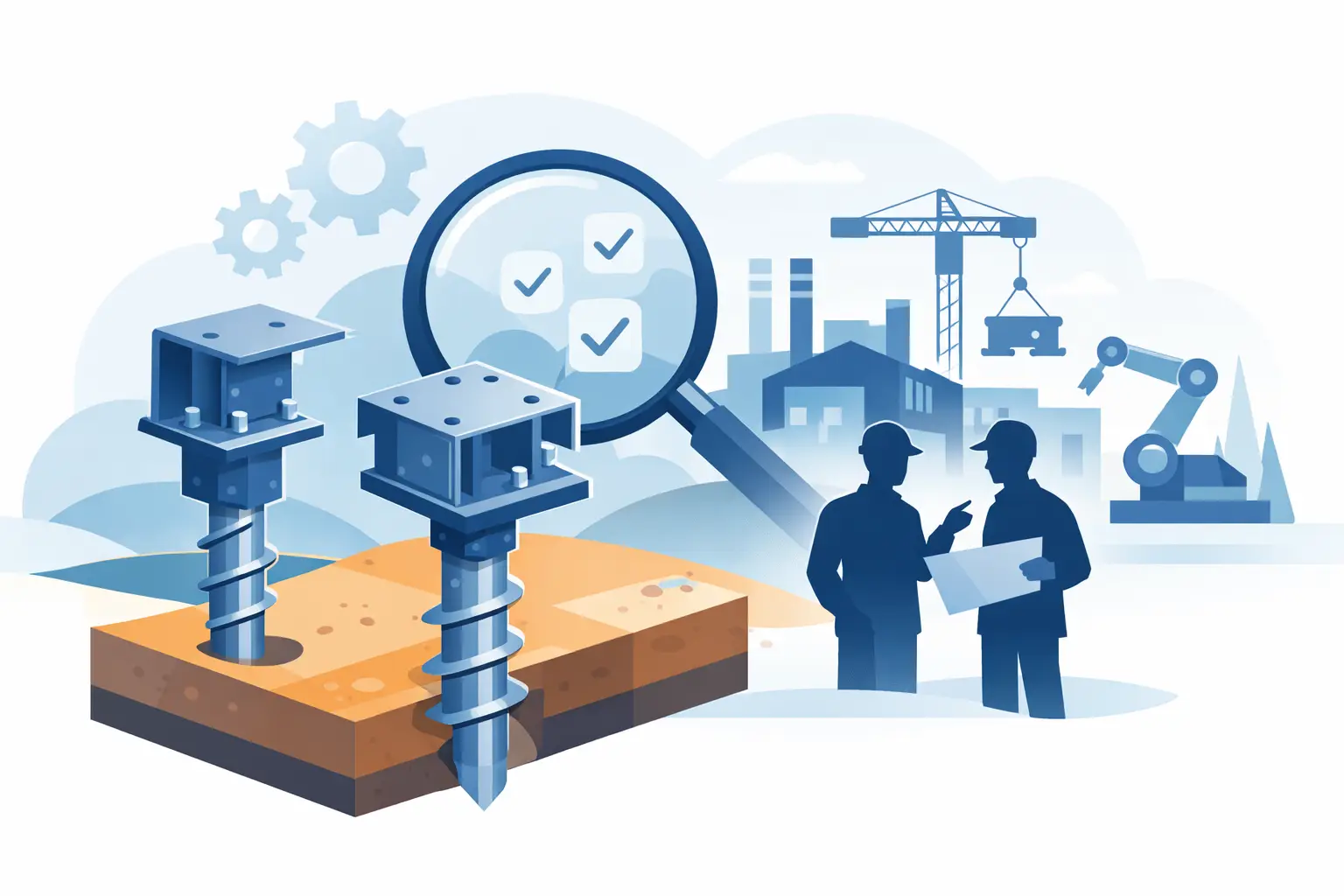
When a foundation repair or new support system is only as reliable as the bracket connecting load to the pier, supplier selection stops being a purchasing task and becomes an engineering decision. A helical pier bracket manufacturer directly affects fit-up in the field, installation speed, load transfer performance, corrosion resistance, and long-term consistency across every shipment.
For contractors, OEM buyers, and procurement teams, that matters more than a low unit price. Brackets that arrive with dimensional variation, weak welds, poor hole alignment, or inconsistent finishes create expensive downstream problems. Delays on site, rework in the field, and failed inspections cost far more than the initial component savings.
What a helical pier bracket manufacturer really delivers
A bracket is not just a formed metal part. In foundation applications, it is a structural hardware component expected to perform under demanding load conditions and real installation constraints. That means the manufacturer must control material selection, forming accuracy, hole placement, welding quality, and coating integrity with far more discipline than a general metal fabricator working on non-structural parts.
The practical requirement is straightforward. The bracket needs to match the installation method, seat correctly against the supported structure, align with the pier assembly, and maintain dimensional consistency from lot to lot. If any of those factors drift, installers compensate in the field, and field compensation is where labor hours expand and confidence drops.
This is why experienced buyers look beyond catalog photos. They evaluate whether the supplier understands load paths, tolerances, fabrication repeatability, and the realities of installation crews working against schedule and soil conditions.
How to evaluate a helical pier bracket manufacturer
The first question is whether the supplier is built for structural hardware production or simply able to make metal parts. Those are not the same thing. A manufacturer serving construction and industrial applications should be able to show capability in cutting, punching, bending, welding, forming, and finishing with controlled processes rather than ad hoc fabrication.
Material capability comes next. Depending on the application, a bracket may require mild steel, galvanized steel, or other specified materials to satisfy structural and environmental demands. The manufacturer should be comfortable working to exact grades, thicknesses, and customer drawings instead of pushing a one-size-fits-all standard.
Production consistency is another major checkpoint. If you are sourcing for recurring projects, distribution, or OEM integration, repeatability matters as much as initial quality. A good sample part is not enough. The real test is whether the supplier can produce the same part across larger volumes while holding the same tolerances, weld quality, and finish standards.
Lead time discipline also deserves close attention. Foundation and construction schedules rarely leave room for hardware uncertainty. A dependable manufacturer should be able to communicate realistic production windows, support order planning, and ship in a manner that aligns with project timing rather than forcing the buyer to absorb schedule risk.
Manufacturing details that separate strong suppliers from risky ones
Bracket performance starts with precision. Hole placement, slot dimensions, bend angles, and plate flatness affect assembly and load transfer. A bracket may look acceptable on a pallet, yet still create serious issues if mating points are slightly off. For that reason, dimensional control should never be treated as a secondary concern.
Welding quality is equally important. In helical pier bracket applications, weld integrity contributes directly to structural reliability. Buyers should expect controlled welding procedures, qualified operators, and consistent inspection practices. Slag, undercut, inconsistent bead profiles, and heat distortion are not cosmetic issues when the part is carrying load.
Coating and finishing also deserve a practical review. The right finish depends on exposure conditions, storage environment, and service life expectations. In some applications, standard painted finishes may be acceptable. In others, galvanized or application-specific surface protection is the better fit. A capable manufacturer should discuss finish options in terms of use conditions, not just appearance or price.
Packaging is often overlooked until parts arrive damaged or mixed. Export and multi-site distribution add another layer of risk. A supplier with international shipment experience should package structural hardware to preserve finish quality, maintain part identification, and reduce handling issues on arrival.
Standard products vs custom bracket production
Many buyers start with a standard bracket and then realize the application needs modification. That might mean changes in plate thickness, hole configuration, geometry, reinforcement, or finish. A capable helical pier bracket manufacturer should be able to support both standardized product lines and custom fabrication without disrupting quality control.
This flexibility matters in real projects. Retrofit work often presents variables that are not obvious in the initial scope. New construction programs may require standardized repeat orders, while specialty jobs need bracket adjustments to suit foundation details or installation methods. Working with a supplier that can handle both reduces vendor fragmentation and shortens the path from drawing review to production.
There is a trade-off here. Fully custom parts can improve fit and project performance, but they also require stronger drawing control, approval discipline, and production planning. Buyers should expect a more involved review process for custom bracket work, especially when structural performance and dimensional compatibility are critical.
Why broader manufacturing capability matters
A supplier focused only on one bracket style may be useful for simple purchasing, but broader manufacturing capability often creates better long-term value. Many buyers sourcing helical pier brackets also need related hardware, structural supports, channels, clamps, post bases, or fabricated metal assemblies tied to the same project.
Consolidating these requirements with one manufacturing partner can simplify procurement, improve compatibility across components, and reduce the hidden costs of managing multiple vendors. It also helps when project needs change midstream. If the same supplier can support revisions, related fabrications, and additional hardware categories, the response is usually faster and more controlled.
This is where an engineering-focused manufacturer has an advantage. The conversation shifts from selling one part number to supporting the application as a complete hardware requirement.
Questions procurement teams and engineers should ask
Before placing an order, buyers should look for direct answers to a few operational questions. Can the manufacturer hold the required tolerances consistently? Can it produce to customer drawings and specifications without excessive back-and-forth? Does it have the welding, forming, and finishing capability in-house or under controlled management? Can it support both prototype quantities and production volumes? And just as important, can it ship reliably to the required market with packaging suited for transit conditions?
The best suppliers answer these questions clearly because their processes are already built around them. Vague claims about quality or capacity are not enough in structural applications. Buyers need evidence of production discipline.
The value of an export-ready manufacturing partner
For US importers, distributors, and international sourcing teams, export readiness is part of supplier quality. Documentation, packaging, communication, and shipment coordination affect whether a purchase order runs smoothly or becomes an administrative problem.
A manufacturer serving global customers should understand how to prepare hardware for international movement, maintain part consistency across repeat orders, and communicate in a way that supports both engineering and commercial teams. That includes responsiveness during quoting, clarity during production, and reliability when delivery dates matter.
Metallix Exports operates in this space with a capability-led model built for industrial and construction buyers who need both standard hardware and custom fabricated metal components from one source. For buyers evaluating long-term supply options, that combination of manufacturing breadth and project discipline is often more valuable than a narrow low-cost offer.
A better way to select a supplier
If you are comparing manufacturers, do not reduce the decision to unit price and nominal capacity. Review how the supplier handles tolerances, weld quality, finish control, production planning, and custom requirements. Ask whether the manufacturer understands field installation constraints and whether it can support growth beyond the first order.
A helical pier bracket manufacturer should help reduce risk, not shift it downstream to your site crews, warehouse team, or customers. The right partner delivers brackets that fit correctly, perform reliably, arrive on schedule, and support your broader sourcing strategy. That is what turns a component supplier into a dependable part of the project.
The most useful buying decision is usually the one that prevents problems no one has time to solve later.


