
 E-mail :
 Call Us :
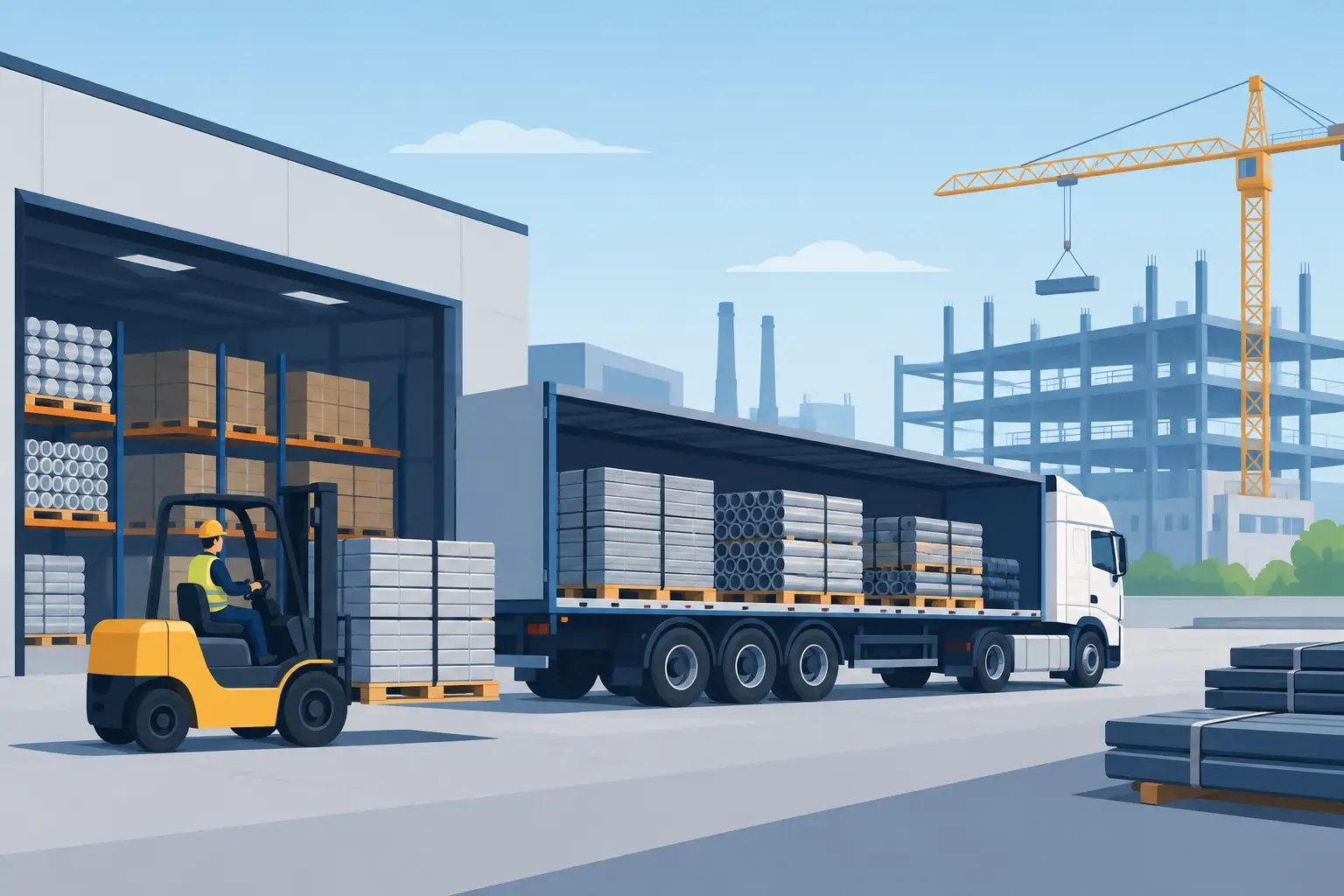
A bulk purchase can lower unit cost, but the real value comes from production consistency. For buyers sourcing channels, brackets, clamps, structural hardware, fabricated assemblies, or custom metal parts, bulk orders must deliver more than volume. They must arrive with the correct material, finish, tolerances, packaging, documentation, and delivery schedule required to keep operations and installations moving.
For OEMs, contractors, distributors, and project procurement teams, a well-planned order reduces vendor complexity and protects the production schedule. A poorly defined one can create expensive rework, site delays, excess inventory, or parts that cannot be installed as intended.
Why Bulk Orders Require More Than a Quantity Estimate
Ordering 10,000 parts is not simply a larger version of ordering 100. Higher volumes place greater pressure on tooling, material availability, production sequencing, inspection procedures, and freight planning. The supplier must be able to repeat the approved design across the full run without variation from the first shipment to the last.
The right order quantity depends on the application and the buyer's operating model. A distributor may prioritize stocked inventory and repeatable packaging. An OEM may need scheduled releases aligned with assembly demand. A construction project may require staged deliveries by phase, with hardware clearly separated by location or installation package.
Price matters, but it should not be evaluated in isolation. A lower unit price has limited value if parts arrive late, require sorting, or fail to match drawings and samples. The most effective bulk purchasing decisions consider total operating cost: unit price, inspection effort, freight, storage, installation efficiency, and the cost of supply interruption.
Start With a Complete Manufacturing Specification
A purchase order should give the manufacturer enough information to produce the part correctly without relying on assumptions. Part drawings, material grade, thickness, dimensions, hole patterns, bend angles, weld requirements, finish, and packaging requirements should be defined before production begins.
For standardized components, identify the exact product configuration, compatible system dimensions, coating, and applicable load or installation requirements. For example, a strut channel bracket may look similar across several applications while differing in gauge, slot spacing, finish thickness, or mounting-hole geometry. Those differences affect fit, corrosion performance, and field installation.
Custom fabricated products need additional clarity. If a drawing includes critical tolerances, reference datums, flatness requirements, thread details, or welded assembly dimensions, call them out directly. Clarify whether cosmetic surface appearance matters and whether weld spatter, sharp edges, or visible grinding marks are acceptable. These details help establish the right production method and inspection standard before material is committed.
Define the Material and Finish Together
Material selection and surface finishing should be treated as one decision. Mild steel with powder coating may be appropriate for protected indoor equipment. Galvanized steel can suit many exterior structural applications. Stainless steel or aluminum may be better for corrosive, marine, food-processing, or moisture-prone environments, depending on the required strength and service conditions.
The finish also affects dimensions. Plating, galvanizing, powder coating, and paint add thickness that can influence threaded connections, close-fitting assemblies, and mating surfaces. Specify the required finish, coverage expectations, and any areas that must remain uncoated. If corrosion resistance is central to the project, establish the expected environment rather than selecting a finish based on appearance alone.
Confirm Manufacturing Capability Before Committing Volume
Bulk orders work best when the supplier's equipment and processes match the part design. Precision cutting, punching, bending, forming, welding, assembly, and finishing each introduce their own production considerations. A supplier should be able to explain how the part will be manufactured, where consistency will be controlled, and what capacity is available for the requested schedule.
For repetitive formed components, production tooling may improve speed and part-to-part consistency. However, tooling requires an upfront investment and is generally most useful when annual demand supports it. Lower-volume or variable-demand programs may be better suited to flexible fabrication methods that avoid dedicated tooling costs. There is no universal answer - the best approach depends on geometry, annual usage, revision risk, and delivery requirements.
Buyers should also confirm whether secondary operations can be completed under one production plan. When cutting, forming, welding, hardware insertion, surface finishing, and packing are coordinated by one manufacturing partner, there are fewer handoffs to manage and fewer opportunities for dimensional changes or damage between processes.
Build Quality Controls Into the Bulk Order
An approved first article, production sample, or pre-production inspection is often the point where an order becomes dependable. It gives the buyer and manufacturer an opportunity to confirm dimensions, fit, finish, labeling, and packaging before the full run proceeds.
Inspection requirements should match the part's function. A non-critical mounting plate may require basic dimensional verification and visual inspection. A structural bracket, foundation component, or assembly that interfaces with other equipment may need defined measurements, thread checks, weld inspection, material certificates, coating verification, or lot traceability.
The goal is not to overcomplicate routine products. Excessive documentation can add cost and lead time where it provides little practical benefit. The goal is to apply the right level of control to the consequences of failure. Critical dimensions, safety-related characteristics, and customer-facing components deserve greater attention than features with no effect on performance.
For recurring orders, record the approved revision and inspection expectations. This prevents production from drifting toward an earlier drawing, a discontinued finish, or an informal sample that no longer represents the current requirement.
Plan Delivery Around Consumption, Not Just Completion
A manufacturer may be able to complete a large order in one production run, while the buyer may not have the space or need to receive it all at once. Scheduled releases can balance manufacturing efficiency with practical inventory control.
This approach is particularly useful for OEM production lines, distributors with changing regional demand, and construction projects with phased installation dates. The full quantity can be planned against a production schedule while deliveries are released in batches that support actual consumption. It can reduce warehouse congestion and lower the risk of parts being exposed to damage or weather before they are needed.
Packaging deserves the same attention. Components that are easy to identify and handle save time at receiving and on the job site. Confirm carton quantities, pallet configuration, labels, part numbers, lot identification, and protective materials. Heavy fabricated components may need skids or custom packing to prevent movement during transit. Finished or coated parts may require separators to avoid surface damage.
For international shipments, commercial documentation, export packaging, and freight coordination should be established early. Shipment mode, destination requirements, lead times, and delivery terms can affect the most practical order size. A manufacturing partner with export-ready fulfillment can help buyers avoid last-minute changes that disrupt delivery dates.
Manage Price Without Sacrificing Performance
Volume pricing is influenced by more than the part count. Material yield, setup time, tooling, cycle time, welding content, finishing requirements, packaging, and freight all affect cost. A small design adjustment can sometimes reduce waste, eliminate an operation, or allow more efficient nesting on sheet material. In other cases, a lower-cost material may create corrosion or durability issues that cost more over the life of the product.
The best commercial discussions are transparent about trade-offs. If a target price is not achievable under the original specification, the manufacturer should identify practical options: a different finish, a revised blank layout, standardized hardware, a revised packaging format, or a delivery schedule that supports longer production runs. Engineering value should protect performance, not simply remove cost from the drawing.
Metallix Exports supports bulk manufacturing programs with precision sheet metal fabrication, structural hardware production, custom assemblies, and export-focused delivery planning. For buyers managing both standard and custom requirements, consolidating compatible components under one capable supplier can simplify purchasing while maintaining clear technical accountability.
A Better Bulk Orders Process Starts Earlier
The most dependable bulk orders are planned before the purchase order is released. Buyers who share forecasts, drawings, approval requirements, delivery needs, and expected revisions early give the manufacturer time to secure materials, confirm processes, and build a realistic production plan.
That preparation creates room for better decisions. It can reveal when dedicated tooling makes sense, when phased delivery is preferable, or when a small design change will improve production consistency. A well-defined order does more than secure parts at scale - it gives your project, production line, or distribution program a more reliable path forward.


