
 E-mail :
 Call Us :
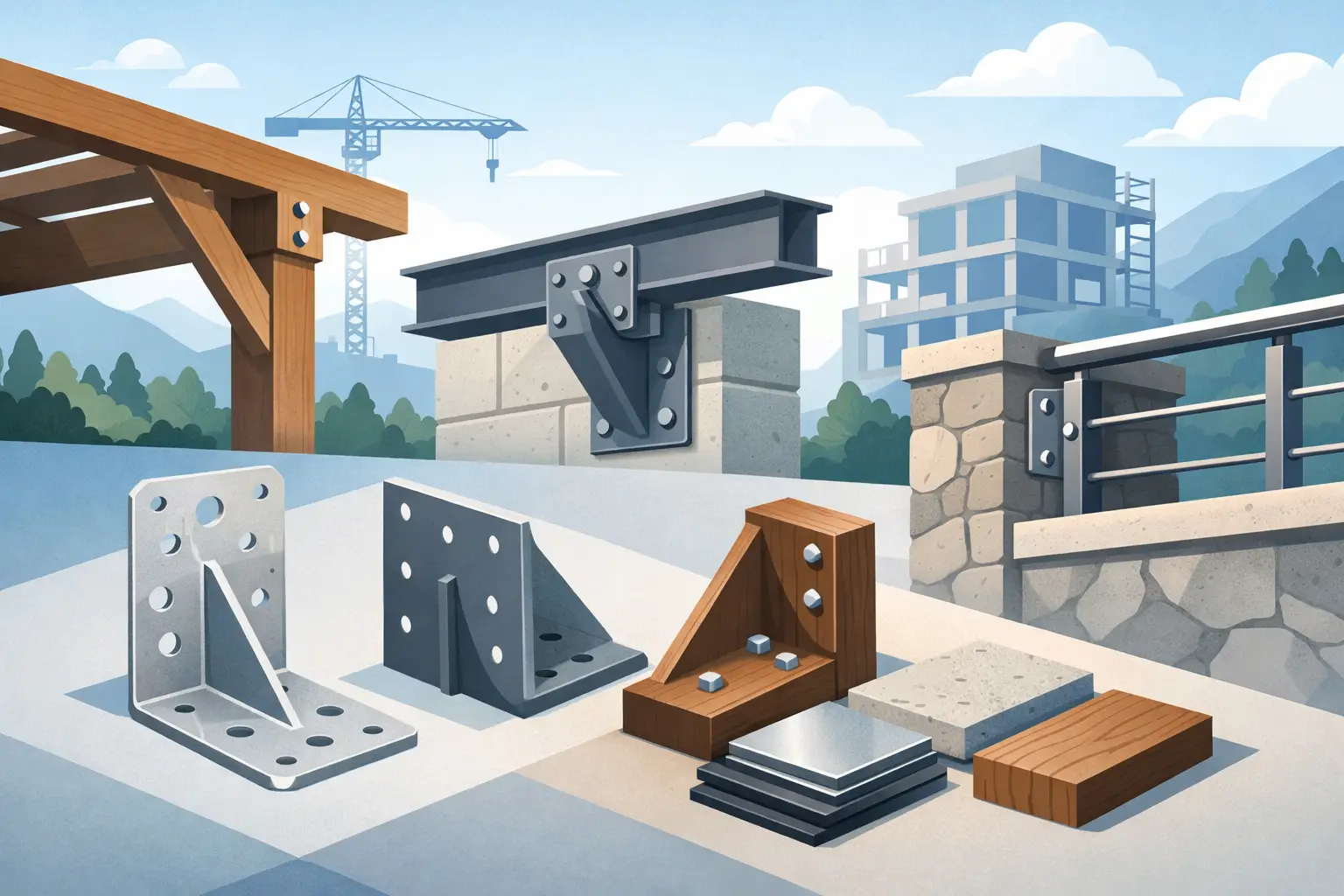
A bracket can be structurally sound on installation day and still become the weak point of an outdoor assembly within a few seasons. Moisture held at a joint, salt carried in the air, dissimilar-metal contact, and damaged coating edges can all shorten service life. Selecting the best materials for outdoor brackets therefore requires more than choosing the strongest available metal. Buyers need to match material, finish, geometry, fasteners, and exposure conditions to the actual application.
For OEMs, contractors, and procurement teams, the right decision reduces premature replacements, field maintenance, and avoidable project delays. It also supports repeatable fabrication, controlled tolerances, and dependable availability across standard and custom bracket programs.
Best Materials for Outdoor Brackets: What Determines the Choice
Outdoor brackets are used in very different environments. A wall-mounted HVAC support in a dry inland location does not face the same conditions as a dock cleat bracket, solar mounting support, utility-frame connection, or coastal equipment enclosure. Material selection should begin with the expected exposure rather than catalog habit.
Load is the first engineering consideration. The bracket must resist static weight, vibration, wind uplift, impact, and possible fatigue cycles without excessive deflection. Material thickness, bend radius, gussets, hole placement, and anchoring arrangement influence capacity as much as the base metal itself. A corrosion-resistant bracket with inadequate section design is not a reliable solution.
The second consideration is the corrosion mechanism. Rain alone is manageable for many coated steels, but standing water, freeze-thaw cycling, fertilizer chemicals, industrial pollution, chlorides, and continuous marine spray demand a higher level of protection. Crevices around bolts and overlapping surfaces deserve special attention because they retain moisture longer than exposed faces.
Fabrication requirements also matter. A buyer may need punched holes, formed tabs, welded gussets, tight positional tolerances, or a bracket that interfaces with unistrut-compatible channels and hardware. The material must perform consistently through cutting, bending, welding, finishing, and installation. Specifying a premium alloy where a coated carbon steel will perform can raise cost unnecessarily. Conversely, under-specifying the material can shift a lower purchase price into a much higher lifecycle cost.
Galvanized Steel for General Outdoor Structural Use
Galvanized steel is one of the most practical choices for outdoor brackets that require high strength and economical production. The zinc coating creates a barrier against corrosion and also provides sacrificial protection at small scratches and cut edges. For structural supports, post connections, framing hardware, and general construction assemblies, it offers a favorable balance of capacity, availability, and cost.
Pre-galvanized sheet is often suitable for formed brackets used in moderate exposure. It is efficient for high-volume punching and bending, but fabrication can expose bare steel at edges, holes, and weld areas. For parts that require extensive welding or are intended for demanding exterior service, hot-dip galvanizing after fabrication is typically the more durable option. It coats the completed assembly, including many difficult-to-reach surfaces.
There are trade-offs. Hot-dip galvanizing adds coating thickness that can affect threaded interfaces, close-fit holes, and flatness. Drainage and venting provisions are necessary on hollow welded components. The final finish also has a more industrial appearance than painted or stainless alternatives. Still, for many structural bracket applications, galvanized mild steel remains the workhorse material.
Stainless Steel for Wet, Coastal, and High-Visibility Applications
Stainless steel is often the preferred material where brackets face frequent wetting, hygiene requirements, visible architectural use, or severe corrosion exposure. Its corrosion resistance comes from a chromium-rich passive surface layer, not from a coating that can be worn away. This makes stainless a strong option for marine hardware, food-related equipment exteriors, outdoor enclosures, railings, utility installations, and exposed mounting systems.
Type 304 stainless steel performs well in many outdoor applications, particularly inland or urban environments. Type 316 stainless steel provides improved resistance to chloride exposure and is generally the better choice for coastal locations, marine structures, and areas exposed to deicing salts. The distinction matters: 304 may stain or pit prematurely in salt-heavy conditions, even though it is stainless.
Stainless is not maintenance-free. Surface contamination from carbon steel tooling, iron particles, or jobsite grinding can create rust staining. Proper material handling, dedicated fabrication practices, weld cleanup, and passivation where appropriate help preserve corrosion performance. Stainless also costs more than galvanized steel and may require different forming allowances because of its work-hardening behavior.
For a long-life bracket in a saltwater environment, 316 stainless combined with compatible stainless fasteners is often a sound investment. For a basic outdoor support away from chlorides, it may be more material performance than the project needs.
Aluminum When Weight and Corrosion Resistance Matter
Aluminum brackets are valuable where reduced weight, good atmospheric corrosion resistance, and easy handling are priorities. They are widely used in solar systems, transportation equipment, electrical applications, outdoor cabinets, lightweight platforms, and equipment mounting. Aluminum does not rust like steel, and many alloys form a protective oxide layer in normal outdoor conditions.
Common choices include 5052 for sheet-metal formed parts and 6061 for higher-strength sections, plates, and machined or structural components. The most appropriate alloy depends on bracket geometry and loading. A thin, sharply formed sheet bracket may favor a more formable alloy, while a highly loaded support may require a stronger grade and a revised design to account for aluminum's lower stiffness compared with steel.
Aluminum needs careful attention at connections. When it contacts galvanized steel, carbon steel, copper, or stainless steel in the presence of moisture, galvanic corrosion can occur. Isolation washers, nonconductive barriers, suitable coatings, and compatible fastener selection help prevent this issue. Bare aluminum can also develop a dull surface or localized corrosion in aggressive environments, so powder coating or anodizing may be appropriate for appearance and added protection.
Aluminum is rarely the default answer for heavy industrial bracketry, but it can be the right answer when shipping weight, installation handling, or corrosion resistance outweigh the higher material cost and section-size requirements.
Powder-Coated and Painted Steel: Useful Only With the Right System
Powder-coated or painted steel brackets can provide a clean finished appearance and a broad range of colors. They are commonly specified for architectural hardware, exterior equipment, retail fixtures, gates, light-duty supports, and branded assemblies. A quality coating system over properly prepared steel can perform well outdoors, especially in low-to-moderate corrosion environments.
The limitation is damage tolerance. A deep scratch, chipped edge, or unsealed fastener hole can allow corrosion to begin beneath the coating. This does not make coated steel unsuitable. It means the coating specification, surface preparation, edge coverage, and installation practices must be treated as part of the engineering requirement.
For improved durability, many buyers specify a duplex system: galvanized steel beneath a powder-coated finish. The galvanized layer provides sacrificial protection, while the coating adds appearance and another barrier to the environment. This approach is particularly useful for outdoor brackets that must remain presentable while serving structural functions.
Material Details That Can Decide Bracket Life
Material selection cannot be separated from bracket design. Water should drain rather than collect inside horizontal folds, around gussets, or beneath mounting faces. Slot orientation, bend direction, weld layout, and access for finishing all affect long-term performance. A simple drain hole or a revised return flange can prevent a persistent moisture trap.
Fasteners must be considered as part of the assembly. Stainless fasteners in aluminum or galvanized systems, zinc-plated fasteners in wet outdoor service, and mixed-metal assemblies all require review. The goal is to avoid a situation where the fastener, washer, or bracket corrodes faster because of an incompatible pairing.
Welded brackets need particular care. Welding changes surface condition and may remove protective coatings near the heat-affected zone. Carbon steel weldments often benefit from post-fabrication hot-dip galvanizing or a specified paint system. Stainless welds should be cleaned and finished to restore corrosion resistance. Where welding is unnecessary, formed one-piece brackets can reduce corrosion-prone seams and improve production consistency.
A Practical Specification Path for Outdoor Brackets
A reliable request for quotation should identify the bracket's function, load conditions, installation orientation, service environment, expected life, mating materials, and finish requirement. Drawings should show critical dimensions, hole tolerances, weld requirements, and any interface with channels, clamps, anchors, or other hardware. If the project is near saltwater, subject to chemicals, or exposed to standing water, state that directly rather than simply labeling it “outdoor.”
For recurring programs, it is useful to approve a first article that checks fit, coating coverage, hole alignment, and installation compatibility before full production. This is especially valuable when brackets are custom formed or used as part of larger support assemblies. A manufacturing partner with cutting, punching, bending, welding, assembly, and finishing capability can control those interfaces more effectively than a fragmented supply chain.
Metallix Exports supports standard and custom bracket requirements with material options matched to project conditions, precise fabrication controls, and export-ready fulfillment. The objective is not to sell the most expensive metal. It is to produce a bracket that performs to specification, installs correctly, and arrives when the project needs it.
The best choice is usually clear once the real exposure and load path are defined: use galvanized steel for economical structural durability, 316 stainless for chloride-heavy environments, aluminum where low weight is essential, and coated steel where appearance is central. Start with the service conditions, then specify the bracket as a complete system rather than as a piece of metal alone.


